

Audio By Carbonatix
For Francis Appiah, a breast cancer awareness campaign in Cape Coast remains unforgettable, not because of the speeches delivered that day, but because of what happened when the rain began.
The downpour was heavy, but people continued to turn up for the campaign organised by Breast Care International (BCI).
“They came out in their numbers; in their numbers they defied the rains and joined the walk,” says Appiah, the Deputy News Editor at Otec FM.
He remembers another campaign in Tamale, where the heat became so intense that the Ghana National Fire Service brought a fire tender and sprayed water on participants to give them some relief.
“These two venues, I can never forget those memories,” he says.
Appiah has worked with BCI since the match in 2011. The experience has taken him beyond covering events as a journalist, giving him knowledge he now shares with women and other members of the public.
His account offers a glimpse into the work of journalists who have spent years reporting on breast cancer awareness in Ghana. Their experiences show how health reporting can influence what journalists understand about a disease, the questions they ask and the information they pass on to their audiences.
But their reflections also raise a question: as another awareness march takes place in Mampong in the Ashanti Region, how can years of public education translate into better understanding, earlier medical attention and improved access to treatment?
Stories that stay with journalists
For Appiah, one of the most affecting encounters involved a woman he remembers as Gifty Joyce, whom he interviewed in the Central Region.
He says the woman had breast cancer and initially sought help at a prayer house before someone introduced her to BCI.
By the time she received medical care, her condition was advanced. She underwent a mastectomy, an operation to remove a breast, and survived.
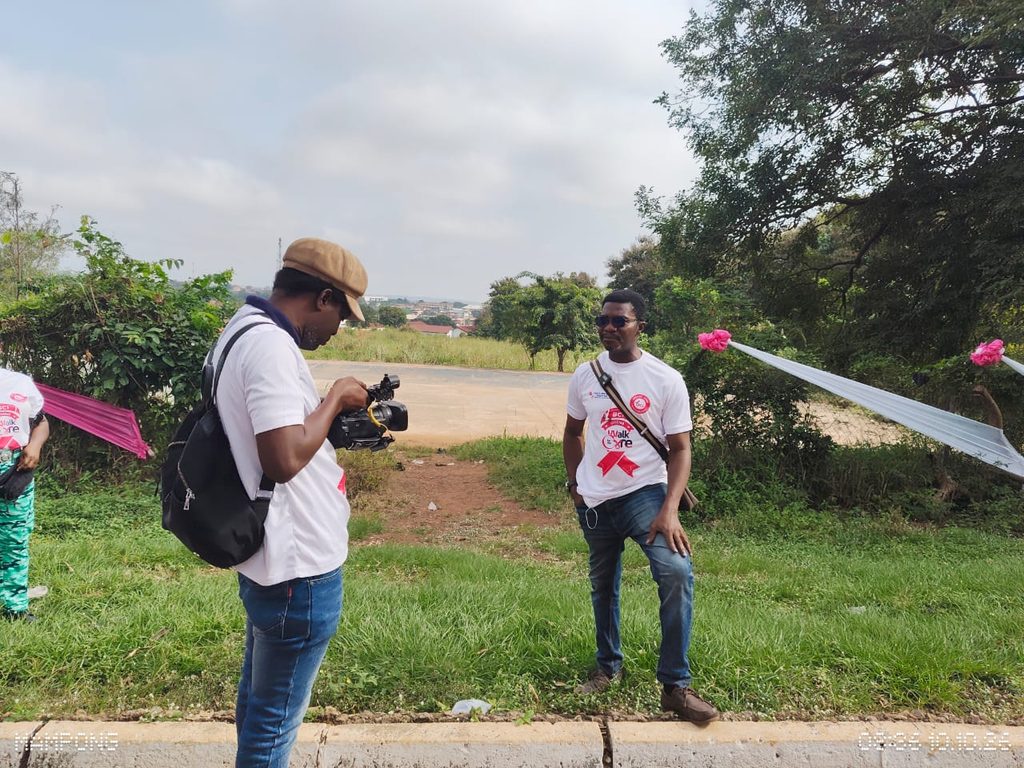
“In fact, I even shed tears because of the way she narrated her story,” Appiah recalls.
Her experience left him thinking about women who conceal their diagnosis because they fear stigma and discrimination.
He also remembers a student he teaches who told him she had pain in her left breast. After seeking medical attention, a doctor identified a lump.
The student's mother was reluctant to let her continue seeking care because she feared doctors would remove her daughter's breast.
Appiah says he spoke to both of them and encouraged them to pursue medical treatment.
The student subsequently received treatment and therapy without having her breast removed. She is now working, he says.
The experience reinforced his conviction that people need accurate information about breast cancer and its treatment.
A lump does not automatically mean cancer, and a breast does not necessarily have to be removed when cancer is diagnosed. Medical assessment is essential to determine the appropriate treatment.
For Appiah, these encounters explain why awareness campaigns must reach people before fear, misinformation or delays in seeking care complicate their circumstances.
He believes rural communities need particular attention because some patients arrive at health facilities with advanced disease, while access to specialised services can be limited.
“Those in rural areas need more of such campaigns,” he says.
He wants organisers to take awareness activities into remote communities where people may depend on Community-based Health Planning and Services (CHPS) compounds that cannot provide specialised breast cancer treatment.
A journalist's first encounter with breast cancer awareness
Deputy Managing Editor of the Daily Banner, Michael Ofosu-Afriyie, says his own understanding of breast cancer began through BCI's awareness work.
He recalls attending what he believes was the organisation's first campaign in Kumasi, about 12 or 13 years ago. A pre-launch event introduced journalists to the disease, its symptoms, possible causes and treatment options. That experience gave him his first substantial exposure to breast cancer issues.
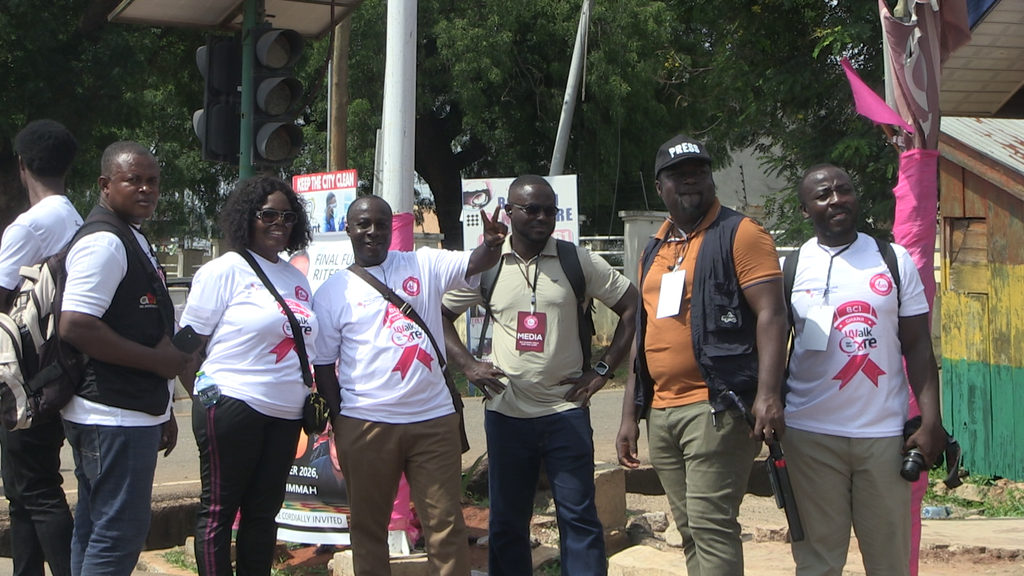
In the years since, he believes awareness activities have reached more people, including through churches, schools and other places where communities gather.
Yet he says misconceptions remain. Some people interpret breast cancer as a spiritual attack or curse, beliefs that can discourage them from seeking medical care.
Ofosu-Afriyie believes journalism has a continuing role in challenging such ideas. But he also wants media organisations and campaign organisers to assess whether their efforts are producing measurable results.
“We need reliable data to establish how much impact journalism and public awareness campaigns have made,” he argues.
He suggests conducting surveys in schools, churches and public places to establish what people know about breast cancer, whether they recognise warning signs and whether they understand the importance of seeking medical attention promptly.
Website traffic and page views can show how audiences engage with online stories, he says, but those figures do not necessarily establish whether people understand the information or act on it.
For him, measuring the impact of health reporting requires a closer examination of public knowledge and behaviour.
Beyond October
Ofosu-Afriyie also wants breast cancer education to begin early in life. He proposes that age-appropriate information about the disease, its warning signs and available treatment be considered for inclusion in school curricula.
He argues that education should not be concentrated in October, which is recognised internationally as Breast Cancer Awareness Month.
“We should not wait to only infuse passion and dedication into the awareness creation in the month of October,” he says. “I believe it should be an all-year-round and everywhere people gather.”
His position reflects a wider concern among the journalists: that breast cancer must remain a subject of public discussion after the annual campaigns have ended.
Andrew Gampson of UTV says his organisation joins BCI and its president, Dr Beatrice Wiafe Addai, every year to support the campaign.
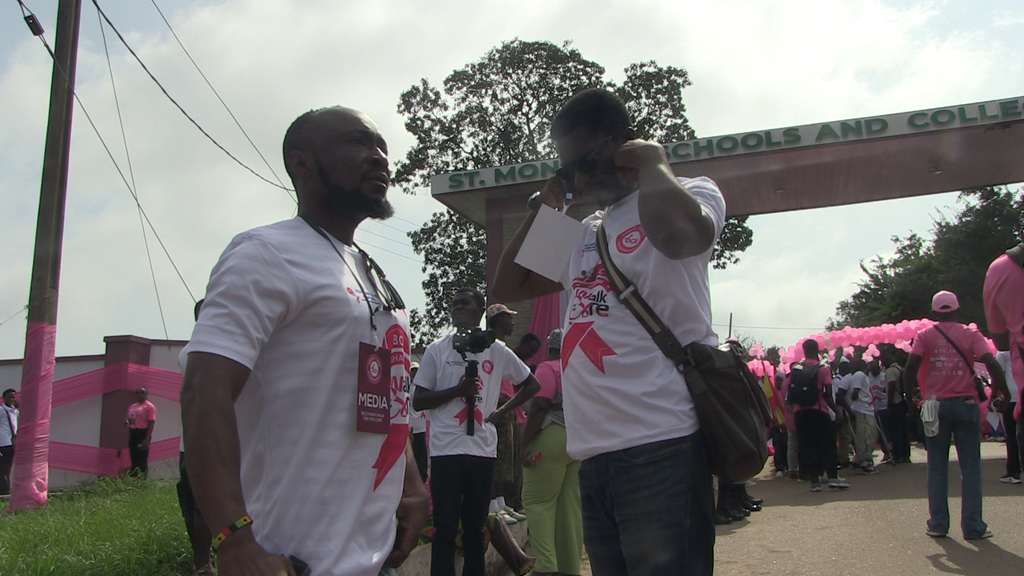
He says the station uses its platform to educate the public and raise awareness about the disease.
That media support is important to Dr Wiafe Addai, who has urged journalists to continue helping women understand breast cancer and seek appropriate care.
“No woman should face breast cancer alone.” She said.
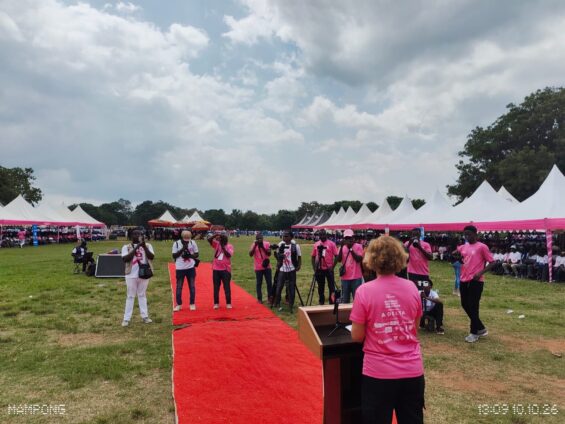
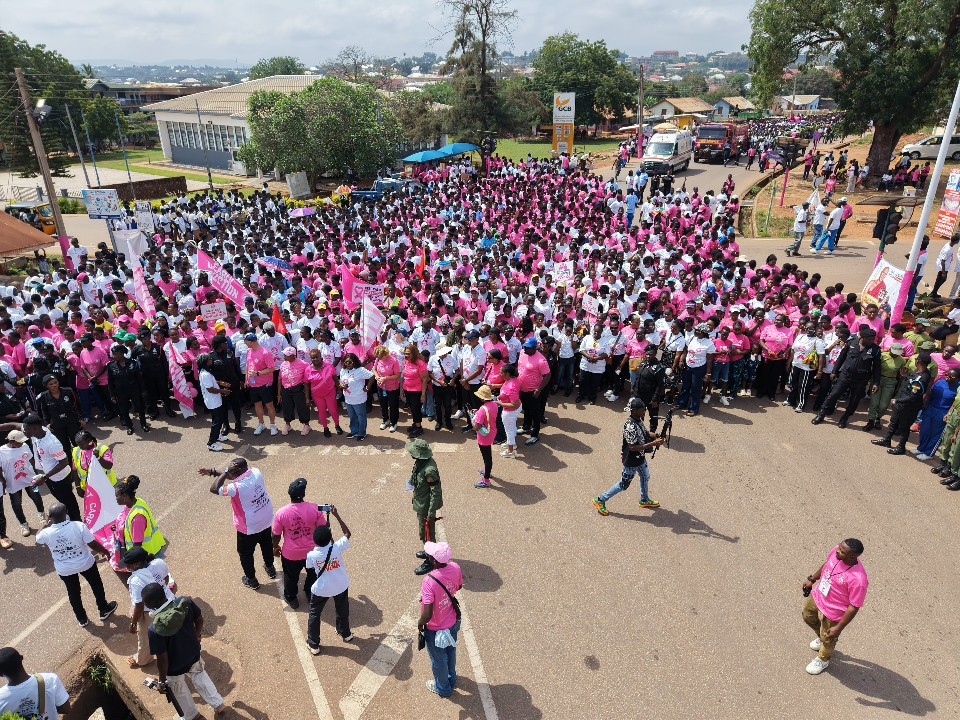
Addressing participants at the Mampong march, the BCI president said the campaign was held in honour of everyone whose life had been affected by the disease.
“I stand before you with one powerful message,” she said. “Breast cancer is not a death sentence.”
This year's theme, “Our Work, Our Fight, Our Future”, captures what she says must remain the focus of the campaign.
“Our work is our declaration that no woman should face breast cancer alone. Our fight is our commitment to break the silence, destroy the myths, promote early detection and fight for access to timely and affordable treatments,” she said.
Dr Wiafe Addai thanked the media for helping educate women and challenge misconceptions, but said the work must continue beyond the march.
She also expressed concern about women being diagnosed at younger ages and called for collective efforts to reduce preventable deaths.
“We can only do that when we work together, when we stand together, when we fight together and when we save lives,” she said.
Her appeal highlights a distinction at the heart of breast cancer awareness: educating the public is essential, but people also need access to appropriate assessment, diagnosis and treatment.
Awareness campaigns cannot, by themselves, remove financial barriers, provide specialist services in underserved communities or guarantee that people will seek care when they notice changes in their breasts.
Those challenges require sustained public education alongside accessible health services and reliable information about where and how to obtain care.
What comes after the march?
The journalists' accounts provide evidence of how years of involvement have shaped their understanding of breast cancer. Appiah describes personal encounters that have stayed with him, while Ofosu-Afriyie wants stronger methods of measuring the impact of public education.
For now, both journalists agree that the message must continue reaching people, particularly those who may have limited access to information and specialised care.
In Mampong, the march brings participants together around a shared cause. Its longer-term value will depend partly on what happens after they leave: whether accurate information reaches more households, whether misconceptions are challenged and whether people who need medical attention can obtain it.
For journalists who have returned to the subject year after year, the responsibility is to keep reporting beyond the annual event and to examine whether the message is reaching the people who need it most.
Latest Stories
-
Ghana Psychological Association calls for greater involvement of people with lived experience in mental health care
6 minutes -
Ablakwa says Ghana could evacuate more citizens from South Africa if the situation worsens
34 minutes -
Violence against girls must be tackled through individual responsibility – Gender advocate
38 minutes -
Ghana’s BRICS bid must be guided by national interest – International Affairs Analyst
51 minutes -
Journalists look back on a decade of breast cancer reporting in Ghana
1 hour -
President Mahama ends Resetting Ghana tour of Ahafo Region
3 hours -
African negotiators seek delivery of climate commitments at COP31
3 hours -
BoG develops AI rules for financial sector
3 hours -
‘Big Push’: Government assures contractors of prompt payments
4 hours -
Court fines miner for breaking into gold buying shop
4 hours -
Tarkwa court jails labourer for three years over GH¢123,000 theft
5 hours -
GAEC must retain nuclear scientists for Ghana’s nuclear ambitions – Minister
5 hours -
Man reportedly mistaken for game and shot by hunter dead in forest
5 hours -
19-year-old mason jailed 15 years for defiling seven-year-old pupil
5 hours -
Ghana’s banking sector assets rise 20.47% to GH¢500.2bn – BoG Governor
5 hours