

Audio By Carbonatix
Names carry weight. They shape how places are remembered, how institutions are perceived, and how nations introduce themselves to the world.
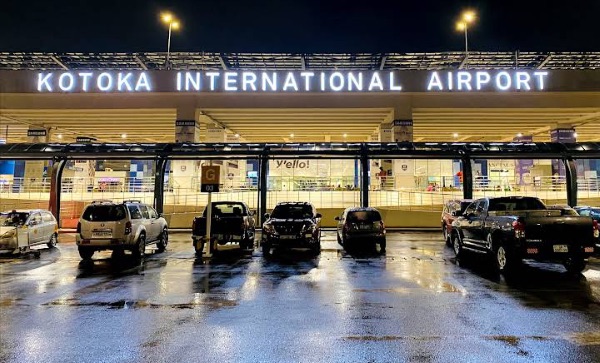
This is why the proposal to rename Kotoka International Airport as Accra International Airport has stirred strong reactions across Ghana’s public space. The debate is not merely administrative. It touches on history, identity, and the meaning we attach to national symbols.
Much of the public discussion has focused on history, particularly the role of Emmanuel Kwasi Kotoka in the 1966 overthrow of the government of Kwame Nkrumah. These are not trivial matters. They speak to legitimacy, democracy, and the kind of political inheritance a nation chooses to acknowledge. Such questions deserve seriousness and care.
Yet it is worth pausing to ask whether an airport is the right place to resolve them.
Airports are not monuments. They are gateways. They exist to welcome, orient, and connect. For millions of travellers, an airport is the first encounter with a country and often the last. Its name, therefore, should communicate clearly and confidently to the world. In that sense, “Accra International Airport” does something simple and effective. It tells visitors exactly where they are and what the city represents.
Accra has long been Ghana’s primary interface with the international community. It is the seat of government, a diplomatic hub, a centre of culture and commerce, and increasingly a meeting place for continental and global conversations. When people think of Ghana abroad, they often think first of Accra. Naming the airport after the city aligns national infrastructure with that lived reality.
There is also a practical dimension that should not be overlooked. City-based airport names are globally legible. They travel easily across airline systems, tourism platforms, conference branding, and international media. They reduce the need for explanation and avoid pulling visitors into domestic political debates at the very point of arrival. From a communication and branding standpoint, this clarity matters.
Some fear that changing the airport’s name would erase history. That concern is understandable, but it overestimates what an airport name can do. Ghana’s political history, including the events of 1966, is firmly recorded in books, classrooms, archives, and public debate. It does not depend on a signboard at the arrivals hall. Remembering history requires deliberate spaces of reflection, not transit lounges.
Others argue that keeping the current name preserves memory, even if the memory is uncomfortable. That position also deserves respect. But memory can be preserved without turning a nation’s primary gateway into a site of permanent ideological contest. A city name offers a neutral alternative. It neither celebrates nor condemns. It simply locates.
There is, finally, a broader national interest to consider. Ghana has worked carefully over the years to project itself as stable, welcoming, and outward-looking. Accra has been central to that image. Presenting the city as a gateway to West Africa and, symbolically, to the continent aligns with our diplomatic posture and tourism ambitions. “Accra International Airport” fits naturally into that narrative.
This is not an argument against honouring history, nor is it an attempt to reopen old wounds. It is a call to place history where it can be engaged thoughtfully and to allow national infrastructure to serve present and future needs.
In the end, the debate returns to the power of a name. Names can divide or they can orient. They can provoke argument or quietly do their work. Letting Accra speak first does not diminish Ghana’s past. It clarifies Ghana’s presence. As a gateway, that clarity matters.
(The writer is an award-winning senior media executive, historian, educator, and leadership consultant. He holds master’s degrees in business administration, Communication Studies, Education, and African Studies, and specializes in history education, media innovation, organisational strategy, and fostering leadership excellence across diverse sectors)
Latest Stories
-
Ghana’s recovery supported by gold strength despite global oil price pressures – Standard Bank Research
5 minutes -
Kwaku Azar writes: A-G vs OSP
38 minutes -
Mfantsipim–Adisadel rivalry built excellence, not division – Sam Jonah
1 hour -
Vice President launches Mfantsipim’s 150 years of shaping Ghana’s greatest mind
1 hour -
I assure Otumfuo, Mahama will join him to commission KNUST Teaching Hospital by end of this year – Haruna Iddrisu
2 hours -
Barcelona dominate derby to extend La Liga lead
2 hours -
Gov’t to roll out free special education for persons with disabilities from July 1 – Education Minister
2 hours -
Importers and Exporters Association declares full support for Publican AI port system
3 hours -
“We used it to test our officiating officials’ readiness” – Bawah Fuseini after CAA Athletics event
3 hours -
Volleyball emerges as Ghana’s fastest rising sport
3 hours -
National Sports Fund needs strong leadership from the top – Administrator David Wuaku
3 hours -
JoySports Exclusive: Steve McLaren in talks with GFA after expressing interest in Black Stars job
3 hours -
Fire guts auto parts warehouse at Bubuashie, one fire officer injured
3 hours -
I owe my victory to coach Ofori Asare – Allotey after winning WBA Africa Gold Super Flyweight belt
4 hours -
Church of Pentecost supports over 2,000 BECE candidates in Obuasi with career guidance seminar
5 hours