

Audio By Carbonatix
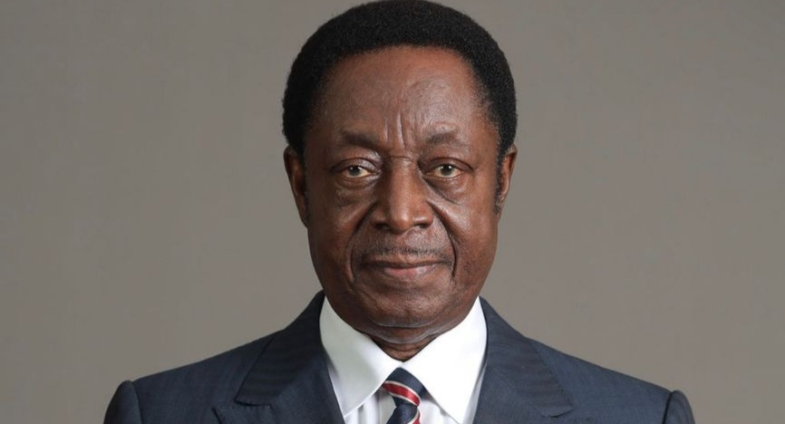
The Attorney-General (AG) has today, July 22, entered a nolle prosequi in the high-profile case involving former Finance Minister Dr. Kwabena Duffuor and seven others, who were facing charges related to the collapse of uniBank.
The decision, announced by Deputy Attorney-General Dr. Justice Srem-Sai, effectively discontinues the criminal proceedings against the accused, a move the AG's office attributes to the significant recovery of state funds.
The case, formally known as The Republic v. Kwabena Duffuor & 7 Others (CR/0248/2020), was a key part of the broader financial sector clean-up exercise initiated by the State in 2018.
The primary objectives of these prosecutions, as outlined by the Attorney-General's office, were to ensure accountability for public funds and, critically, to recover losses incurred by the State due to alleged acts of financial impropriety.
Dr. Kwabena Duffuor, who founded uniBank and previously served as Finance Minister from 2009 to 2013 and as Governor of the Bank of Ghana from 1997 to 2001, was among those charged in February 2020 with various offenses, including theft and money laundering.
Court documents at the time alleged that Duffuor received GHS 663.3 million (approximately $122 million at the time) "knowing it had been obtained by means of a criminal offense."
uniBank was declared insolvent in August 2018 by the Bank of Ghana (BoG), which cited that shareholders and related parties had taken GHS 5.3 billion in loans and withdrawals without following due process.
The charges also implicated other individuals, including a former Deputy Governor of the Bank of Ghana, Johnson Asiama, who faced accusations of facilitating financial impropriety.
According to the Deputy Attorney-General's press release, the Office of the Attorney-General, in collaboration with other relevant State agencies such as the Economic and Organised Crime Office (EOCO), established a threshold of 60% recovery of the alleged losses as a condition for reconsidering prosecution in specific cases.
"Following prolonged negotiations and engagements, the accused persons in The Republic v. Kwabena Duffuor & 7 Others case have met this recovery threshold," the statement read.
"Accordingly, in furtherance of public interest, and considering the significant recoveries made for the State, the Honourable Attorney-General has satisfied himself that continuing with the prosecution will not serve any additional public purpose."
A nolle prosequi is a legal term where the prosecution, often the Attorney-General, declares that it is unwilling to pursue a criminal case.
While the law typically does not require an explanation for such a discretionary power, the Attorney-General's office emphasized its commitment to accountability and transparency in providing the rationale behind this significant decision.
It is important to note that a nolle prosequi results in the discharge of the accused but does not amount to an acquittal; it leaves open the possibility of future re-prosecution should new evidence emerge or circumstances change.
The decision does not, however, "imply an absence of wrongdoing nor a vindication of any conduct." Rather, it is framed as "a pragmatic step in line with the overarching national interest of recovering State resources."
The Attorney-General reiterated his commitment to upholding the rule of law, protecting the public purse, and pursuing justice in all matters of national importance.
Background to the Financial Sector Clean-Up:
Ghana's banking sector experienced a significant crisis between 2017 and 2019, leading to the collapse of several indigenous banks, including uniBank, UT Bank, Capital Bank, and others.
The Bank of Ghana embarked on a comprehensive clean-up and recapitalization exercise, citing insolvency, weak corporate governance, related-party lending, and unsustainable business models as key reasons for the failures.
This exercise, aimed at restoring confidence and stability to the financial system, resulted in the revocation of licenses, mergers, and the creation of Consolidated Bank Ghana (CBG) to absorb the assets and liabilities of some of the distressed institutions.
The cost of the clean-up to the taxpayer was substantial, estimated to be in the billions of Ghana cedis, necessitating efforts by the government to recover lost funds and hold those deemed responsible accountable.
The Economic and Organised Crime Office (EOCO) played a crucial role in investigating and prosecuting cases arising from the crisis under the authority of the Attorney-General.
Latest Stories
-
Community 25 residents demand answers over two-month water shortage
6 minutes -
Ampem Darkoa Ladies and Hasaacas Ladies clash in 2026 Women’s Champion of Champions
12 minutes -
Business dies when luxury takes over leadership
28 minutes -
No family should lose everything to save a loved one – GMTF administrator
30 minutes -
Bawumia has the dignity to lead and the vision Ghana needs – Gabby
45 minutes -
GOC, GFA chart Olympic qualification roadmap for Black Queens, Black Meteors
47 minutes -
Absa InspireMe 2026 highlights opportunities for women-led business growth
48 minutes -
The only thing that flows regularly is THE BILL
53 minutes -
KGL U17 Colts 2026: Prempeh Elite Academy lead Group A as Western Region secures top spot in Group B
56 minutes -
‘You’ve never been touched by any scandal’ – Gabby celebrates Bawumia on his 63rd birthday
57 minutes -
WPL 2026/27: GFA unveils dates for start of new season as Ampem Darkoa Ladies begin title defence
1 hour -
Ghana Embassy in Washington pays tribute to late academic Dr Kofi Akamani
1 hour -
Ibrahim Mahama urges Ghanaians to overcome fear and venture into business
1 hour -
2026 U-17 WWC: Black Maidens lose to China in pre-tournament friendly
1 hour -
Who gave Gbande the EOCO remote control?
2 hours