

Audio By Carbonatix
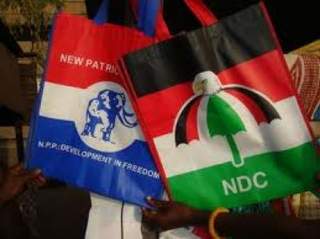
The dust has long settled in Akwatia, a key mining town in Ghana's Eastern Region, but the political reverberations from its historic by-election are still being felt across the country. What began as a local contest to replace a deceased member of parliament became a powerful barometer of the national mood. The victory of the National Democratic Congress' (NDC) candidate, Bernard Bediako Baidoo, was more than just a win; it was a decisive signal of a significant political shift. The results offered a crucial glimpse into the challenges and opportunities facing Ghana's two main parties, the ruling NDC and the now-opposition New Patriotic Party (NPP), ahead of the next political cycle.
The Numbers Tell a New Story
Bernard Baidoo's victory was a decisive reversal that defied recent political history. The final tally was 18,199 votes for the NDC, giving him a nearly 3,000-vote advantage over the NPP’s Solomon Kwame Asumadu, who garnered 15,235 votes. This margin is particularly notable given the context.
The by-election was triggered by the sudden death of Ernest Yaw Kumi, an NPP stalwart who had won the seat in the previous general election by a slim 2,063-vote margin. Baidoo’s win not only reclaimed the constituency but also represented a significant vote swing of over 5,000 ballots.
While voter turnout was lower, the NDC's candidate was able to significantly increase his vote share, indicating a high level of enthusiasm and mobilisation among his supporters. The result confirmed that the NDC could not only win but could do so convincingly in a seat the NPP had only recently held. The Liberal Party of Ghana’s Owusu Patrick garnered just 82 votes.
A Constituency with a History of Shifting Allegiances
Akwatia has long been a bellwether for Ghana's political landscape, often swinging between the NDC and NPP. The constituency's history highlights its unpredictable nature, with voters consistently rewarding or punishing parties based on performance and local issues. Out of the nine general elections held since 1992, the NPP has won five, while the NDC has secured four. Notable victories include the NDC's Gilbert Kwasi Agyei (1992) and Alhaji Mohammed Erzuah Siam (1996).
The NPP held the seat in 2000 and 2004 with Kinston Akomeng Kissi. The NDC's Henry Boakye won in 2020, but the NPP's Ernest Yaw Kumi reclaimed the seat in the closely contested 2024 general election by a margin of 2,063 votes. This latest by-election victory for the NDC continues Akwatia’s tradition of political unpredictability and serves as a vital indicator of the national mood.
Local Reaction Reflects a Broader Divide
The result sparked a mix of emotions on the ground, mirroring the national political divide. "This is a wake-up call," said Kwame Osei, a disappointed NPP voter. "We thought our work here was done, but the people have sent a strong message to the party’s leadership. We must listen or suffer again."
In contrast, an NDC supporter, Ama Owusu, celebrated with a sense of relief and optimism. "We have always believed in our candidate and our party. This is a sign that the nation is ready for change. Akwatia is just the beginning." A young, uncommitted voter, Emmanuel Tetteh, offered a more pragmatic view, linking the outcome directly to a single, overriding concern. "I voted for who I thought had a better message, but for most people, it's not about the by-election. It's about the economy. Until the cost of living comes down, the by-election results are just a small piece of a much bigger puzzle."
Strategic Focus vs. A Call to Action
The new MP, Bernard Baidoo, attributes his victory to a simple, direct strategy grounded in clarity and focus. His approach of "not focusing on the tangential" but rather on "the main ball" appears to have resonated with voters. This signalled a shift away from traditional, personality-driven campaigns, highlighting a focus on substantive issues. Baidoo’s victory suggests voters were prioritising core concerns over political noise.
On the other side, the NPP faced a difficult internal reckoning. A senior party official, speaking on condition of anonymity, acknowledged the defeat. “We failed to address the palpable economic concerns of the people here. The by-election was a protest vote against the high cost of living, and we must return to the drawing board to understand where we fell short.”
The Akwatia result echoed similar frustrations seen in other parts of the country, serving as a powerful reminder that national economic hardship had a direct and measurable impact on local electoral outcomes.
Notably, the NPP's candidate, Solomon Kwame Asumadu, did not immediately issue a public statement regarding the results. The by-election also served as a microcosm of Ghana's highly charged political climate. Tensions flared in isolated incidents, including an arrest for tearing down posters and a heated scuffle between top party officials. The swift action of the police was critical in diffusing a potentially explosive situation, ensuring the democratic process was protected. The chaos served as a preview of the heightened political tensions that could characterize the months leading up to the next general election.
The Wider Implications
The Akwatia by-election was a crucial bellwether for Ghana's political future. It’s a key indicator of voter sentiment, particularly in the face of ongoing economic challenges like the high cost of living and the International Monetary Fund (IMF)-mandated austerity measures. The IMF is an international organization that provides financial assistance and policy advice to countries experiencing economic difficulties. Voters were sensitive to a depreciating cedi and inflation, which, despite a recent decline, remains a significant burden.
For the National Democratic Congress, the victory was a massive psychological boost. It validated their ground game and campaign messaging, demonstrating their ability to flip key swing seats.
This win strengthens the party’s position and gives the newly elected MP a powerful voice in parliamentary debates. As political scientist Dr. Kwame Asah-Asante noted, the by-election was a test of the NDC's "declining goodwill," and the results prove it is "increasing with amazing rapidity."
For the New Patriotic Party, the loss was a significant setback. It has forced the party to re-evaluate its strategy and address what went wrong. Dr. Asah-Asante agreed, stating that the results send a clear message to the NPP about the need to "put their house in order to be able to fight and fight head on."
For Dr. Mahamudu Bawumia, who served as Vice President and was the NPP's presidential candidate in the 2024 election, the by-election result was a direct challenge to his core campaign narrative of economic transformation.
It signaled that voters were more concerned with tangible issues like the cost of food and fuel than with long-term technological promises. The NPP, having lost the 2024 general election, will now need to select a new flagbearer for the upcoming political cycle.
In short, Akwatia delivered a decisive verdict: the national mood had shifted, and the economy was at the forefront of voters' minds. The result is a powerful warning that both parties must heed if they are to successfully navigate the political landscape in the months ahead.
By Nana Karikari, Senior International Affairs and Political Analyst
Latest Stories
-
Power restoration fault suspected in Kumasi Central Market fire
1 hour -
The 7-foot giant of Ngleshie Amanfro: Seven-foot Ghanaian Ephraim Saawa dreams of joining the national basketball team
2 hours -
Government promises support for Kumasi Central Market fire victims
2 hours -
Vibes The Movie: Big Ghun’s Ghanaian film earns five nominations at 2026 REFFA
3 hours -
MamaCare CEO warns unresolved conflicts among health workers could undermine maternal and neonatal care
3 hours -
Health professionals urged to translate medical knowledge into practice to save mothers
3 hours -
Conflicts among care providers linked to maternal, neonatal deaths – Expert
5 hours -
GIS marks 10th TIME conference, champions improved teaching practices
5 hours -
BRICS Or Balance? What Ghana’s bid really means
5 hours -
GPRTU wants full TRAFFITECH-GH implementation to start in 2027
6 hours -
Mahama announces plans to import electric wheelchairs for PWDs
6 hours -
KGL U17 Colts 2026: Western beat Prempeh Elite Academy to set up final final with Greater Accra Region
6 hours -
Late Solanke strike salvages 10-man Spurs draw at Man United
6 hours -
Gender Ministry to monitor welfare of Nana Akua Addo’s children amid domestic violence case
6 hours -
Benedict Okyere Yeboah: Ghana’s football problem goes beyond sacking a coach
6 hours