


Audio By Carbonatix
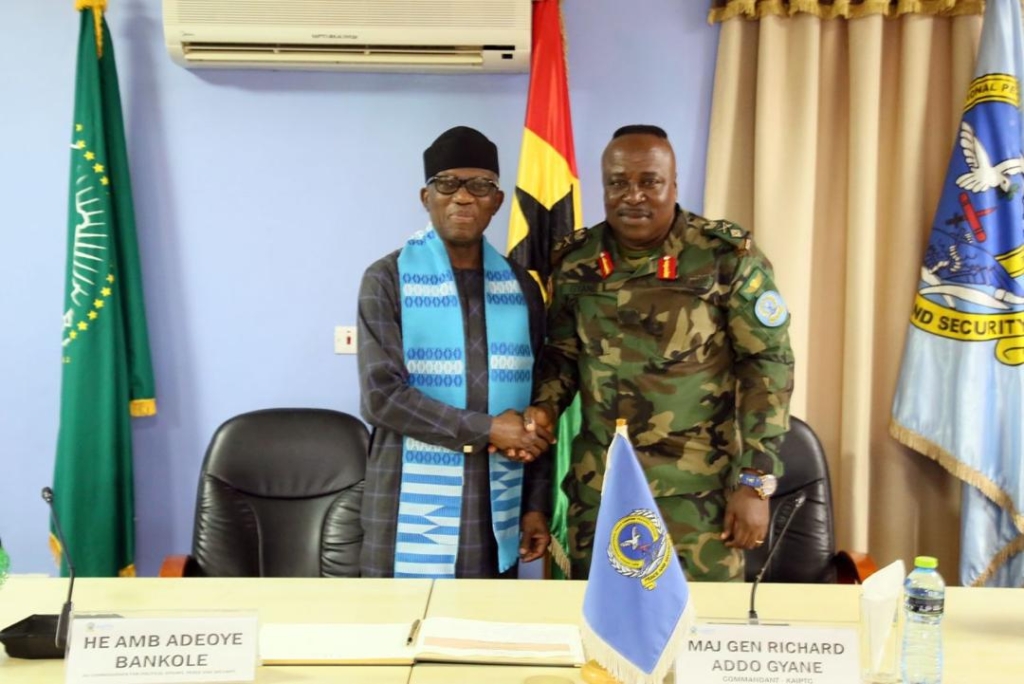
The African Union (AU) is directing its focus on new and emerging threats facing the continent, according to its Commissioner for Political Affairs, Peace and Security, Bankole Adeoye.
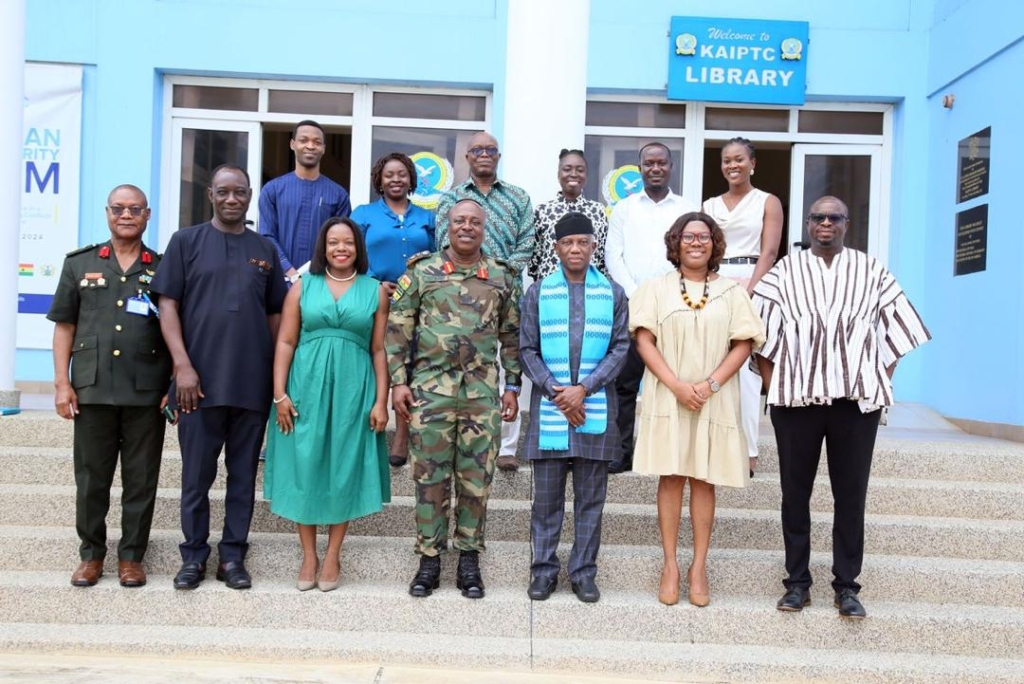
The Commissioner outlined the new key areas of focus as climate change, artificial intelligence, and the critical need for a functional early warning system, when he visited the Kofi Annan International Peacekeeping Training Centre (KAIPTC) in Accra to apprise himself of the operations of the Centre.
Emphasising the link between climate change and peace and security, Ambassador Adeoye highlighted the need to include peacebuilding discussions within the UN Framework Convention on Climate Change (UNFCCC) agenda, reiterating the AU's commitment to advocating for this critical connection.
He said, whereas there is some resistance in connecting climate change to peace and security on the continent, “We think it is still a very important conversation we must drive,” he said.
Ambassador Adeoye pointed to the devastation caused by Boko Haram in parts of Nigeria, where climate change has exacerbated the conflict.
“In many Boko Haram-affected areas of Nigeria, adults face a stark choice, either join the sect or flee, as livelihoods continue to decline due to the absence of farming activity,” Ambassador Adeoye bewail.
Early Warning System
The Commissioner also acknowledged the challenges in establishing a continental early warning system despite existing structures.
Highlighting a policy paper being developed with by the AU with the support of the UN to address this gap, the Commissioner said the focus on early warning by the AU reflects a commitment to preventing conflicts before they erupt.
"The Sahel situation is a stark reminder that even with warning signs, we haven't always been able to predict crises," the Commissioner said, emphasising the role KAIPTC could play in leveraging its research to push early warnings into concrete preventative actions.
Women, Youth and CSO’s
The Commissioner underscored the importance of women and youth in peace and security efforts, pointing to the low number of females in various positions and the ongoing efforts to get member states to appoint women to leadership roles.
He also said that the AU is introducing the AU Disarmament Fellowship programme as a new initiative aimed at building African expertise in disarmament issues, traditionally led by the international community.
Acknowledging the positive developments in AU election observation missions, with strong support from the European Union, Ambassador Adeoye stressed the crucial role of well-equipped Civil Society Organisations (CSOs) in ensuring credible elections.
Ambassador Adeoye while underscoring the importance of the newly operationalised AU Peace Fund in supporting these efforts, encouraged the KAIPTC to shift away from traditional peacekeeping missions towards more comprehensive peace support operations.
KAIPTC
The Commandant KAIPTC, Major General Richard Addo Gyane, in his remarks, highlighted the Centre's commitment to expanding its reach beyond the ECOWAS sub-region.
He acknowledged the Centre's current focus on the sub-region but emphasised ongoing efforts to broaden impact across Africa, stressing the need for AU support in running mobile training programmes throughout the continent.
Major General Addo Gyane also said that the KAIPTC recognising the importance of youth involvement in peace and security efforts has restructured its Women’s Peace and Security Institute to include the youth.
“Our Youth Unit is engaging the AU to not only support the development of national action plans on youth, peace and security (YPS) for member states that do not have such policies but also to facilitate the implementation of such plans by countries that have them in place”, he said, while expressing the hope that the Commissioner would lend his support towards the process.
The Acting Dean of the Faculty of Research and Academic Affairs of the KAIPTC, Dr. Kwaku Danso, emphasised the Centre's focus on practical applications of early warning systems.
The Centre, he said, collaborates with national actors and stakeholders to enhance conflict prevention efforts across the continent.
Dr Danso also pointed out that many conflicts erupt as micro disputes that escalate into macro conflicts arguing for the crucial role of indigenous conflict prevention frameworks in addressing these issues.
Recognising the value of Indigenous approaches, KAIPTC's existing Course on Conflict Prevention, Dr Danso said includes dedicated components on Indigenous approaches to preventing conflict in Africa.
Latest Stories
-
Nigeria says domestic gas supply surpasses 2 billion cubic feet per day, eyes further growth
1 hour -
Suspected Islamists kill Nigerian villagers collecting firewood
2 hours -
Kodua dismisses rift fears, says he and John Boadu are focused on NPP victory
2 hours -
Why Canada is preparing for a (long shot) US invasion
2 hours -
Dangote’s planned Kenya refinery faces legal challenge by consumer-rights group
2 hours -
Hawa Koomson stands by pepper spray plan, vows to bring rival on board
3 hours -
‘There is no competition’ – Justin Kodua confident of NPP General Secretary re-election
3 hours -
J100 Accra Doubles Champions : Kolesolva/ Ndukwa, Agarwal/Patel seal title victories
3 hours -
Sydney Wright crowned J100 Accra Champion
3 hours -
J100 Accra Boys’ Singles: Verma denies Beckles back-to-back titles to claim crown
3 hours -
Two friends fined GH¢12,000 for stealing
4 hours -
Son jailed for threatening to stab mother
4 hours -
Drive constitutional reform – GJA urges journalists
4 hours -
NPP Delagates Congress: Confusion delays voting at Ashanti Region TESCON centre
5 hours -
Fire ravages shops, houses near Koforidua Central Police Station
5 hours