

Audio By Carbonatix
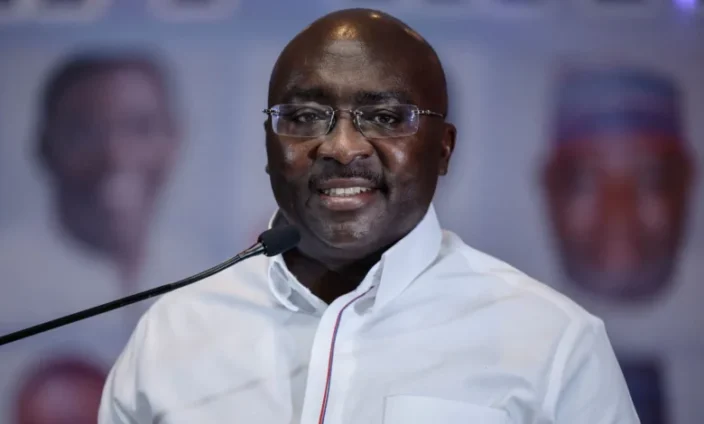
In a significant move widely being described by political observers as a major step towards internal cohesion, the Flagbearer of the New Patriotic Party (NPP), Dr. Mahamudu Bawumia, has appointed all four of his former presidential primary opponents as Co-Chairpersons of newly established party policy committees.
The decision, which has generated considerable discussion within political circles, forms part of a broader initiative by the NPP leadership to strengthen its policy development structure and reposition the party as a more research-driven and solution-oriented opposition force ahead of the 2028 elections.
Under the new framework, a central Policy Committee has been established to coordinate sector-specific working groups spanning key areas of national development, including employment, energy, education, health, transport, local governance, and security. The committee is chaired by Kojo Oppong Nkrumah, with Dr. Kwasi Nyame Baafi serving as secretary to ensure technical and administrative coordination.
The most notable aspect of the arrangement is the inclusion of Dr. Bawumia’s former internal competitors in senior policy roles. Kennedy Agyapong has been assigned to co-chair the Employment and Jobs Policy Committee, Kwabena Agyapong will serve on the Housing and Urban Development Committee, Bryan Acheampong takes a role on the Defence and Interior Committee, while Dr. Yaw Osei Adutwum will co-chair the Education Policy Committee.
Party insiders say the appointments are intended to harness the experience and influence of key figures within the party while reducing internal tensions following the primaries.
According to them, the move is aimed at transforming competition into collaboration within a unified policy direction.
A political analyst described the development as a strategic consolidation of party strengths, noting that each appointee brings a distinct support base and policy experience that could enhance the NPP’s overall organisational effectiveness.
The arrangement, he said, reflects a deliberate attempt to align individual influence with collective party goals.
The policy committees are expected to begin work immediately, engaging stakeholders and producing detailed proposals to serve as alternative policy options for national governance discussions.
Latest Stories
-
Putin warns West that Russia is ready to use every weapon to protect Kaliningrad
1 hour -
Mobile Money Fintech LTD, UMB train hairdressers and beauticians
3 hours -
OpenAI fires workers for mishandling ‘sensitive information’
4 hours -
What’s gone wrong at Nike? How the world’s sportswear giant lost its mojo
4 hours -
Carney pitches oil pipeline as a response to US-Canada trade war
4 hours -
Badenoch welcomes expanded grooming gangs inquiry
4 hours -
GACL MD sues Samuel Buabeng over alleged Facebook defamation
4 hours -
Asylum votes show people want help, says Kemi Badenoch
4 hours -
Christa Pike in critical condition after surviving two lethal injections, lawyer says
4 hours -
Kemi Badenoch backs face covering ban at protest
5 hours -
Man City not ‘above the rules’, says No 10 after backlash to Burnham remarks
5 hours -
Real Madrid submit ‘substantial’ dossier in Barca payments case
5 hours -
Messi completes purchase of second Spanish club
5 hours -
Government must engage horticulturists on tomato crisis – GhIH
5 hours -
King Promise’s ‘Can’t Tame Us’ becomes official Chelsea anthem
5 hours