

Audio By Carbonatix
In the long arc of Africa’s liberation, few struggles commanded as much continental solidarity as the fight against apartheid in South Africa.
From Ghana to Nigeria, from Tanzania to Zambia, independent African states, many newly freed themselves, committed scarce resources, diplomatic capital, and human effort to dismantle one of the most brutal racial regimes of the 20th century.
This history is not abstract. It is personal, lived, and documented in the lives of figures such as Nelson Mandela, Thabo Mbeki, and Steve Biko, leaders whose political formation was shaped, in part, by support networks across the continent.
Ghana, under its early post-independence leadership, became a hub for liberation movements, offering training, ideological grounding, and logistical support. Figures like Kojo Tsikata played key roles in coordinating and sustaining these efforts, often at high national cost.
African solidarity was not merely rhetorical. Countries such as Angola and Mozambique provided frontline bases for armed resistance movements. Zimbabwe and Zambia hosted exiled activists and political organizations, despite facing military retaliation from the apartheid regime.
Nigeria contributed financially, earning the nickname “the frontline state behind the frontline states” for its sustained funding of anti-apartheid efforts. Across the continent, ordinary citizens, students, workers, and intellectuals mobilized in protest, boycott, and advocacy.
These acts of solidarity were not confined to governments and elite actors. They lived in the everyday sacrifices of ordinary Africans. At Adisadel College in the late 1980s, a student named Mayor Agbleze reportedly made a striking personal protest: he refused to wear sandals for an entire academic year, walking barefoot as a symbolic act of solidarity with the imprisoned Mandela.
His vow was simple but profound: he would not resume wearing sandals until Mandela was free. Such gestures, though small in scale, reflected the depth of emotional and moral investment that many Africans placed in South Africa’s struggle.
The anti-apartheid cause was not seen as distant; it was felt as a shared African burden. This collective sacrifice culminated in moments of global significance, including the inauguration of Mandela in 1994, a ceremony attended by allies and supporters from across Africa, invited in recognition of their contributions to South Africa’s freedom.
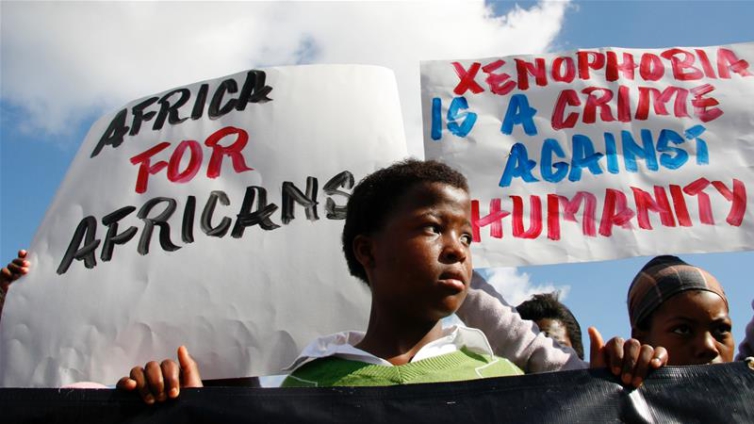
It is against this historical backdrop that recent waves of xenophobic violence in South Africa are particularly troubling. Attacks targeting African migrants, many of whom come from countries that once stood firmly behind South Africa’s liberation represent more than isolated acts of violence.
They signal a deeper erosion of historical memory and continental identity. To be clear, the socioeconomic frustrations driving these tensions such as high unemployment, inequality, and pressure on public services are real and deserve serious policy attention.
But directing anger toward fellow Africans risks compounding these challenges rather than resolving them.
There are also tangible costs. Economically, South Africa’s position as a regional hub depends on its openness to trade, labor, and investment from across the continent.
Xenophobic violence undermines investor confidence, disrupts small and medium-sized enterprises many of them migrant-owned, and weakens regional integration efforts under frameworks like the African Continental Free Trade Area.
Diplomatically, such actions strain relations with neighboring countries and erode South Africa’s moral authority as a champion of human rights, a role it has long claimed since the end of apartheid.
Socially, they fracture communities, fostering cycles of fear and retaliation that ultimately harm citizens and migrants alike.
Perhaps most significantly, xenophobia contradicts the very ethos that made South Africa’s liberation possible: the idea that African struggles are interconnected, and that progress for one nation advances the dignity of all.
History offers a powerful lesson here. Solidarity is not a one-time transaction; it is an enduring commitment. The support South Africa received was not contingent on future repayment, but it was grounded in a shared vision of continental unity and justice.
Reclaiming that vision requires more than condemning violence. It demands investment in education that preserves liberation history, leadership that speaks clearly against division, and policies that address economic grievances without scapegoating vulnerable populations.
South Africa remains one of Africa’s most influential nations economically, culturally, and politically. Its choices resonate far beyond its borders.
By reaffirming its commitment to pan-African solidarity, it can honour the legacy of those who stood with it in its darkest hours and ensure that history is not remembered as a bond broken, but as a foundation renewed.
Nuworza medo ooo
Latest Stories
-
Christian Council calls for protection of mission schools’ religious identity
12 minutes -
Mahama holds discussions with India’s External Affairs Minister
18 minutes -
Even when you cough, they come after you — Abanga accuses Mahama govt of criminalising free speech
24 minutes -
Mahama Ayariga proposes bank-adopted streets as part of stronger public-private partnership
32 minutes -
NPP will impose $500m bail bond on NDC offenders if we return to power — Abanga
39 minutes -
Gov’t begins 175-hectare Anunuso irrigation project to raise rice production
50 minutes -
Mahama Ayariga urges banks to take responsibility for beautifying public spaces
57 minutes -
I plan to secure 70 ‘orphan’ parliamentary seats for NPP — Abanga
1 hour -
Annoh-Dompreh brokers talks as Zoomlion pledges support for Adipa communities
1 hour -
Account for the old economy before selling us a new one
1 hour -
Abanga sets 4 million youth-vote target for Bawumia ahead of 2028 election
2 hours -
Gold edges lower with focus on Fed minutes, rate path clues
2 hours -
Oil prices rise as storms and air strikes threaten supply
2 hours -
Nigeria nears 2,000 repatriations from South Africa after latest evacuation flight
2 hours -
‘How can an office…close at 5pm?’ – Abanga questions 24-Hour Economy
2 hours