

Audio By Carbonatix
A new study by the Ghana Centre for Democratic Development has reignited calls for the election of Metropolitan, Municipal and District Chief Executives (MMDCEs), citing concerns over accountability and effectiveness in local governance.
The study, titled: “Resetting Ghana’s Local Governance System for Enhanced Effectiveness,” conducted in partnership with RISE Ghana and funded by the Foreign, Commonwealth and Development Office (FCDO), covered 24 Metropolitan, Municipal and District Assemblies (MMDAs) across 12 regions.
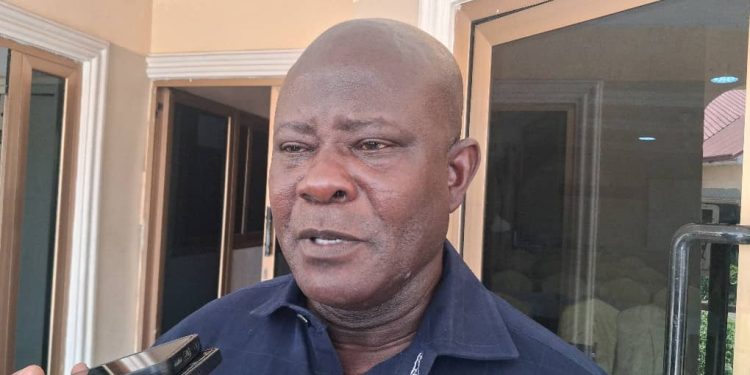
Speaking on the sidelines of a dissemination forum held in Bolgatanga, Mr Paul Nana Kwabena Aborampah Mensah, Programmes Manager at CDD-Ghana, said the findings strongly supported growing public demand for the election of MMDCEs on a non-partisan basis.
According to him, the research findings aligned with recommendations from the Constitutional Review Committee chaired by Professor H. Kwasi Prempeh, which also advocated electing MMDCEs, albeit through a phased approach.
“Across multiple studies by institutions such as CDD-Ghana, Afrobarometer and others, citizens continue to clamour for the election of MMDCEs as a way to enhance accountability at the local level,” he stated.
Mr Mensah explained that the current appointive system weakened accountability, as MMDCEs tend to be more answerable to the central government than to local residents whom they are supposed to serve.
The research findings further revealed that limited financial capacity remained a major constraint on effective local governance at the MMDAs level.
It recommended increasing the District Assemblies Common Fund from a minimum of five per cent to at least 10 per cent, while allowing assemblies greater discretion in the use of the funds based on their development plans.
In addition, the study called for the full devolution of staffing to assemblies, enabling them to recruit and manage their own personnel to improve discipline and performance.
Another major concern identified was the weak functioning of sub-district structures, including unit committees and area councils, and urged the government to invest in training, logistics, and better integration of these bodies into the local governance system.
He noted that structures such as town hall meetings, public relations and complaints committees, and information-sharing platforms, mandated under the Local Governance Act 2016 (Act 936), were largely ineffective or non-functional.
He warned that limited access to information not only hampered media work but also fuelled misinformation and public distrust.
“We are encouraging district assemblies to open up and deepen engagement with citizens and the media to ensure transparency and improve governance outcomes,” he said.
The forum brought together various stakeholders, including staff of selected district assemblies, youth and women groups, political parties, traditional leaders, assembly members, and the media, among others.
Latest Stories
-
Mr President, Ghana was mentioned at the UN; why aren’t we talking about it?
2 hours -
Accra to convene Africa’s regulators and markets on tokenisation at AVAS 2026
2 hours -
The Paradox of Plenty — When every smartphone becomes a newsroom
2 hours -
GTA sensitises taxi drivers in ‘Know Ghana’ tourism campaign
4 hours -
Archbishop Agyinasare calls for responsible speech amid growing social media abuse
4 hours -
‘It will be inexcusable for gov’t not to honour payment of teachers’ arrears by 30th October’ – Haruna Iddrisu
4 hours -
Forbes’ World’s Best Employers 2026: No Ghanaian firm ranked among 900 companies
4 hours -
Electronic processing of teachers’ data: ‘The decision is the Controller’s’ – GES boss
4 hours -
Teachers’ Strike: Haruna Iddrisu questions paper-based processing of promoted teachers’ data
4 hours -
Savannah Region: Kunfusi bridge collapses again, leaving nearly 4,000 residents cut off
4 hours -
Teachers’ strike: GES targets Monday deadline to submit promotion data to Controller
4 hours -
Inflation to average 11.3% in 2027 – Fitch Solutions
5 hours -
‘I didn’t campaign for NDC to come and do this nonsense’ – Kpebu on EOCO’s conduct
5 hours -
Fitch Solutions maintains policy rate forecast of 14% by December 2026
5 hours -
Diaspora Nasara Caucus congratulates Mohammed Ali Suraj, new NPP executives
6 hours