

Audio By Carbonatix
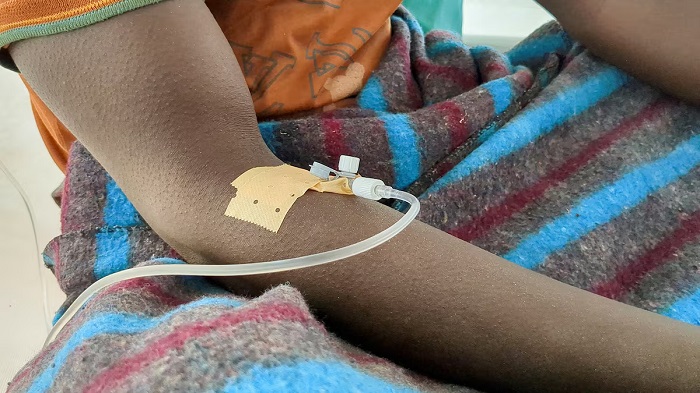
The Ghana Health Service (GHS) has issued an urgent public health alert warning the public of severe health risks associated with the ongoing rainy season.
GHS has cautioned that flooding, poor sanitation, and contaminated water are drastically increasing the vulnerability of communities to deadly waterborne outbreaks, including cholera, typhoid fever, and dysentery.
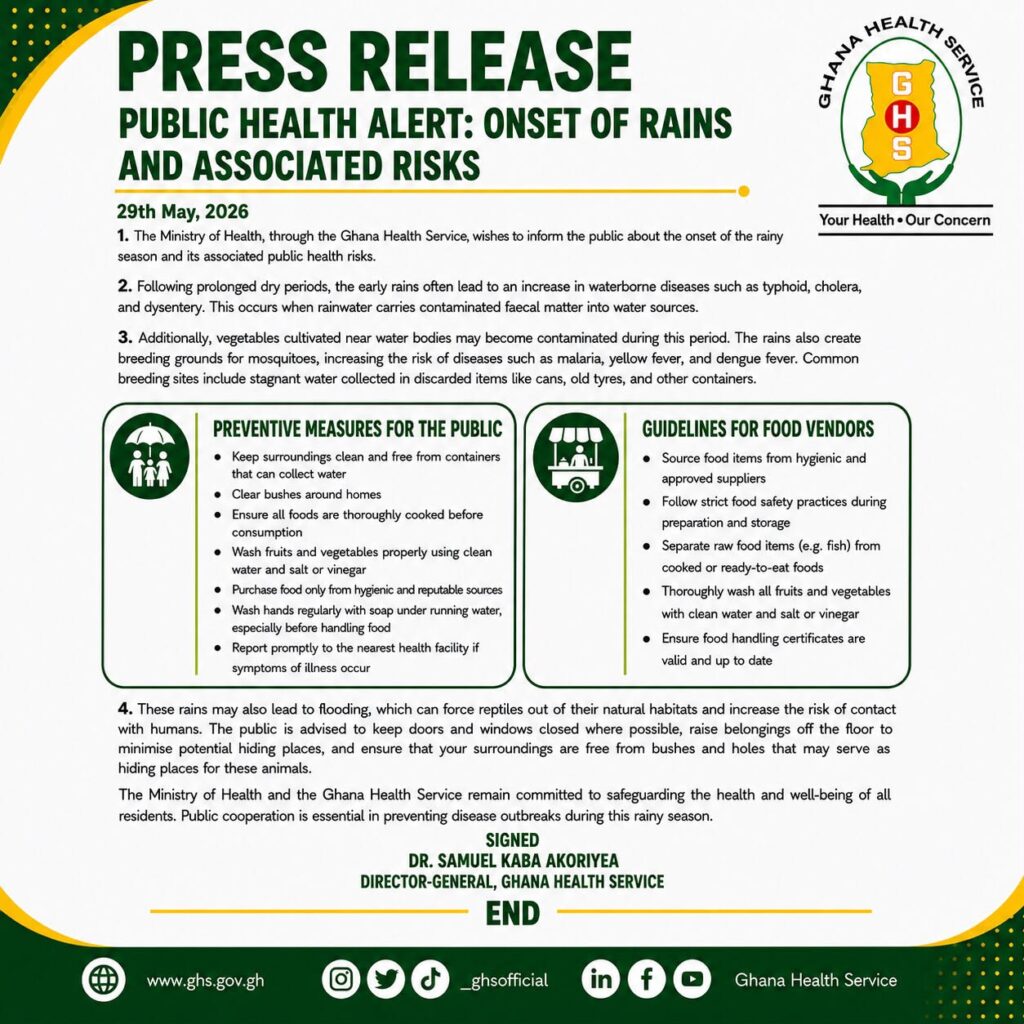
The directive, signed by the Director-General of the Ghana Health Service, Dr. Samuel Kaba Akoriyea, explains that early and prolonged rains frequently cause rainwater to carry contaminated faecal matter directly into local water sources. Additionally, the GHS noted that vegetables cultivated near water bodies risk contamination during this period.
Rising threat of deadly diseases and displaced wildlife
Beyond waterborne infections, the health authorities highlighted a sharp rise in breeding grounds for mosquitoes due to stagnant water collecting in discarded items like old tyres, cans, and open containers. This spike in the mosquito population poses an immediate risk of malaria, yellow fever, and dengue fever outbreaks across the country.
The press release also brought attention to an often-overlooked hazard: displaced wildlife. Severe flooding is forcing dangerous reptiles out of their natural habitats and directly into human settlements, significantly heightening the risk of venomous snakebites.
Preventive measures and critical guidelines
To combat these compounding hazards, the Ghana Health Service has outlined strict preventative measures for the general public and commercial food operators to safeguard national health:
For the general public:
- Keep all surroundings thoroughly clean and entirely free from empty containers that collect stagnant water.
- Clear bushes and overgrown vegetation around homes to remove hiding places for dangerous reptiles.
- Keep doors and windows closed where possible, and raise household belongings off the floor to minimise hiding spots for displaced snakes.
- Ensure all food is thoroughly cooked before consumption, and wash fruits and vegetables properly using clean water and salt or vinegar.
- Wash hands regularly with soap under running water, particularly before handling food, and report promptly to the nearest health facility if any symptoms of illness occur.
For food vendors:
- Source all food items strictly from hygienic and approved suppliers while maintaining valid, up-to-date food handling certificates.
- Adhere to rigorous food safety practices during preparation and storage, keeping raw food items like fish strictly separate from ready-to-eat foods.
- Thoroughly wash all fresh produce with clean water and salt or vinegar before processing or serving.
The Ministry of Health and the Ghana Health Service re-emphasised their commitment to safeguarding the health and well-being of all residents, stating that public cooperation and heightened alertness are absolutely essential to preventing catastrophic disease outbreaks during this rainy season.
Latest Stories
-
Obuasi SHTS scandal: Eduwatch calls for sex offenders’ register and mandatory background checks for teachers
3 minutes -
GloMeF CEO urges intensified public education on new road traffic regulations
14 minutes -
‘Any tax on ChatGPT is an attack on education and innovation’- Akim Swedru, MP
18 minutes -
Obuasi SHTS sexual abuse scandal exposes systemic failure in child protection – Moving Masculinity
18 minutes -
Hubtel CEO calls for national data-sharing framework to boost AI development
21 minutes -
Twelve Golden Rules of real estate development in Ghana, Africa
25 minutes -
Five new telephony cell sites in Ashanti Region to be activated in October 2026 – Sam George
26 minutes -
Mahama cuts sod for Afienya Industrial Park, targets 120 enterprises
31 minutes -
Rush for fuel from accident tankers is stealing, punishable by law – NPA boss, Edudzi Tamakloe
36 minutes -
GhIG pushes for legislation to regulate geoscientists’ activities
42 minutes -
Mfantsipim @150: Ace Anan Ankomah leads project to preserve school’s musical heritage
46 minutes -
Gov’t launches rCOMSDEP in Ahanta West, Mpohor Fiase to promote responsible community mining
48 minutes -
AI is forcing professionals to rethink how they deliver value – Hubtel CEO
51 minutes -
Daily Insight for CEOs: Strengthening the CEO’s Leadership Legacy
52 minutes -
Jimmy Aglah’s ‘When the River Testified’ approved by NaCCA as Supplementary Reader
1 hour