

Audio By Carbonatix
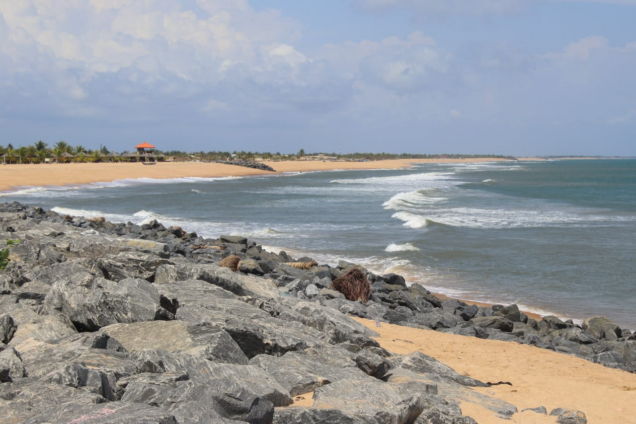
Frustration is mounting across Ghana’s coastal belt as citizens from vulnerable communities in the Volta and Greater Accra regions call on President John Dramani Mahama to urgently intervene and revive the stalled West Africa Coastal Area Resilience Investment Project (WACA ResIP 2).
They warn that the delay is pushing already fragile communities closer to the brink.
In a petition issued by Coastal CSOs Forum Sub-National Group on April 11 in the Volta Region, residents described the suspension of the project since 2025 as a devastating blow to years of hope built around a coordinated regional response to coastal erosion, tidal waves, and flooding.
Ghana joined the WACA ResIP 2 programme in 2022, with its official launch in August 2024 marking a significant step toward addressing the persistent environmental threats facing coastal populations.
The initiative was widely embraced as a transformative intervention—one that promised not only protection but a pathway to restoring dignity and stability for communities that have long endured the destructive force of the sea.
That sense of optimism was evident during the 2024 Hogbetsotso Festival in Anloga, where traditional leaders and local authorities actively championed the project, encouraging widespread community participation and ownership.
But what was once celebrated as a turning point has now become a source of deep anxiety.
Speaking on behalf of the group, a representative, Vance Kwaku Adedze, said the prolonged silence and lack of clarity surrounding the project’s status have left communities in distress and uncertainty.
“We are dealing with a very real and present danger,” he stressed. “For many of these communities, the sea is not a distant threat—it is at their doorstep. The delay in implementing WACA is not just a policy issue; it is a matter of survival.”
He noted that while government efforts to construct sea defence infrastructure in areas such as Amutinu, Blekusu, and Agavedzi are commendable, they were never intended to replace the comprehensive, multi-country framework that WACA represents.
“Those interventions are important, but WACA offers a broader, integrated solution. Losing momentum on such a programme undermines everything communities have invested in—both emotionally and practically,” Adedze added.
The group further warned that Ghana risks isolating itself from a wider West African effort to build coastal resilience, as countries like Togo, Benin, Senegal, and The Gambia continue to advance with implementation.
According to them, the delay contradicts the very essence of the regional collaboration model underpinning WACA.
They also expressed concern over the lack of transparency, revealing that even civil society organisations closely monitoring the programme have been unable to obtain concrete updates beyond indications that the project remains “under discussion by government".
Adedze cautioned that the consequences of inaction could be severe and far-reaching.
“Every delay increases the risk of irreversible damage—both to our ecosystems and to the livelihoods that depend on them. If this continues, we are looking at a future where entire communities could be displaced and critical economic activities wiped out,” he warned.
The group is therefore urging President Mahama to take immediate steps to remove any institutional bottlenecks hindering the project and ensure Ghana fulfils its commitments under the WACA programme, which was approved by Parliament.
They insist that reactivating the initiative is not only a matter of governance but a direct response to the voices of citizens who played a key role in shaping the project.
For many along Ghana’s coastline, the message is clear: the sea is advancing, and time is running out.
Latest Stories
-
Mahama honoured at 2026 World Health Summit in Berlin for global health leadership
2 minutes -
Breast cancer is not a death sentence – Besease Kontire Obaapanin, Magmina Foundation lead awareness campaign
4 minutes -
EcoBank invests in digital education of 4 Garisson School to mark 40 years in Africa
35 minutes -
AGI urges investment in skills and raw materials to strengthen local manufacturing
38 minutes -
GPL 2026/27: ‘We have to rectify our mistakes’ – Boadu reacts to Aduana FC defeat
39 minutes -
No disability access, no building permit – KMA declares
39 minutes -
Asantehene to lead environmental restoration effort at Jimi Land Reclamation Site
43 minutes -
Poor Ghanaians are being jailed because they cannot afford justice – Crime Check Foundation
44 minutes -
No conflict in appointing Emelia Agbenyo as Deputy EC Chair – NDC
45 minutes -
87-year-old man jailed 20 years for defiling 9-year-old girl at Ofankor
48 minutes -
Sankofa Gold targets 70kg output after 9-month shutdown
50 minutes -
Tamale, Bolgatanga had just one Legal Aid lawyer between them – Kwesimintsim MP
57 minutes -
PAC orders eviction of former irrigation company MD from official residence
1 hour -
Legal Aid Commission has offices in only 45 of Ghana’s 261 districts, needs 180 more staff
1 hour -
Challenging Heights welcomes Ghana’s Tier 1 ranking, calls for more anti-trafficking funding
1 hour