

Audio By Carbonatix
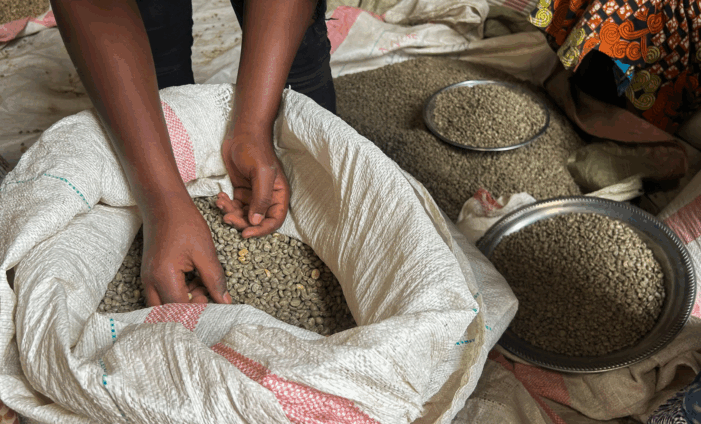
In the lush highlands of eastern Democratic Republic of Congo, coffee crops are rotting and withering as an escalation in the decades-long conflict in the region has kept farmers from tending to their land this year.
Fighting between the government and Rwanda-backed M23 rebels escalated at the start of the year as rebels seized major cities in North and South Kivu provinces, prime coffee-growing areas known for their high-quality Arabica beans.
The latest hostilities have killed thousands and displaced hundreds of thousands more, including farmers. They have also blocked export routes, threatening to curtail what had been a remarkable recovery for the nation's coffee industry following years of decline.
Coffee bean production in Congo topped 100,000 metric tons a year in the late 1980s, according to U.N. data, but fell sharply in the 1990s as DRC forces and other armed groups fought in devastating wars rooted in Rwanda's 1994 genocide.
Output climbed again in the past decade, reaching just over 62,000 tons in 2023, the U.N. data shows.
Cooperatives like SOPACDI in South Kivu province were getting international recognition for their quality beans, and improvements had been made in production methods and in deepening global market connections.
Now those gains are under threat.
At the state-run coffee factory in Bukavu, the South Kivu capital, rows of drying beds laid empty during a Reuters visit earlier this month.
François Kambale Nzanzu, the director of the state agriculture office that oversees exports, said that while coffee trees flowered abundantly this year, fighting and banking disruptions have hit exports.
"We had a lot of coffee, but there weren't many exporters this year," Nzanzu said.
In Muganzo, also in South Kivu, farmer Mudekereza Kashugushu Celestin surveyed the sorry state of his plantation, where fallen trees and shrivelled beans littered the ground.
"There's nothing left of the coffee I had. Even those that remain are already rotten and dry," he said.
The damage has left him struggling to support his family and pay his children's school fees.
"I used to harvest $300 worth of coffee each year, but this year I only got $50," he said.
Latest Stories
-
Power restoration fault suspected in Kumasi Central Market fire
4 hours -
The 7-foot giant of Ngleshie Amanfro: Seven-foot Ghanaian Ephraim Saawa dreams of joining the national basketball team
5 hours -
Government promises support for Kumasi Central Market fire victims
5 hours -
Vibes The Movie: Big Ghun’s Ghanaian film earns five nominations at 2026 REFFA
5 hours -
MamaCare CEO warns unresolved conflicts among health workers could undermine maternal and neonatal care
6 hours -
Health professionals urged to translate medical knowledge into practice to save mothers
6 hours -
Conflicts among care providers linked to maternal, neonatal deaths – Expert
7 hours -
GIS marks 10th TIME conference, champions improved teaching practices
7 hours -
BRICS Or Balance? What Ghana’s bid really means
8 hours -
GPRTU wants full TRAFFITECH-GH implementation to start in 2027
8 hours -
Mahama announces plans to import electric wheelchairs for PWDs
8 hours -
KGL U17 Colts 2026: Western beat Prempeh Elite Academy to set up final final with Greater Accra Region
8 hours -
Late Solanke strike salvages 10-man Spurs draw at Man United
9 hours -
Gender Ministry to monitor welfare of Nana Akua Addo’s children amid domestic violence case
9 hours -
Benedict Okyere Yeboah: Ghana’s football problem goes beyond sacking a coach
9 hours