

Audio By Carbonatix
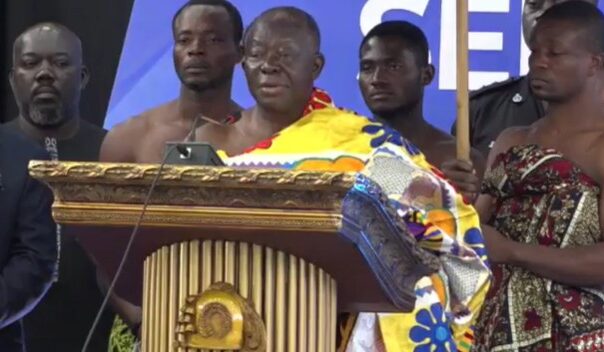
The Asantehene, Otumfuo Osei Tutu II, has called for deeper collaboration between Ghana's judiciary and the institution of chieftaincy to ensure the timely resolution of chieftaincy disputes and strengthen public confidence in the administration of justice.
He said although Ghana's constitutional framework firmly entrenched the institution of chieftaincy within the country's governance architecture, unresolved jurisdictional challenges and prolonged litigation continued to undermine effective traditional leadership in many communities.
Delivering a keynote address at the Supreme Court's 150th Anniversary Celebrations and Lecture Series in Kumasi on Thursday, July 16, the Asantehene stressed that the institution of chieftaincy was not a relic of Ghana's past but a constitutionally protected institution with clearly defined legal status.
"Article 270 guarantees the institution of chieftaincy, together with the traditional councils, as established by customary law and usage, and expressly forecloses Parliament from legislating in a manner that detracts from or derogates from the honour or dignity of the institution."
He added:
"So, my Lord Chief Justice, this must serve as a notice to all persons, especially those of the Bench and Bar, that the Nananom are intimately familiar with the laws that concern the institution of chieftaincy."
Constitutional pillar
The Asantehene said the Constitution places the institution of chieftaincy alongside other key institutions of state, making it an integral component of Ghana's democratic governance.
"The institution of chieftaincy is therefore not merely tolerated by our modern constitutional order. It is entrenched within it and recognised as a coequal pillar of our governance architecture."
READ ALSO: There are no family allodial lands in Asanteman — Otumfuo cautions family claiming KNUST lands
He explained that while constitutional recognition had provided a firm legal foundation for chieftaincy, practical questions relating to customary law and jurisdiction continued to require careful interpretation.
According to him, traditional councils, judicial committees of the Houses of Chiefs and the Supreme Court all have distinct but complementary responsibilities in the adjudication of chieftaincy matters.
"It has fallen to the traditional councils, judicial committees of the Houses of Chiefs, and ultimately to the Supreme Court to give that recognition practical effect, each acting within its constitutional mandate."
He urged the courts to continue exercising institutional restraint by recognising the unique expertise of traditional authorities in matters of customary law while remaining vigilant in protecting constitutional rights.
The Asantehene said the judiciary should demonstrate "institutional humility" by deferring to those who possess inherited knowledge of customs where appropriate, while intervening whenever fundamental rights were implicated.
Concern over delays
Otumfuo Osei Tutu II expressed concern about the persistent delays in determining chieftaincy disputes, saying some cases had remained unresolved for generations, leaving communities without substantive traditional leadership.
He warned that prolonged litigation not only affected governance at the local level but also eroded public confidence in both the judicial system and traditional institutions.
"We must be candid, though, about the strains in this relationship. Delays in resolving chieftaincy disputes, some spanning generations, have at times undermined public confidence and left communities without settled leadership for unconscionably long periods."
He further pointed to recurring jurisdictional overlaps between the regular courts and the judicial committees of the Houses of Chiefs, saying such uncertainties often generated avoidable and protracted litigation.
"Overlapping and occasionally uncertain jurisdictional lines between regular courts and judicial committees continue to generate satellite litigation."
Common constitutional purpose
Despite the challenges, the Asantehene said the difficulties should not be viewed as institutional failings but rather as the natural evolution of two longstanding systems of justice working within a common constitutional framework.
"These are not indictments of either institution. They are the inevitable growing pains of two systems of authority still learning fully to speak one constitutional language."
He called for sustained dialogue, mutual respect and closer institutional cooperation between the judiciary and traditional authorities to ensure that both systems complement each other in delivering justice.
Anniversary celebration
The Supreme Court's 150th Anniversary Celebrations and Lecture Series brought together judges, traditional rulers, lawyers, academics and public officials to reflect on the historical evolution of Ghana's apex court and its relationship with the institution of chieftaincy.
The lecture examined the role of both institutions in promoting the rule of law, constitutional governance and peaceful dispute resolution.
Latest Stories
-
Second edition of Prince Amoako Jr giveback project scheduled for December
5 seconds -
Muntaka commissions polyclinic at Ayigya Zongo to address healthcare challenges
7 minutes -
World Habitat Day: Adequate housing for all – a right we must build
9 minutes -
Ghana Institute of Architects urges government to adopt coordinated agenda for affordable housing
9 minutes -
Yutong bus extensively damaged by fire at Gbogdaa
10 minutes -
Spanish PM Sánchez calls early election after housing protests
16 minutes -
GH¢3,000 monthly allowances for Paramount Chiefs and Queen Mothers fully paid – Ayariga
16 minutes -
Government disbursed over GH¢5bn to MMDAs in 2025- Ayariga
16 minutes -
Teachers’ strike: Abosamso queenmother, assemblyman take over classroom
19 minutes -
GPL 2026/27: Tanko, Agyemang shortlisted for September Coach of the Month award
25 minutes -
Mahama directs creation of Local Government TV – Ayariga
26 minutes -
GPL 2026/27: Amankona, Gyamfi Junior and four others nominated for September Player of the Month award
30 minutes -
Government to remodel 24-hour markets, rename project District Model Markets – Ayariga
34 minutes -
June 29 floods exposed weaknesses in Ghana’s environmental sanitation system – Ayariga
40 minutes -
Local Gov’t Minister announces plans to regenerate Agbogbloshie enclave
45 minutes