

Audio By Carbonatix
As healthcare systems across North America and Europe grapple with rising chronic disease rates, ageing populations, and persistent workforce shortages, experts are increasingly pointing to the growing contribution of African healthcare professionals as a critical factor in sustaining quality care delivery.
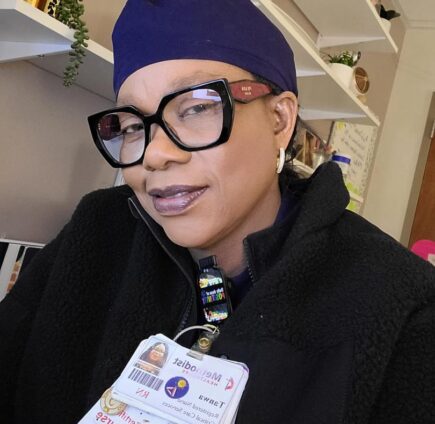
These issues were at the centre of a virtual interview with healthcare professional and innovator Tanwa Sola Lawal, who discussed the evolving healthcare landscape in the Western world and the expanding role Africans are playing in addressing some of its most pressing challenges.
According to Lawal, the conversation around healthcare in developed nations is no longer limited to medical advancements alone. Instead, healthcare leaders are being forced to confront growing rates of cardiovascular disease, diabetes, respiratory illnesses, and other chronic conditions that continue to place immense pressure on hospitals and healthcare workers.
“Healthcare systems today are managing a level of complexity that requires more than clinical expertise,” Lawal said. “The challenge is not simply treating diseases; it is ensuring that healthcare delivery remains coordinated, responsive, and sustainable.”
Lawal noted that African healthcare professionals have increasingly become part of that solution. Across hospitals, research institutions, and healthcare organisations, African physicians, nurses, administrators, and innovators are helping strengthen patient care and operational efficiency.
“The contribution of African professionals extends far beyond filling workforce gaps,” he stated. “Many are helping introduce new perspectives on patient management, healthcare coordination, and quality improvement.”
The discussion also highlighted the importance of innovation in modern healthcare environments. Lawal emphasised that effective healthcare systems must combine clinical excellence with technologies and operational frameworks that improve communication, decision-making, and patient outcomes.
“The future of healthcare will belong to systems that successfully integrate people, processes, and innovation,” he said. “No nation can address today's healthcare challenges in isolation.”
As disease patterns continue to evolve globally, experts believe international collaboration will become increasingly important. For Lawal, the growing influence of African healthcare professionals represents not only a workforce trend but a broader shift toward a more interconnected global healthcare ecosystem.
“The healthcare challenges facing one region ultimately affect us all,” he concluded. “The solutions must be equally global.”
Latest Stories
-
GPL 2026/27: Medeama go top after win over Port City
3 minutes -
Manhyia South MP Baffour Awuah reports himself to EOCO after arrest warrant
14 minutes -
Ghana records 11 cocaine cases in 28 drug busts since March 2025; biggest hauls seized abroad
16 minutes -
The numbers behind Carlos Queiroz’s tenure as Black Stars boss
24 minutes -
The man who saw tomorrow: How Dr Bawumia built for Ghana what America and Nigeria are building today
50 minutes -
Kumasi drivers demand price controls for goods, brand some traders as real ‘Kalabule’
54 minutes -
Consumer Protection Agency commends FDA for destroying illegal bales of diapers
57 minutes -
GNFS rescues stranded persons after flooding in Hohoe
1 hour -
Baffour Awuah deliberately refused to honour EOCO invitation – Deputy AG, Srem-Sai
2 hours -
‘Believe in these players’ – Carlos Queiroz tells Ghanaians after leaving Black Stars job
2 hours -
Gideon Boako: GoldBod books must be stretched to establish true nature of reserves support
2 hours -
ECG announces planned maintenance outage in parts of Accra on Friday
2 hours -
Carlos Queiroz sacked as Black Stars head coach
2 hours -
Parliamentary Sports Committee to ‘interrogate’ Black Stars struggles with Ministry, GFA invitations
2 hours -
Asutifi North Police arrest 7 in crackdown on suspected drug activities
2 hours