

Audio By Carbonatix
There is something fascinating about politics. It possesses a supernatural ability to develop amnesia exactly when memory is most needed.
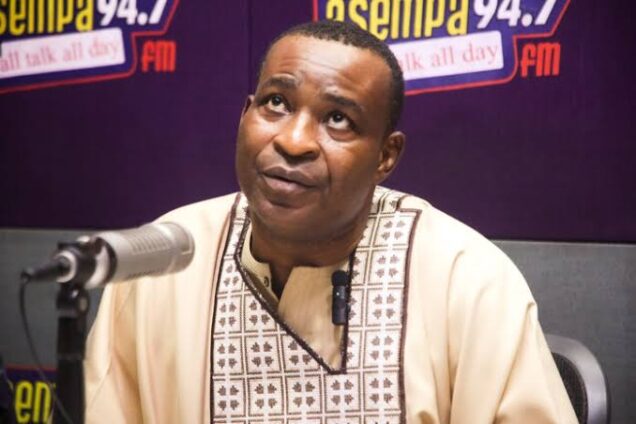
The New Patriotic Party has reportedly convened an emergency meeting following the conviction and sentencing of its Ashanti Regional Chairman, Bernard Antwi-Boasiako, popularly known as Chairman Wontumi.
Emergency meeting.
Wonderful.
But one cannot help asking: Emergency for what?
To discuss the judgment?
To discuss the sentence?
Or to discuss how everyone suddenly became surprised?
Because if this meeting is about expressing shock, then Ghana may have just discovered the eighth wonder of the world.
The Samreboi case did not begin yesterday. It did not begin last week. It did not even begin this month. The prosecution, witnesses, legal submissions and adjournments unfolded in open court over many months before judgment was delivered.
So, permit a few uncomfortable questions.
Is the NPP saying it had absolutely no idea where the case was heading?
Is the party saying it never appreciated the gravity of the allegations until the judge finished reading the verdict?
If that is the case, then perhaps the only people paying attention were the prosecution, the defence lawyers and the journalists.
Everyone else must have been watching football.
Then comes another question.
Did nobody within the political establishment ever ask how mining concessions were being managed?
Did nobody think the regulatory institutions charged with supervising Ghana's mineral resources should be answering difficult questions too?
Leadership is not only about celebrating success. It is also about accounting for failure.
When something goes wrong on this scale, accountability should travel further than one individual.
Yet our politics has perfected a remarkable tradition.
When there is victory, everyone wants to stand on the stage.
When there is accountability, suddenly everyone develops selective distance.
"This is his personal matter."
Interesting.
But was his influence also personal when campaign platforms were shared?
Was it personal when political capital was accumulated?
Was it personal when endorsements were exchanged?
Power, it seems, has many parents.
Responsibility is always an orphan.
Which brings us back to this famous emergency meeting.
Why now?
Why wasn't there an emergency meeting while the trial was progressing?
Why wasn't there an emergency meeting when the court first heard evidence?
Why wasn't there an emergency meeting when judgment was scheduled?
Why only after the sentence?
One is tempted to conclude that this is not an emergency meeting.
It is an emergency reaction.
A political fire extinguisher brought in after the building has already caught fire.
Of course, every convicted person has the constitutional right to appeal, and that right must be respected.
That is how the rule of law works. But appeals do not erase today's reality.
Today's judgment exists. Today's conviction exists. Today's political questions exist.
Perhaps the greatest lesson is not about one politician.
It is about power itself.
Power has a dangerous habit of convincing people that consequences are for ordinary citizens.
It whispers that influence is immunity.
It promises that connections can substitute for accountability.
Until one day, a courtroom quietly reminds everyone that offices are temporary, titles are temporary, motorcades are temporary, applause is temporary and political popularity is temporary.
The law, however imperfectly applied, has a habit of eventually demanding an answer.
This moment should prick the conscience of everyone who currently occupies public office.
Cabinet ministers.
Chief executives.
Board chairpersons.
Regulators.
Party executives.
Public servants.
The question is no longer whether power can be abused.
History has answered that repeatedly.
The only remaining question is whether those entrusted with power will finally learn that public office is a stewardship, not a licence.
Because when power becomes arrogance, and accountability becomes an afterthought, the courtroom eventually becomes the most important meeting room of all.
And unlike political meetings, court sittings rarely begin with applause.
Latest Stories
-
Let The Constitution direct Chieftaincy to deliver “All Development Is Local”
1 hour -
John Jinapor outlines renewable energy, nuclear power priorities for 2027
2 hours -
Ghana explores centre of excellence for hearing, communication and cochlear implant care
3 hours -
Schizophrenia-related disorders lead mental health cases recorded in Ghana
3 hours -
Dutch authorities enlist Ghana in hunt for fugitive drug lord Bolle Jos
3 hours -
Ghana housing finance conference adopts communiqué to improve affordable housing access
8 hours -
Special Initiatives Minister urges Wa Technical Institute to enrol more girls as EU-backed solar training lab opens
8 hours -
In the matter of my first year at the Bar
8 hours -
ActionAid Ghana calls for an end to child marriage, greater investment in girls’ rights
8 hours -
Newsfile to tackle World Cup visa scandal, beach demolitions, education strikes, BRICS bid
9 hours -
UK-Ghana Trade & Investment Summit: Trade Resource Centre to help businesses maximise UK-Ghana trade opportunities
9 hours -
Embassy of Denmark celebrates World Maritime Day
9 hours -
Linking LEAP to productive inclusion could cut extreme poverty by 2030 – UNICEF
10 hours -
Trade Ministry backs use of creative arts to rehabilitate prison inmates
10 hours -
Negotiations with government to continue despite strike suspension – GNAT
10 hours