

Audio By Carbonatix
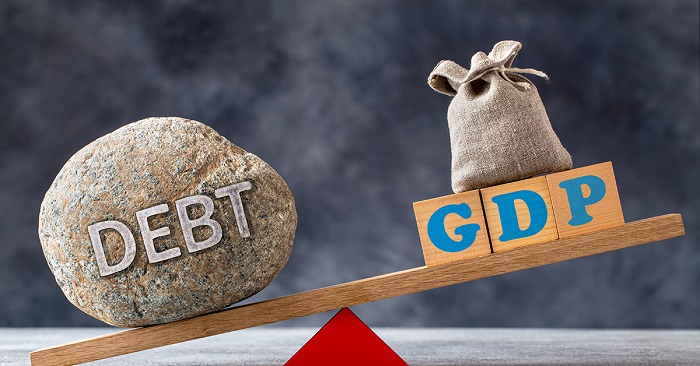
Ghana cannot borrow more than $250 million in external loans—including commercial loans—in 2025, under a borrowing cap as part of a Memorandum of Understanding (MOU) with its Official Creditor Committee (OCC).
The borrowing cap is now a structural benchmark under the International Monetary Fund (IMF) programme, allowing the Fund to monitor and assess Ghana’s compliance annually. The MOU, signed by all participating creditor countries, paves the way for bilateral agreements to enforce the $250 million disbursement limit.
The limit is part of Ghana’s broader debt restructuring efforts following its 2022 suspension of external debt servicing. It also coincides with the country’s ongoing Eurobond restructuring, where the government is swapping $13.1 billion in outstanding Eurobonds for new notes.
With the borrowing ceiling in place, the Ministry of Finance is working with bilateral creditors to prioritise funding for ongoing projects. Government agencies have been instructed to exclude externally funded capital expenditure (CAPEX) from their 2025 budgets until the Ministry finalises its project priority list.
The cap poses a challenge for the new National Democratic Congress (NDC) administration, which campaigned on ambitious infrastructure promises while managing substantial restructured debt obligations. With Ghana’s local bond market still recovering from the domestic debt exchange, treasury bills remain the government’s main financing option—but elevated interest rates continue to weigh on public finances.
Speaking to Bloomberg at the Munich Security Conference in February 2025, President John Mahama intimated his government does not plan to extend the IMF program beyond its scheduled conclusion in May 2026. An extension would further limit public spending, making it harder to deliver on flagship projects.
Meanwhile, Ghana continues to engage commercial creditors, including Eurobond holders, to finalize restructuring deals aligned with the comparability of treatment principle—ensuring all creditors share the burden of providing debt relief.
Latest Stories
-
Banks NPL ratio of 16.1% is still too high – S&P
21 minutes -
Guidelines, regulations of cryptocurrency in Ghana fall short of comprehensive oversight – IMF
55 minutes -
COCOBOD’S GH¢16.3bn SPV: Real progress toward a sustainable cocoa sector
1 hour -
Ghana lose Morocco friendly as Atlas Lions turn to Mali
3 hours -
Burnham ‘really concerned’ if Man City owners sell up after rule breaches
3 hours -
2026/2027 GPL: Kelvin Nkrumah strike sends Medeama top of league table
3 hours -
Punish Manchester City this season, say other club chiefs
3 hours -
Emmanuel City crowned champions of maiden Global Game Scouting Tournament
3 hours -
MPship should not shield anyone from arrest – Felix Ofosu-Kwakye
4 hours -
Thomas Partey loses father Jacob Teye Partey
4 hours -
Gov’t rejects Baffour Awuah ‘kidnap’ claims, says EOCO officer was lawfully executing arrest
4 hours -
Martin Kpebu explains when EOCO can arrest Manhyia South MP after securing court warrant
4 hours -
EOCO’s reasons for seeking Manhyia South MP arrest warrant not justified – Kpebu
4 hours -
MTN Ghana warns SMEs against sharing PINs amid digital fraud risks
4 hours -
Yendi nursing students warn restricted access to skills lab could affect their training
4 hours