

Audio By Carbonatix
The Ministry of Gender, Children and Social Protection and the United Nations Population Fund (UNFPA) have warned that female genital mutilation (FGM) remains a serious and evolving concern in Ghana, despite significant progress made over the past three decades.
In a joint statement issued on Thursday, 6 February 2026, to mark the International Day of Zero Tolerance for Female Genital Mutilation, the two institutions stressed that the harmful practice continues to violate the fundamental rights of women and girls and poses long-term risks to their health, safety and dignity.
“Female Genital Mutilation is neither a cultural rite nor a private family practice. It is a violation of the fundamental rights of women and girls and tends to cause irreversible harm to life, health, and freedom from cruel treatment,” the statement said.
The Ministry and UNFPA recalled that Ghana took a decisive stand against FGM more than 30 years ago, criminalising the practice in the mid-1990s and strengthening the law through subsequent amendments. These legal measures, they noted, contributed to a marked decline in prevalence and sent a clear signal that violence against girls, even when justified as tradition, would not be tolerated.
However, the statement cautioned that legislative success has also produced new and complex challenges, particularly the cross-border practice of FGM.
“Rather than abandoning FGM, babies and girls are taken across the national borders into neighbouring countries to evade Ghana’s legal framework,” the statement noted, adding that this shift has pushed the practice into secrecy, complicated enforcement and exposed girls to even greater danger.
According to the Ministry and UNFPA, FGM remains most persistent in parts of the Upper East, Upper West, Savanna and Bono Regions, especially in border districts where family ties and social norms extend beyond Ghana’s boundaries. Girls from households affected by poverty, migration, displacement or limited access to education are said to face heightened risk.
Placing Ghana’s situation within a global context, the statement revealed that more than 230 million girls and women worldwide are living with the consequences of FGM. It warned that without renewed political commitment and investment, an additional 23 million girls could be subjected to the practice by 2030.
“For Ghana, these figures serve as a stark warning that the gains achieved over the past 30 years are fragile and reversible,” the statement said, underscoring the urgent need for national action involving traditional and religious leaders, civil society organisations, development partners and citizens.
Reflecting on this year’s theme, “Towards 2030: No End To Female Genital Mutilation without Sustained Commitment And Investment,” the Ministry and UNFPA emphasised that legal reform alone cannot end the practice.
“Lasting change requires continuous engagement with communities, traditional and religious leaders, civil society organisations, health workers, educators, and law enforcement agencies,” the statement said, stressing the importance of predictable and flexible funding to sustain prevention, protection and response efforts.
To address emerging risks, the Ministry said it is working with UNFPA and other stakeholders to strengthen community-based surveillance in high-risk areas, expand safe spaces for girls and integrate FGM prevention into education, sexual and reproductive health services and child protection programmes. Efforts are also underway to improve cross-border collaboration and information-sharing to prevent girls from being taken outside Ghana for FGM.
The Ministry of Gender, Children and Social Protection reaffirmed its commitment to enforcing the law while deepening engagement with affected communities to prevent and protect vulnerable girls from harmful practices.
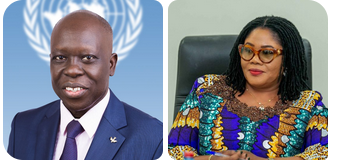
UNFPA’s Country Representative, Dr Wilfred Ochan, also highlighted the need to safeguard national progress.
“Ghana has made remarkable progress over the past three decades, but continued coordinated efforts from all stakeholders, particularly affected communities, are essential to sustain the progress,” he said.
As Ghana joins the global community to mark the International Day of Zero Tolerance for Female Genital Mutilation, the Ministry and UNFPA urged the public to recognise FGM as a present and evolving risk rather than a practice of the past.
“Ending FGM requires stronger cross-border cooperation, consistent funding for community-led initiatives, and active participation from families, professionals, traditional leaders, and young people,” the statement said, adding that every action taken today strengthens protection for girls and brings Ghana closer to a future free from female genital mutilation.
Latest Stories
-
Nearly 400 sentenced in Nigeria for links to militant Islamists
3 minutes -
Ghana’s recovery supported by gold strength despite global oil price pressures – Standard Bank Research
10 minutes -
Kwaku Azar writes: A-G vs OSP
43 minutes -
Mfantsipim–Adisadel rivalry built excellence, not division – Sam Jonah
1 hour -
Vice President launches Mfantsipim’s 150 years of shaping Ghana’s greatest mind
1 hour -
I assure Otumfuo, Mahama will join him to commission KNUST Teaching Hospital by end of this year – Haruna Iddrisu
2 hours -
Barcelona dominate derby to extend La Liga lead
2 hours -
Gov’t to roll out free special education for persons with disabilities from July 1 – Education Minister
2 hours -
Importers and Exporters Association declares full support for Publican AI port system
3 hours -
“We used it to test our officiating officials’ readiness” – Bawah Fuseini after CAA Athletics event
3 hours -
Volleyball emerges as Ghana’s fastest rising sport
3 hours -
National Sports Fund needs strong leadership from the top – Administrator David Wuaku
3 hours -
JoySports Exclusive: Steve McLaren in talks with GFA after expressing interest in Black Stars job
3 hours -
Fire guts auto parts warehouse at Bubuashie, one fire officer injured
4 hours -
I owe my victory to coach Ofori Asare – Allotey after winning WBA Africa Gold Super Flyweight belt
4 hours