

Audio By Carbonatix
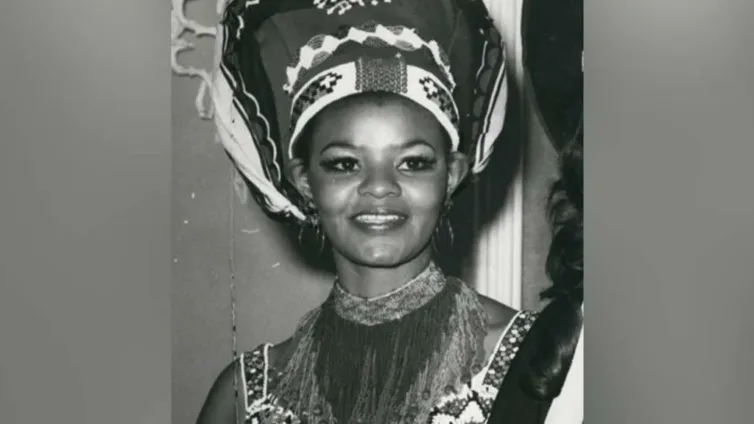
South Africa mourns the passing of Cynthia Shange, a towering figure in the nation’s cultural and political history who rose to fame as a beauty queen during the height of the apartheid era. The celebrated actress died at age 76. Her daughter, Nonhle Thema, confirmed the news on Monday. Thema described her mother as "a graceful and compassionate soul whose presence brought warmth, dignity, and kindness to all those who knew her." The death occurred early Monday morning in a hospital following a period of illness.
Breaking Racial Barriers at Miss World
Shange earned international recognition in 1972 as the first Black woman to represent South Africa at the Miss World pageant. During this era, the racist system of apartheid prohibited Black women from competing in the official Miss South Africa competition. Black South Africans organised parallel events like Miss Africa South to showcase their own talent. Shange won this title and travelled to London to compete on the global stage. She placed fifth in the competition while competing alongside a white South African participant. While she was the first Black woman to represent the nation, she followed Pearl Gladys Jansen, who competed in 1970 under the apartheid "Coloured" racial classification.
Redefining Black Identity Under Apartheid
Her presence in London served as a profound act of political and social defiance. "Ms Shange was more than an actress - she was a cultural pioneer, a trailblazer, and a powerful symbol of African excellence at a time when the dignity and humanity of Black South Africans were systematically denied under apartheid," stated South African parliamentary leaders. Her success challenged the racial hierarchies of the 1970s. It provided a rare moment of visibility for Black South Africans in a world that often sought to marginalise them. Born in Lamontville, Durban, she used her platform to demonstrate that Black womanhood was powerful and worthy of global recognition.
A Decades-Long Legacy in Film and Television
Following her success in pageantry, Shange transitioned into a formidable career in the performing arts. She starred in Udeliwe, which is widely regarded as one of the first feature films produced for Black South African audiences. Her work in the acclaimed historical drama Shaka Zulu further cemented her status as a household name. More recently, she was beloved for her role as MaNkosi in the long-running drama Muvhango. In 2024, she received the Lifetime Achiever award at the KZN Simon Mabhunu Sabela Awards. This honour recognised her enduring contributions to the South African film and television industry.
A Legacy Resonating Across the Continent
Shange’s story finds a deep echo in Ghana and across West Africa, where the themes of pan-Africanism and the reclamation of Black identity have long been central to the national narrative. Just as Ghana led the continent toward independence, Shange’s 1972 breakthrough in London served as a victory for African representation globally. Her career in cinema, particularly in Shaka Zulu, connected South African history with the broader African audience, fostering a shared cultural pride that transcends borders. For fans in Accra and beyond, she remains a testament to the power of using the arts as a tool for continental dignity.
Tributes from the State and Family
Government officials have expressed deep sorrow over the loss of a national icon. National Assembly Speaker Ms Thoko Didiza and NCOP Chairperson Ms Refilwe Mtshweni-Tsipane extended their condolences. They noted that "her presence on that stage asserted the beauty, worth, and humanity of Black women in a society that sought to erase them." Thema requested privacy for the family as they navigate this transition. "We honour her journey, her strength, and the love she shared so generously," Thema wrote.
Shange’s transition from a beauty icon to a veteran of the arts solidified her role as a mentor for younger generations. By successfully navigating the systemic barriers of both the apartheid era and the evolving modern industry, she remained a steady symbol of grace and resilience. Her legacy stands as a bridge between South Africa’s painful past and its vibrant, expressive present.
Latest Stories
-
SSNIT says La Beach clearance was to protect hotel investments, beaches to remain public
9 minutes -
APSU congratulates St Augustine’s College after back-to-back National Investment Quiz wins
13 minutes -
Renewed flood intervention at Mallam Junction raises hopes among residents, businesses
53 minutes -
St Augustine’s College retain National Investment Quiz title after nail biting grand finale
1 hour -
Education infrastructure investment will drive Banda’s development – Ahmed Ibrahim
1 hour -
Teacher unions strike: Gov’t presents fresh proposals as talks end inconclusively
2 hours -
51,000 teachers’ promotion arrears to be validated for October payment – Education Minister
2 hours -
Kwabena Boamah appointed Board Chair for Impact Investing Ghana
2 hours -
Striking teacher unions to meet Fair Wages and Salaries Commission on October 6
3 hours -
EOCO working with AG to arraign Nana Baffour Awuah before weekend court
3 hours -
Duraplast reassures customers after fire, announces October 5 reopening
3 hours -
Call off strike, gov’t will not renege on promotion arrears pledge – Haruna Iddrisu to teacher unions
3 hours -
Committee set up to validate teachers eligible for 20% deprived-area allowance – Education Minister
3 hours -
Five-member committee to search for new Black Stars coach after Sports Ministry-GFA meeting
4 hours -
Pinktober: Breast cancer survival exceeds 90% when detected early – Breast Society of Ghana
4 hours