

Audio By Carbonatix
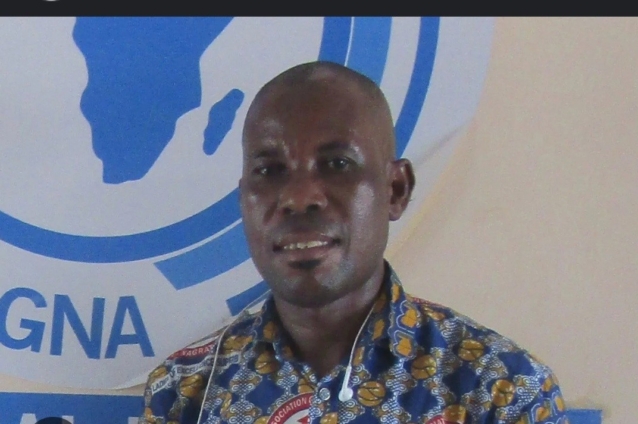
Convener for the Campaign Against Privatization and Commercialization of Education (CAPCOE), Mr. Richard Kovey, says the directive to block the salaries of members of the College of Education Teachers Association of Ghana (CETAG) is not the solution to the ongoing strike.
Speaking to the Ghana News Agency (GNA), he described the approach as harsh, saying it could worsen the situation if care is not taken.
He said the government needed to adopt amicable and permanent solutions to the challenges of continuous strikes in the educational sector.
Read also: We never anticipated CETAG’s strike would drag – PRINCOF
CETAG declared an indefinite strike from June 14, 2024, over the government’s delay in implementing the National Labour Commission's (NLC) arbitrary award orders and negotiated service conditions.
The strike is aimed at pushing the government to meet the association's demands, including paying one month’s salary to each member for additional duties performed in 2022 and applying the agreed rate of allowances payable to public universities to deserving CETAG members.
The Ghana Tertiary Education Commission (GTEC) directed the Controller and Accountant General to freeze the salaries of members of CETAG after the government declared the strike illegal.
Mr. Kovey mentioned that the reason CETAG was on strike was not above the capacity of the Ministry of Education; as such, GTEC, NLC, and all other parties involved needed to play their roles as agreed to prevent further occurrences.
“In the teaching sector everything depends on passion, so if people feel aggrieved with certain things, the passion goes down and it affects the quality and the output of work,” he started.
The CAPCOE Convener further said that it was time for the government to prioritise the needs of the educational sector by resolving issues that resulted in strikes and providing all the tools and services crucial to make their work fruitful.
He said when workers were well taken care of, they would give their best with a positive impact on the economy, adding that it was inappropriate to use intimidation to prevent people from embarking on legal action.
He urged the NLC to do follow-ups whenever there were agreements of this nature to prevent issues that would halt workers' activities, saying teachers' contribution to the country's development was massive and must be recognised.
Latest Stories
-
Don’t let speed of information become your judgement – CJ tells new lawyers
22 minutes -
World Cup visa scandal: People have leveraged public office to facilitate fraud – Senyo Hosi
27 minutes -
Glut! Farmers count losses as prices crash, customers happy
1 hour -
GSA postpones auction of unserviceable vehicles
1 hour -
Man charged with attempted murder after stabbing
1 hour -
World Cup visa scandal: Senyo Hosi says issue goes beyond calls for Sports Minister’s resignation
1 hour -
Yaw Ampofo Ankrah hasn’t taken or received any money to facilitate visas – Lawyer insists
1 hour -
World Cup visa scandal: Senyo Hosi urges focus on constitutional accountability
1 hour -
La Beach demolition: Senyo Hosi condemns lack of consultation
2 hours -
Russian glide bomb attack on Zaporizhzhia kills at least 15 people
2 hours -
Jinapor warns underperforming energy sector CEOs of consequences, says no protection for failure
2 hours -
Fire destroys head of tipper truck on Lower Volta Bridge
2 hours -
Palmer signs new Chelsea contract until 2034
2 hours -
World Cup visa scandal: Mahama will act on corruption allegations – Abass Nurudeen
2 hours -
Abass Nurudeen accuses Minority of ‘scandal scavenging’ over World Cup visa controversy
2 hours