

Audio By Carbonatix
The Fisheries Commission has raised concerns over the growing impact of illegal mining, popularly known as galamsey, on fish farming and aquaculture development in Ghana.
The Commission says illegal mining activities are increasingly taking place in wetlands, many of which are suitable for fish farming and other aquaculture projects.
Ashanti Regional Director of the Fisheries Commission, Abigail Quarshie, is particularly concerned about the increasing number of young people turning to activities that degrade the environment rather than pursuing opportunities in agriculture and fisheries.
She made the remarks in an interview with JoyNews on the sidelines of the second phase of an aquaculture training programme for senior high school (SHS) students.
Madam Quarshie said many Ghanaians, particularly young agriculture graduates, are interested in fish farming but are struggling to secure suitable land because of illegal mining activities.
“We have realised that a lot of the youth are now going into other jobs that are destroying the environment. Ghana is one of the biggest fish-eating countries in the world, and each Ghanaian takes about 25 kilos of fish every year.
“So if galamsey is going to destroy our lands and water bodies, then it means very soon we will not even get land to do fish farming,” she said.

She disclosed that several fish farms, particularly in Obuasi and surrounding communities, had been affected by illegal mining, forcing some operators to fold up.
“Let me use Obuasi as a case study. A lot of our farms in Obuasi and its environs have been folding up because of galamsey activities,” she said.
She appealed to residents, traditional authorities, government agencies and other stakeholders to work together to curb illegal mining and protect wetlands and water bodies.
“I would like to entreat those within that enclave and several other enclaves who are practising galamsey to put a stop to it because very soon, if this is not stopped, we will not get fish to feed our population,” she added.
Madam Quarshie stressed that protecting wetlands and water bodies was critical to food security and the livelihoods of thousands of people who depend on the fisheries and aquaculture value chain.
She also called on government agencies, traditional authorities and civil society organisations to intensify public education and enforcement efforts to protect the environment for future generations.
Youth in Aquaculture initiative
The Ashanti Regional Directorate of the Fisheries Commission is also seeking to encourage more young people to pursue aquaculture through its “Youth in Aquaculture” initiative.
The programme targets SHS students studying science and agriculture and is designed to expose them to the practical aspects of fish farming and processing.
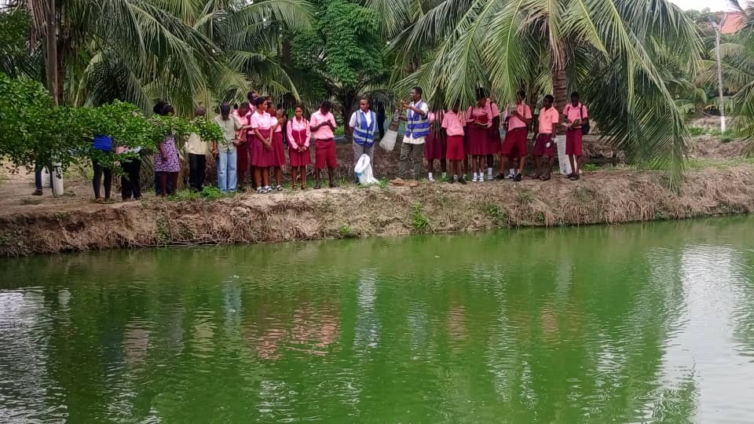
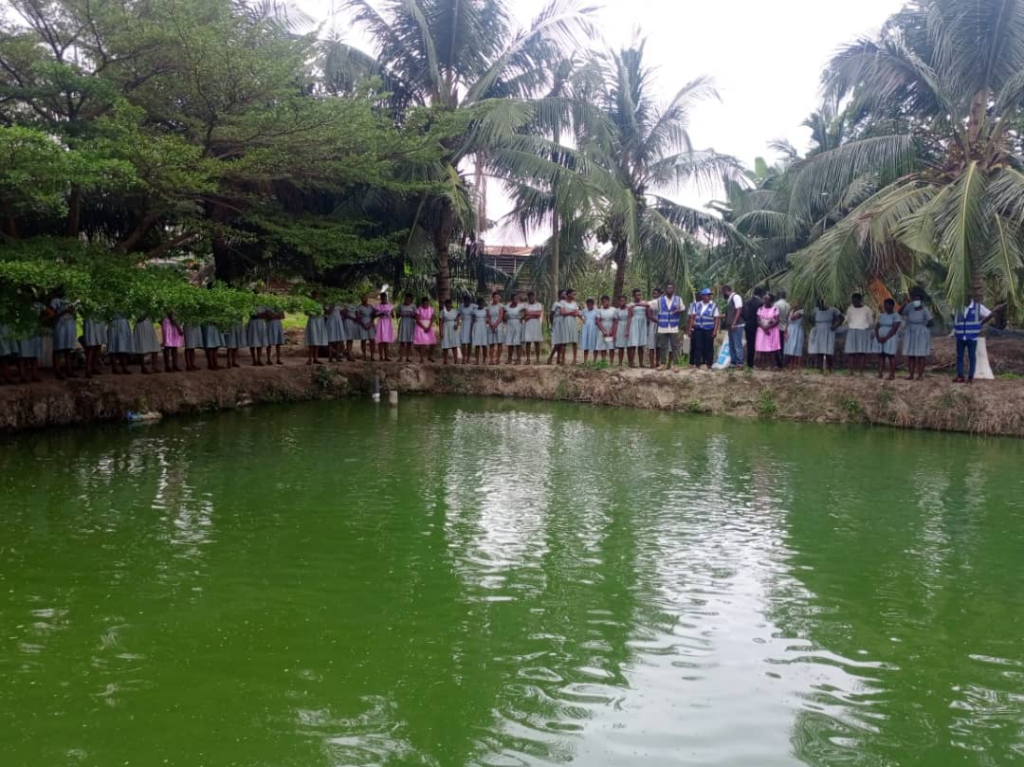
The second phase of the programme brought together students from Simms SHS, Kofi Agyei SHS and Adventist Girls SHS in the Kwabre East Municipality at Rhojay Farms in Dumanafo.
The training combined classroom instruction with practical demonstrations at ponds and fish-processing units.
Students were introduced to fish biosecurity, antimicrobial resistance and the responsible use of antimicrobials, as well as value addition, hygiene and proper storage practices in fish processing.
The programme is intended to equip students with technical skills and entrepreneurial confidence to either join the aquaculture value chain or establish their own fish farming businesses.
Madam Quarshie said the initiative was aligned with the government's School Farm Initiative, which encourages schools to use available land for practical agriculture to improve food production and nutrition while helping to reduce feeding costs under the Free SHS programme.
She said a report assessing the first phase of the initiative, which involved Toase and Nkawie SHSs, had been submitted to the sector ministry.
According to her, the findings were positive, prompting plans by the government to provide the schools with the necessary equipment to establish fish ponds on their campuses.
She said the broader objective was to empower young people to develop careers in aquaculture, reduce Ghana's reliance on imported fish and create sustainable agribusiness opportunities.
Students, teachers welcome practical training
Students who participated in the training expressed enthusiasm about the initiative, describing it as an opportunity to move beyond classroom theory and gain practical experience.
One student from Simms SHS said the training had helped make concepts that were previously taught mainly from textbooks easier to understand.
“It has not been easy learning about aquaculture only in textbooks. Coming here to see the ponds, handle the fish and learn processing has made everything clearer.”
Teachers who accompanied the students also welcomed the programme, saying the practical exposure would complement classroom teaching and make it easier for students to understand agriculture and science-related subjects.
Aidoo Isaac, an agriculture teacher at Adventist Girls SHS, said a lack of resources had made practical teaching difficult for many schools.
“For years, our teaching has been mostly theoretical. But with this kind of first-hand training, students can now see, touch and practise what we teach in class. It will help a lot and make our work easier,” he said.
The teachers appealed to the government to provide greater support for agriculture departments in second-cycle institutions, including equipment, teaching materials and access to demonstration farms.
An agriculture teacher from Simms SHS said such resources were essential to giving students the practical experience needed to pursue careers in agriculture and agribusiness.
“We need equipment, tools and access to demonstration farms so our students can get proper hands-on training. This will not only make teaching and learning easier, but also prepare the students for careers in agriculture and agribusiness,” the teacher said.
The teachers believe that with the necessary investment, schools can play a greater role in developing a new generation of agriculture professionals, reducing Ghana's dependence on imported food and strengthening the country's agriculture sector.
They also said exposing students to practical farm operations at an early stage could build their confidence and encourage more young people to consider aquaculture as a viable career.
Latest Stories
-
Ballon d’Or Power Rankings: Lamine Yamal leads race for Golden Ball ahead of Rodri and Kane
2 hours -
‘Nothing worked for us’ – Gideon Mensah takes responsibility for Gambia defeat
2 hours -
Habib Iddrisu ‘very surprised’ as Speaker rejects Parliament recall motion
4 hours -
Speaker’s decision to reject recall motion catches Dep Minority Chief Whip off guard
4 hours -
2026 Women’s Super Cup: FC Savannah beat Epiphany Warriors to win trophy for first time
4 hours -
Fifa accuses Uefa of ‘misinformation campaign’
4 hours -
Kane and Gordon give England victory over Czech Republic in Nations League
4 hours -
AFCON 2027Q: ‘The last time Ghana won was eight games ago’ – Carlos Queiroz
4 hours -
AFCON 2027Q: Gambia defeat doesn’t make me a loser – Carlos Queiroz
4 hours -
Yamal inspres Spain to homecoming victory over Croatia
4 hours -
2027 AFCONQ: Late goals seal 2-0 for Côte d’Ivoire against Somalia
5 hours -
I’d stick my Man City medals in bin – Keane
5 hours -
AFCON 2027Q: My resignation won’t solve Ghana football issues – Queiroz
5 hours -
Morocco call off Ghana friendly after Black Stars’ AFCON setback
5 hours -
It is time for Tuchel to offer Alexander-Arnold some trust
5 hours