

Audio By Carbonatix
The Chamber of Agribusiness Ghana (CAG) has sounded a clarion call over a staggering economic drain, revealing that the nation loses approximately GH¢5.7 billion every year due to a crippled domestic tomato industry.
In a comprehensive statement released on Monday, 16th February 2026, the Chamber described the heavy reliance on imports and the failure to build local processing infrastructure as a "national emergency" equivalent to 1.2% of Ghana’s Gross Domestic Product (GDP).
The revelation accompanied the launch of the National Tomato Production Strategy (2026–2030), a bold five-year roadmap designed to end the "tomato-dollar" flight and reclaim the local market from foreign dominance.
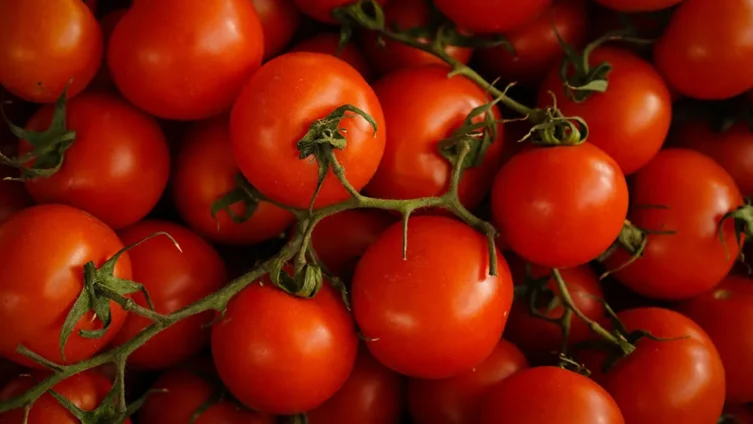
Ghana’s current position in the global tomato market is paradoxically high for a country with vast arable land. The CAG disclosed that the nation has become the world’s second-largest importer of tomato paste, trailing only behind Germany.
Each year, Ghana spends between GH¢650 million and GH¢760 million on foreign tomato products. This includes the importation of up to 100,000 metric tonnes of fresh tomatoes, primarily from Burkina Faso, and a similar volume of processed paste from Europe and Asia.
"These numbers are devastating," said Mr. Anthony Morrison, CEO of the Chamber of Agribusiness Ghana. "We're not just losing foreign exchange; we're losing an entire generation's employment opportunities. The recent security incident in Burkina Faso is a wake-up call. We cannot continue to sacrifice Ghanaian lives and livelihoods for tomatoes we can grow better and cheaper at home."
"The Burkina Faso attack was a tragedy, but it's not the first-time traders have been attacked or killed. We risk our lives because there aren't enough quality tomatoes produced in Ghana. This strategy will finally make it possible to trade safely within Ghana's borders while creating prosperity for all of us," added.
The invisible cost: Taxes, jobs, and rotted harvests
The Chamber’s report suggests that the direct import bill is only the tip of the iceberg. The true economic cost includes a massive loss in potential wealth that never reaches the Ghanaian treasury or the pockets of its citizens.
The Economic Breakdown of Losses:
- Uncollected Taxes: GH¢180m – GH¢220m annually in lost VAT, income, and corporate taxes.
- Post-Harvest Waste: GH¢175m – GH¢250m worth of local tomatoes rot in the sun every year—a 30% to 45% production loss—due to a total lack of cold storage.
- Foregone Wages: A staggering GH¢4.5 billion in potential salaries for Ghanaian workers is lost to foreign processing hubs.
- Employment Gap: The underdevelopment of the sector has stalled the creation of an estimated 250,000 direct and indirect jobs.
The economic argument is further bolstered by a growing security crisis. The CAG highlighted the increasing danger faced by Ghanaian traders who must trek into the volatile regions of Burkina Faso to secure supplies.
Recent militant attacks in the Loroum Province have resulted in the deaths of Ghanaian drivers, proving that the nation's food security is now dangerously tied to the regional security of its neighbours.
The GH¢3.2bn Red Gold Strategy
To stem this haemorrhage, the Chamber has proposed a massive GH¢3.2 billion investment under its new strategy. The goal is not just to grow more tomatoes but to build a resilient seed-to-shelf ecosystem.
The 2026–2030 Strategy Objectives:
- Import Reduction: Slashing the import bill by at least GH¢600 million annually.
- Revenue Generation: Delivering GH¢220 million in new tax revenues for the state.
- Processing Hubs: Establishing value-addition factories to compete with imported pastes.
- Security of Supply: Protecting traders by shifting the primary supply base back to Ghanaian soil.
The Chamber maintained that the reset of the agricultural sector is no longer optional.
With the right policy alignment and private sector investment, Ghana could transform from a dependent importer into a regional powerhouse for processed "Red Gold", retaining billions of cedis within the local economy and safeguarding the lives of its traders.
Latest Stories
-
The Pusiga connection behind Gertrude Atongi’s work in New York
13 minutes -
NPA launches 2026 staff welfare week with focus on teamwork and employee wellbeing
18 minutes -
Ghana, Saint Kitts and Nevis sign labour deal to strengthen protections for Ghanaian nurses
24 minutes -
No ‘Bawumia candidates’ in NPP executive elections – Anthony Karbo
28 minutes -
Over 3,000 displaced as flooding overwhelms Hohoe communities
33 minutes -
Sunyani East NPP executives begin reconciliation drive ahead of 2028 polls
38 minutes -
Agric Minister engages Ga Mantse on agriculture transformation agenda
43 minutes -
Aayalolo expansion targets private car users, not trotro operators – Mahama Ayariga
48 minutes -
KNUST, GMTF explore AI partnership to transform healthcare delivery
53 minutes -
MTTD records 9,000 preventable crashes, over 900 deaths in eight months
58 minutes -
UN Secretary-General expresses optimism about future, pledges support for Mahama, AU
1 hour -
Ghana’s desalination lesson: A water project must work on paper and at the tap
1 hour -
Bawumia calls for paradigm shift in Ghana’s healthcare policies after GMA engagement
1 hour -
77 aspirants pick NDC nomination forms in Sunyani West
1 hour -
Mahama holds talks with China Vice President Han Zheng in New York
2 hours