

Audio By Carbonatix
A total of 28,501.24 million standard cubic feet of natural gas worth approximately $170 million was lost in Ghana’s upstream petroleum sector through flaring.
This is contained in the 2024 annual report of the Public Interest and Accountability Committee (PIAC) on the management and use of petroleum revenues.
The figure constitutes 10.40% of the 279,345 million cubic feet of raw gas utilised in the year under review, from the three oil fields – Jubilee, Sankofa-Gye Nyame (SGN) and Tweneboa-Enyenra-Ntomme (TEN).
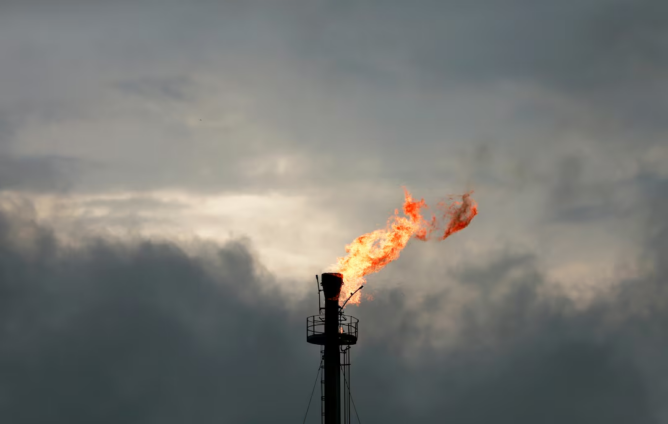
Gas flaring is the practice of burning excess natural gas that cannot be economically collected and transported for use.
Over the years, there has been an increasing percentage of gas excesses burned out into the atmosphere.
In 2022, the volume of gas flared increased by 19.3 per cent compared to the 21.2 billion cubic feet recorded in 2021.
The activity poses environmental dangers, particularly its contribution to greenhouse gas emissions and air pollution, which adversely affect human health and the environment.
Although Ghana has a zero-flaring policy under its oil and gas production regulations, a significant percentage of gas is still flared owing to inadequate gas processing capacity.
The PIAC is concerned about the continuous wasteful use of the gas, especially during periods where the country experienced intermittent power cuts.
“Technically, no company is allowed by the Environmental Protection Agency (EPA) to flare gas. However, because the Atuabo Gas processing plant cannot handle all the associated gas produced, excess gas is often flared. This is harmful to the environment and a waste of valuable resources,” said Richard Kojo Ellimah, a member of PIAC.
Government has announced plans to commence the construction of a second gas processing plant (GPPII).
The new facility is expected to significantly facilitate the reduction of gas flaring and rather convert excess gas into usable energy.
Mr. Ellimah wants expedited processes for the completion of the project within the next three years.
“It was heartwarming to hear the minister confirm cabinet’s approval. This project should be treated as a national priority. If construction begins quickly, Ghana could begin benefiting from its excess gas within the next two to three years. While it is a complex and capital-intensive project, it is necessary for environmental sustainability and economic growth,” Mr. Ellimah noted.
Latest Stories
-
Breast Cancer awareness must lead to action – Deputy Health Minister
37 seconds -
UK identified as leading destination for Ghana’s illicit cannabis exports – Report
2 minutes -
Drug money allegedly finances Ghana’s political parties and real estate – Global Organised Crime Index
7 minutes -
NSA outlines seven steps for successful posting and validation of national service personnel
8 minutes -
GPRTU taskforce clamps down on unapproved fares at Kasoa
9 minutes -
Prime Insight: Making room for meaningful national conversations on Joy Prime
20 minutes -
FABAG commends Ato Forson’s over removal of 20% excise duty on locally manufactured fruit juices
27 minutes -
HIV stigma discourages testing, prevention and treatment in Ghana – Ghana AIDS Commission
30 minutes -
Blocking cocaine probe lends weight to claims of political protection for traffickers – Assin South MP
33 minutes -
NPP Vice Chair race: I may be the youngest, but most experienced – Nana B
35 minutes -
Last UK and US troops leave Iraq as anti-Islamic State mission ends
36 minutes -
Don’t stay home idle, embrace entrepreneurship while awaiting posting – Unemployed nurses urged
47 minutes -
Aayalolo buses not speeding on contra-flow lanes – GAPTE assures commuters
50 minutes -
Effia MP calls for Kurt Okraku’s removal, overhaul of Ghana football structure
51 minutes -
CAS hearing on AFCON final appeal by Senegalese Football Federation set for October 8
51 minutes