

Audio By Carbonatix
The Ghana National Petroleum Corporation (GNPC) is yet to establish a reserve fund to finance its long-term operations as required by the Petroleum Act.
The company presently receives 55% of the Carried and Participating Interests (CAPI) to fund its operational expenditures. The allocation of petroleum revenue to the company is expected to halt in 2026 following its implementation in 2011.
The 2024 semi-annual report of the Public Interests and Accountability Committee revealed the corporation had not set aside funds to support its operations after a 15-year timeline expiration.
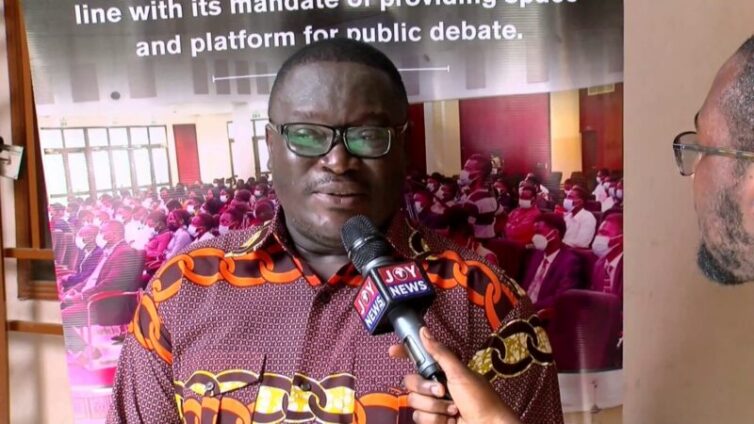
“When the government then decides not to fund them, how are they going to fund their operations? We are recommending that they should actualize their own reserve funding so that once they’re able to put aside some monies they will be able to build up enough revenues to support their operations,” Technical Advisor on the PIAC, Richard Elimah, said.
The PIAC was in the Ashanti region to engage stakeholders on the findings on the semi-annual report and ways to hold the government in ensuring the oil revenues are utilized for its intended purpose.
IOCs owe over $2 million surface rentals
Ten international oil companies (IOCs) are yet to cough up money to settle their surface rental fee owed the government.
According to the 2024 semi-annual report by the Public Interests and Accountability Committee (PIAC), a total of over 2.6 million dollars are yet to be retrieved from the companies during the first half of the year.
Four of these foreign companies failed to pay up their debts and have already exited the country after collapsing.
The committee is recommending the government ensures the companies pay the acreage fee during the course of production and also take immediate steps to recover the outstanding amounts.
“PIAC is recommending that the government takes the surface rental before these companies leave the country. So, they should be made to pay during the course of the production. This would ensure the state doesn’t incur any losses,” Mr. Elimah admonished.
Meanwhile, the committee is distraught over the government’s decision not to sign any new petroleum agreement since 2018.
The committee finds the decision is worrying as it could impact more revenue generation for the country.
Latest Stories
-
Fiabci-Ghana inaugurated to promote professionalism and global collaboration in real estate sector
17 minutes -
‘No flying in just for matches’ – Kofi Adams sets conditions for next Black Stars coach
21 minutes -
Ghana and BRICS: Strategic opportunity, economic imperative or geopolitical gamble?
27 minutes -
SML vs GRA: Court grants preservation order in dispute over US$500 million investment
27 minutes -
Spotify brings audiobooks to Ghana
30 minutes -
GPL 2026/27: ‘We are the team to beat’ – Medeama boss Tanko ahead of Samartex clash
31 minutes -
Parliamentary Select Committee on Health assesses progress of work on KATH maternity block
38 minutes -
Ghana’s fertility rate too high for development – Reproductive health specialist warns
53 minutes -
NLA/KGL Licence Contract: Why Ghana must reform the law to maximise the state’s benefit
58 minutes -
Association of Small-Scale Industries empowers trade executives in Bono East with a mentorship programme
1 hour -
AMA evacuates refuse along Graphic Road, warns against indiscriminate dumping
1 hour -
STC interdicts driver over Pokuase overtaking incident
1 hour -
Ekumfi: How $6m EXIM participation built a $53m industrial asset — now poised for a 24-Hour Economy breakthrough
1 hour -
4 arrested, 142 parcels of suspected Indian hemp seized as officers reject GH¢50k bribe
1 hour -
No MMDCE can say they don’t see galamsey – Local Government Ministry
1 hour