

Audio By Carbonatix
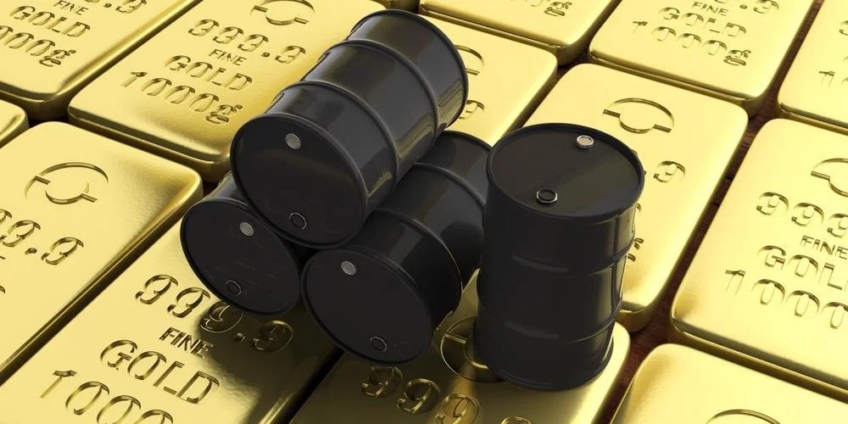
Since its rollout in January 2023, the Bank of Ghana has disclosed that it incurred losses of GH¢317 million in 2023 and GH¢1.82 billion in 2024 under the Gold for Oil (G4O) programme.
That brings total losses to GH¢2.137 billion over two years.
The central bank injected GH¢4.69 billion into the programme, effectively losing 45% of the capital it deployed in an effort to stabilise fuel prices and support the cedi.

On March 13, 2025, the Bank officially ended the Gold for Oil initiative, citing the heavy financial losses sustained as the primary reason for shutting it down.
Gold for Oil (G4O) was introduced in December 2022 in response to surging fuel prices, with diesel retailing as high as GH¢23 per litre and petrol around GH¢17 at GOIL stations in November 2022.
A sharp cedi depreciation and the rapid depletion of foreign reserves forced the government and the Bank of Ghana to try an alternative strategy: use gold, not dollars, to purchase petroleum products from the international market.
The logic behind the programme was straightforward. Ghana needed a workaround to its dollar shortage that wouldn’t further drain the Bank of Ghana’s reserves or worsen currency depreciation.
The goal was to ease pressure on the cedi by preserving scarce foreign exchange reserves.
Ghana spends about $400 million each month importing fuel, making it a major driver of dollar demand.
Reducing that pressure, even partially, was central to the programme’s logic.
The Bank had already launched a domestic gold purchase programme in June 2021, partnering with the then Precious Minerals Marketing Company (PMMC), now rebranded as GoldBOD, to buy gold dore from local miners in cedis and refine it abroad for Ghana’s official reserves.
The aim at the time was to double Ghana’s gold reserves within five years, then standing at 8.74 tonnes.
That gold stockpile now exceeds 32 tonnes, nearly quadrupling in under four years, according to central bank data.
The domestic gold purchase programme was later expanded to include the Gold for Oil framework
The Bank, through PMMC, purchased dore in cedis from local miners and handed it over to designated "gold brokers".
In some cases, the brokers sold the gold internationally and deposited the foreign currency directly into the Bank’s offshore (nostro) accounts. Those funds were then used to buy petroleum products for the domestic market.
In other instances, the dore gold was either swapped directly for fuel or refined first and then exchanged for petroleum products.
The fuel was delivered to Ghana, but the dollars used to buy it remained overseas. As a result, the local economy saw no direct injection of foreign currency.
Notably, the entire arrangement was never subjected to parliamentary oversight. The ruling government argued at the time that the Gold for Oil programme was not an executive policy but a central bank initiative, and therefore did not require parliamentary approval.
The criteria for selecting these gold brokers, the fees paid, and the number of intermediaries involved have not been publicly disclosed.
The cedi did stabilise in the months after G4O’s launch, and fuel prices fell.
While it’s hard to isolate the programme’s direct impact from that of the IMF deal signed in May 2023, the reduced dollar demand from oil importers likely contributed to easing exchange rate pressure.
By November 2023 (nine months in) then-Finance Minister Ken Ofori-Atta told Parliament during the 2024 budget presentation that G4O accounted for around 30% of petroleum imports.
No major updates followed until the release of the Bank’s 2024 financial report.
The Bank attributes most of the GH¢2.1 billion loss to foreign exchange losses.
But key details remain missing: the volume of gold acquired, the fuel supplied, the commissions paid, the intermediaries involved, and the broader impact of the programme.
With over GH₵2.1 billion in reported losses and little transparency about how it was run, Gold for Oil has ended as a costly intervention.
- Read also: Explainer: Why one dollar can’t be one cedi
It may have brought temporary foreign exchange relief and cheaper fuel, but it ultimately left a deep hole in the Bank of Ghana’s books.
Latest Stories
-
MTN set to deploy 5G services after winning spectrum licenses worth US$202m
2 hours -
NPP national elections: 3,000–4,000 police to handle security, traffic in Kumasi – Karbo
4 hours -
Atta Akyea fumes as Manhyia MP is to spend another night in EOCO custody
5 hours -
SSNIT says La Beach clearance was to protect hotel investments, beaches to remain public
5 hours -
APSU congratulates St Augustine’s College after back-to-back National Investment Quiz wins
5 hours -
Renewed flood intervention at Mallam Junction raises hopes among residents, businesses
6 hours -
St Augustine’s College retain National Investment Quiz title after nail-biting grand finale
6 hours -
Education infrastructure investment will drive Banda’s development – Ahmed Ibrahim
6 hours -
Teacher unions strike: Gov’t presents fresh proposals as talks end inconclusively
7 hours -
51,000 teachers’ promotion arrears to be validated for October payment – Education Minister
8 hours -
Kwabena Boamah appointed Board Chair for Impact Investing Ghana
8 hours -
Striking teacher unions to meet Fair Wages and Salaries Commission on October 6
8 hours -
EOCO working with AG to arraign Nana Baffour Awuah before weekend court
8 hours -
Duraplast reassures customers after fire, announces October 5 reopening
8 hours -
Call off strike, gov’t will not renege on promotion arrears pledge – Haruna Iddrisu to teacher unions
8 hours