

Audio By Carbonatix
Ghana’s infrastructure deficit is no longer just a statistic—it’s a development emergency. For decades, we have witnessed successive administrations make modest gains in road development, housing, water access and transport systems. Yet, the scale of the problem has consistently outpaced the pace of intervention.
This is why former President John Dramani Mahama’s proposed “Big Push” agenda—an ambitious $10 billion infrastructure investment plan—is not only welcome, but absolutely essential. As an analyst who has monitored Ghana’s infrastructure trajectory over the years, I firmly believe this initiative represents one of the most comprehensive blueprints for tackling the country’s deep-rooted structural challenges. It must not be allowed to remain a campaign promise—it must be implemented.
Ghana’s Infrastructure Deficit: A Barrier to Development
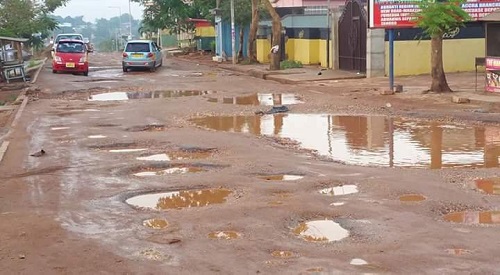
The numbers are staggering. Ghana has an estimated housing deficit of over 2 million units, and the shortfall continues to grow due to rapid urbanisation, population pressure, and lack of affordable housing finance. In the transport sector, road quality has deteriorated significantly: over 57% of urban roads are classified as poor, and an estimated GH₵20 billion in unpaid road contractor debts has stalled hundreds of projects.
These infrastructure deficits are more than technical failings—they are bottlenecks to productivity, regional equity, and social cohesion. Poor roads limit market access for farmers. Inadequate housing fuels urban slums. Patchy transport systems choke business efficiency. Simply put: we cannot develop without fixing our infrastructure base.
The Big Push: A Holistic, Strategic Framework
What sets the Big Push apart is not just its scale, but its strategic focus on five core pillars:
- Housing:
Investment in affordable housing, especially for low- and middle-income Ghanaians, will not only reduce the housing deficit but create jobs and expand local industry supply chains—from cement to fittings and home décor. - Road Infrastructure:
Dualisation of critical highways such as Accra-Kumasi, Accra-Aflao, and Accra-Takoradi, coupled with the construction of bridges and rural feeder roads, would significantly ease transport costs, facilitate trade, and enhance regional integration. - Rail and Urban Transit:
Revitalising the Eastern and Western rail corridors and introducing light rail systems in Accra, Kumasi, and Takoradi will modernise Ghana’s mobility and help decongest cities—something Accra, in particular, urgently needs. - Water and Sanitation:
Expanding safe water access in underserved regions, including Ho, Tamale, and Yendi, is not just a matter of development—it’s a matter of dignity and public health. - Youth Employment:
Infrastructure projects, if well-structured, are labour-intensive. This plan offers an opportunity to engage thousands of unemployed youth in productive work while building national capacity in engineering and project management.
Implementation Is the Litmus Test
Ideas are not in short supply in Ghana. Implementation is. The real test of the Big Push will be in how it is executed—how resources are mobilised, how priorities are set, how transparency is maintained, and how efficiently projects are delivered.
To ensure success, government must:
- Strengthen the Ghana Infrastructure Investment Fund (GIIF) to manage and disburse funds efficiently.
- Leverage private sector partnerships through well-structured public-private arrangements.
- Depoliticise project selection so that infrastructure benefits are equitably distributed across regions.
- Ensure accountability by subjecting projects to regular audits and public reporting.
A National Imperative
We are at a crossroads. Ghana’s infrastructure crisis can no longer be treated as a long-term aspiration—it must be a top-tier national priority. The Big Push offers a ready-made, well-articulated plan to respond to this urgency. It is strategic, inclusive, and economically sound.
Whether or not one supports the politics behind it, there is no denying that the policy logic of the Big Push is strong. It is now up to the government—current or future—to take this plan seriously and commit to its implementation.
As an analyst and concerned citizen, I urge policymakers to act. Ghana cannot wait any longer.
Latest Stories
-
Trade Minister applauds GUTA as a pillar of economic growth; Prez Mahama honoured
8 minutes -
President’s brother’s takeover of Damang Mines is ‘untidy’ – Alhassan Tampuli
14 minutes -
It’s not true that gov’t decided not to renew the lease for Gold Fields – Bobby Banson
18 minutes -
Ghana to boost tomato production with 60-hectare irrigated farms and processing initiatives
36 minutes -
E&P’s takeover process of Damang Mines was very clean – Inusah Fuseini
40 minutes -
Damang takeover: There is not going to be any job loss; it is a lease change – Bobby Banson
1 hour -
Gold Fields didn’t stop mining at Damang mines; such claims are untrue – Bobby Banson
1 hour -
Engineers and Planners currently operate only in Ghana – Bright Simons
1 hour -
Lands Minister has no legal basis to restrict lease to Ghanaian firms – Bright Simons
2 hours -
Gov’t’s refusal to renew Gold Fields’ lease was simply untenable – Bright Simons
2 hours -
SOS Children’s Villages Ghana deepens partnership with Gender Ministry
2 hours -
Gender Ministry celebrates Christina Koch, reaffirms commitment to empowering girls
2 hours -
Live stream: Newsfile digs into E&P’s takeover of Damang Mines, OSP powers and Anti-LGBTQ Bill
2 hours -
Moody’s maintains Ghana’s rating at Caa1, revises outlook to positive
3 hours -
Zambia elevates tourism education to national priority as President Hichilema backs continental summit
4 hours