

Audio By Carbonatix
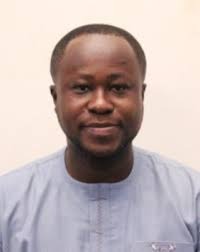
An Energy Committee Member of Parliament, Michael Kwasi Aidoo, has questioned the government’s assertion that Ghana’s power supply is stable, warning that gaps between installed capacity and actual plant availability still pose risks to the system.
Speaking on JoyNews’ Pulse on April 30, the MP said recent developments in the energy sector are positive but do not fully address the country’s underlying electricity challenges.
“We have an issue at hand… and it needs to be solved,” he said.
His comments follow President John Dramani Mahama’s visit to the Akosombo Generating Station after a fire at the switchyard on April 23 disrupted parts of the national grid.
During the visit, the President praised engineers from the Volta River Authority (VRA) and the Ghana Grid Company (GRIDCo) for restoring four out of six generating units within a week, returning about 550 megawatts to the system.
The MP acknowledged that Ghana’s power sector has benefited from long-term investments in transmission and distribution infrastructure across successive administrations.
He referenced upgrades to transmission lines and distribution systems, as well as the deployment of GRIDCo’s SCADA system used to manage and coordinate power flow across the national grid.
“There were a lot of investments in the energy sector… upgrades of transmission lines and distribution systems,” he noted.
He also pointed out that several generators currently in use by the Electricity Company of Ghana (ECG) were procured under previous governments, arguing that the sector’s stability is the result of accumulated investments over time.
However, he cautioned against equating installed capacity with actual available power.
Ghana currently has about 5,800 megawatts of installed capacity against a peak demand of roughly 4,300 megawatts, but he said that does not reflect what is truly available to the system at any given time.
“If you have 5,800 megawatts of installed capacity and your peak demand is about 4,300, that leaves you with more than 1,000 megawatts,” he said.
“But if we are now meeting demand, it means we had a deficit,” he added.
He warned that several plants are either idle, undergoing maintenance, or not operating at full capacity, creating vulnerabilities in the system.
“In case we should have any emergency at all, we do not have anything to fall on,” he cautioned.
Latest Stories
-
Ghana Medical Trust Fund, Hungary explore partnership to strengthen specialised healthcare
25 seconds -
Manhyia South MP Baffour Awuah pleads not guilty to EOCO charges, granted GH¢10m bail
4 minutes -
NPP conference: We need leaders to complement our efforts in Parliament – Annoh-Dompreh
6 minutes -
Sammy Crabbe steps down from NPP Chairmanship race, backs John Boadu
7 minutes -
NPP postpones constitutional amendments, including proposal on party leadership to next national conference
10 minutes -
NDC ‘running into opposition like Usain Bolt’ – Sammy Awuku
22 minutes -
Local pharma production can create jobs, strengthen Africa’s health security – Mahama
24 minutes -
Mahama calls for removal of barriers to boost Africa’s pharmaceutical industry
29 minutes -
NPP needs ‘war-like’ leaders to take fight to government – Annoh-Dompreh
32 minutes -
Mahama unveils HINGE digital platform to streamline health investment and regulation in Africa
39 minutes -
We won’t return to the classroom without concrete solutions – NAGRAT
44 minutes -
Mahama urges Africa to invest in local pharmaceutical manufacturing
50 minutes -
Akufo-Addo giving Bawumia space to assert himself as NPP leader – Gabby Otchere-Darko
56 minutes -
NPP delegates, not social media, will decide election winners – Miracles Aboagye
1 hour -
I have no interest in this election; I believe Bawumia will win 2028 election – NAPO
1 hour