

Audio By Carbonatix
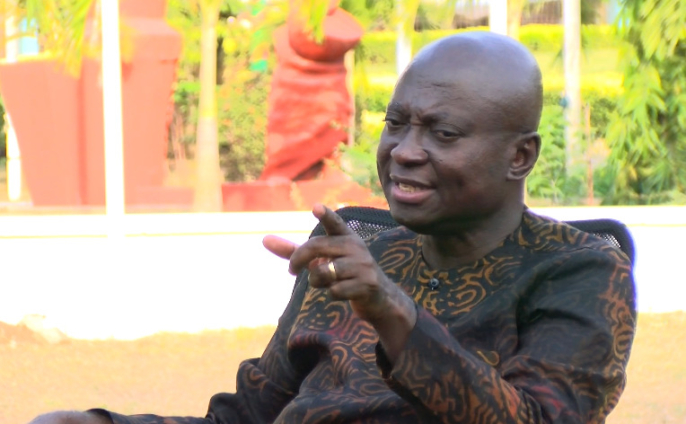
The Member of Parliament for Abuakwa South, Samuel Atta-Akyea, has dismissed allegations that the Supreme Court serves as an extension of the Jubilee House, describing such claims as misguided and uninformed.
According to Atta-Akyea, those making these assertions lack a proper understanding of legal principles and the judiciary’s fundamental role in a democratic society.
His remarks come in response to criticism following the Supreme Court's recent decision to overturn Speaker Alban Bagbin’s declaration of four parliamentary seats as vacant.
The decision sparked a wave of reactions, with some critics accusing the Court of bias and undue influence from the executive branch.
In an interview with Channel One TV on Saturday, 16th November, Atta-Akyea robustly defended the Supreme Court's integrity.
He described the justices as distinguished and impartial legal professionals committed to upholding the rule of law, emphasising that their decisions are rooted in legal reasoning, not political affiliation.
“Those who claim that the Supreme Court is merely an extension of the Jubilee House and will rubber-stamp what we want are mistaken," he stated.
He noted that the recent case showcased the Court’s independence, pointing out that two judges, Justice Lovelace Johnson and Justice Amadu Tanko, had dissented, demonstrating the diversity of thought within the judiciary. “The Supreme Court is a forum of respectable and capable individuals," he added.
Atta-Akyea further stressed that it was misleading to view the Court as an arm of the executive.
He criticised those who held such views as lacking a proper understanding of the rule of law and argued that such perspectives were subversive to the constitution and the principles of judicial independence.
The controversy arose after the Supreme Court's ruling on 12th November, which overturned Speaker Alban Bagbin's decision to declare four parliamentary seats vacant.
The ruling was in favour of a challenge mounted by Majority Leader Alexander Afenyo-Markin, asserting that the Speaker’s declaration was not in line with the law.
In their detailed judgement on 14th November, the five justices who supported Afenyo-Markin's position clarified that a parliamentary seat can only be considered vacant if an MP switches political parties while maintaining their position in Parliament.
Meanwhile, the two dissenting justices argued that the Supreme Court did not have the jurisdiction to decide the matter, highlighting a significant difference in legal interpretation regarding the Court's powers.
Latest Stories
-
‘I don’t make music for awards, I make it to connect people’ – Rocky Dawuni
1 minute -
Farmer jailed for three months over assault on wife in viral video
7 minutes -
Police arrest eight in Okaishie operation targeting illicit drugs and medicines
10 minutes -
David Agyemang Yeboah: Marriage is not the problem; your approach is
13 minutes -
Lawyer sues Standards Authority over used-vehicle import restrictions
15 minutes -
Ukraine to restart strikes on Russian oil refineries, Zelensky says
15 minutes -
CIMG awards drive competition among Ghanaian businesses
21 minutes -
NSA regional director Emmanuel Reagan files nomination to contest NDC Ashanti Regional Organiser position
26 minutes -
Obuasi SHTS: Number of students alleging sexual abuse rises to 16
31 minutes -
Ghana’s economy grows by 7.4% in July 2026
42 minutes -
NDC member challenges Dennis Yeboah Twumasi’s eligibility for Bono Regional Secretary elections
52 minutes -
Popular Nigerian gospel singer Toluwanisings dies
1 hour -
Spio-Garbrah proposes debt swaps to fund reparative justice in Africa and Caribbean
1 hour -
Alban Bagbin calls for governance reforms and coordinated action to address Africa’s debt crisis
1 hour -
AAK Academy Ghana trains 22 chocolate and confectionery companies in production techniques
1 hour