

Audio By Carbonatix
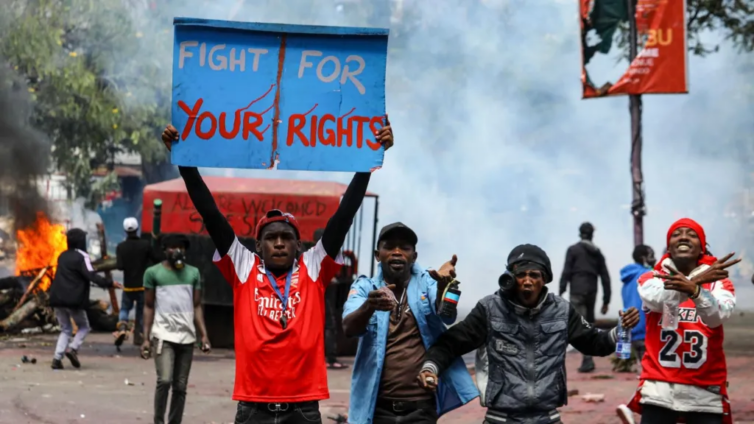
The events that led William Ruto to abandon his budget might in time be seen as a milestone moment - not only for Kenya’s president but also for the power of youth on the world’s youngest continent.
Through the potency of protest, organised largely organically, a movement initiated by young people on social media has forced one of Africa’s most internationally regarded leaders to junk his flagship policy.
It’s not that Mr Ruto now realises he had been wrong to push for the tax hikes which caused so much anger across Kenya. In fact he began his address to the nation on Wednesday with a robust and detailed explanation of exactly why he believed they were needed.
His government, he said, had made the tough choices necessary to stabilise the economy and to help ease Kenya out of a debt trap which forces it to spend 61 cents of every tax dollar on repaying its loans.
The finance bill was essential, he claimed, to "redeem our country from the discomfort of debt and assert our sovereignty".
That makes it all the more astonishing that the turmoil of recent days has forced the embattled president to change course so completely.
Instead of raising extra revenue, Mr Ruto now intends to balance the books by introducing a new programme of public austerity.
It will notably include a cut to spending in his own office – a clear nod to the fury heard from many on the streets about perceived corruption and government largesse.
And in an attempt to reach out directly to Kenya’s youth, the president promised to engage and listen to them.
Mr Ruto spoke in front of an audience of his own MPs, whom he thanked for having backed his bill. Many might now be forgiven for wondering where his U-turn leaves their credibility.
There is no doubt that the last two days have been severely bruising for the president.
His security forces were roundly condemned for a brutal response to Tuesday’s demonstrations in which at least 22 people are reported to have died, several shot by police.
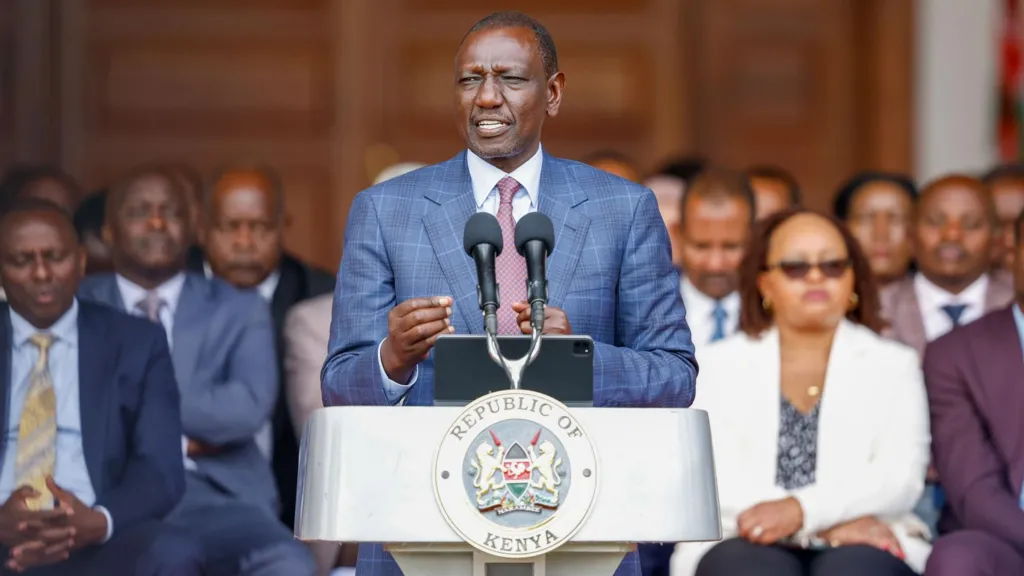
In the immediate aftermath of the bloody protests, Mr Ruto highlighted the criminal excesses at the heart of the chaos, threatening a robust response to the storming of parliament and widespread looting.
But his concession on the substance of his policy on Wednesday came too with the acceptance that the demonstrations had at heart been a legitimate expression of anger.
"It has become evident," he acknowledged, "that members of the public still insist on the need for us to make more concessions".
"I run a government, but I also lead people, and the people have spoken."
At home, the question now is whether the people believe the withdrawal of Mr Ruto’s finance bill goes far enough.
Some have called for planned protests on Thursday to go ahead, demanding the president's resignation.
The days ahead will show whether the genie of public fury can be put back into the bottle.
Beyond Kenya, Mr Ruto will be wondering how the crisis has affected his global standing.
Some of his country’s closest diplomatic allies and the UN secretary-general demanded Kenya uphold the right to peaceful public protest.
That pressure might have played a part in the difference in tone between his speeches on Tuesday and Wednesday.
Perhaps the backlash to the violence displayed by his security forces will prove as powerful in shaping Mr Ruto’s response as the sight of thousands demonstrating against him.
Whatever led to his new path, less than two years into his tenure the task now for Mr Ruto is to rebuild and to regain momentum.
But Kenya’s president is left to pursue an economic policy which he doesn't seem to believe in.
Some of Mr Ruto's opponents may see today's message as a statement of intent – a lesson hard learned by a humbled leader.
But for others, this victory over the powerful might provide fresh impetus to keep challenging the president's authority.
And this episode could resonate elsewhere in Africa too.
Because although Mr Ruto’s U-turn was driven ultimately by more than just the anger of the young, he recognised himself that it was Kenya’s youth who sparked the fire.
As a continent, Africa has the youngest population on earth, with almost three-quarters of citizens under 35.
Many of them will see Wednesday's events as proof that with enough determination, they can force their leaders to hear their voices.
Latest Stories
-
Five-member committee to search for new Black Stars coach after Sports Ministry-GFA meeting
23 minutes -
Pinktober: Breast cancer survival exceeds 90% when detected early – Breast Society of Ghana
30 minutes -
TCDA to adopt Upper West’s MATCO mango farm as northern prototype, issues warning against felling shea trees
40 minutes -
Fear delegates tag: Afoko touts genuineness among delegates ahead of NPP delegates conference
43 minutes -
John Boadu: The leader our party needs at this time – Amb. Edward Akwasi Boateng
48 minutes -
Baffour Awuah: EOCO effected an arrest, detained MP after hours of waiting, questioning – Afenyo-Markin
1 hour -
EOCO court warrant authorised search of Baffour Awuah’s law firm, not residence – Afenyo-Markin
1 hour -
NPP delegates conference: 3,000 to 4,000 police personnel deployed for security in Kumasi – Anthony Karbo
1 hour -
KGL Foundation commits $200,000 to support juvenile football for the next two years
2 hours -
UNDP invites Mahama Ayariga to Northern Peace Conference in Tamale
2 hours -
Afoko can give NPP ‘new identity’ ahead of 2028 to overcome NDC – Political scientist, Dr Amakye-Boateng
2 hours -
2 injured amid gunshots during raid at Nawara Mining office at Nsuapemso
2 hours -
St Augustine’s College retains 2026 National Investment Quiz title
2 hours -
KNUST Nursing and Midwifery School staff recognised at 2026 Health Ministry Excellence Awards
2 hours -
JoyNews’ Esther Esi Nkrumah selected for UK Media Excellence for Emerging Technology Fellowship
2 hours