

Audio By Carbonatix
Lotus Ecoculture, through its subsidiary, Mepe Farms Limited, an agricultural development company, has launched its services seeking to offset $35 billion annual food imports to the African continent.
The company has been trading with smallholder farmer aggregation in the West African markets for over six years.
It utilizes innovative technologies to deliver the highest yields and quality crops in a sustainable zero-waste production cycle, with a specialty in organic grains and greenhouse vegetables.
A communique issued by the company indicated that Mepe Farms has partnered with several businesses and organizations that aim to alleviate poverty, improve food security, and foster economic growth including the Ministry of Food & Agriculture (Ghana) and TROTRO Tractor.
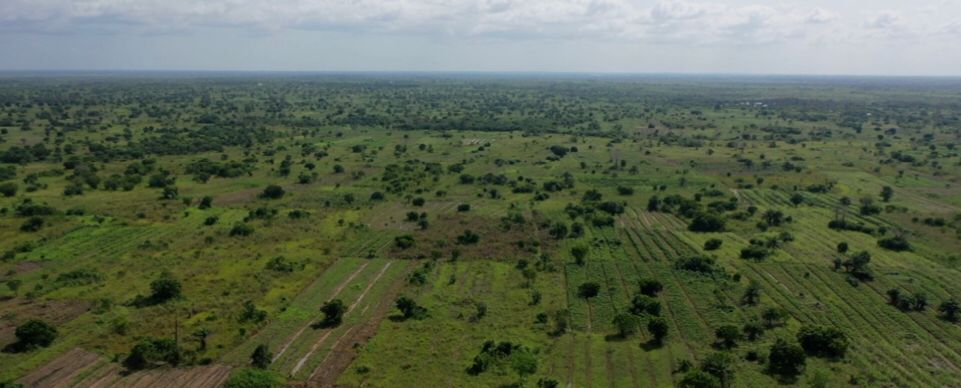
The company has acquired over 3,300 hectares of farmland in the Volta region, hoping to increase farming yields by up to 30% “whilst maintaining a zero-waste, zero-chemical operation.”

It also aims to tackle rising food costs using innovative agronomic and agritech solutions, a fully-mechanised technological process, and zero-chemical input operation to boost growth in Ghana’s agricultural sector.
“All inputs are OMRI (Organic Materials Review Institute) certified, bringing Ghana best-in-class organic inputs, available to farmers in the region at a discounted price.”
Activities of the companies would address the concerns of lack of raw materials in producing animal feed, which has been identified as a major setback in the sector, leading to a frequent shortage of feed.
An estimate of 50 jobs would be created for an all-female agronomic team, “to remedy the fact that women already make up a significant percentage of the agriculture value chain, but earn a fraction of the income.”
Export and off-taker agreements
Mepe Farms have secured massive export agreements to supply various companies in Europe and Asia, and as well as provide raw materials to some factories in Ghana.
The agreement includes the exportation of 4,500 metric tonnes of SoyBeans to European and Asian markets.
The supply of 2,250 metric tons of Soybeans and 3,750 metric tons of maize to support animal feed
production companies operating locally and 3,000 metric tons of organic tomatoes to two processing companies operating in the Bono Region.
Interestingly, all organic waste from cultivation operations will be used as raw materials and converted into Bio-Fertiliser and energy under the company's Assisted Fermentation Technology and Portable Biogas module.
“The Bio-fertiliser is healthier, safer, and more environmentally friendly than its chemical counterparts. This enzyme-induced bio-fertilizer will also be made available for sale to farmers in the region at a discounted price.”
Latest Stories
-
Ghana explores centre of excellence for hearing, communication and cochlear implant care
42 minutes -
Schizophrenia-related disorders lead mental health cases recorded in Ghana
1 hour -
Dutch authorities enlist Ghana in hunt for fugitive drug lord Bolle Jos
1 hour -
Ghana housing finance conference adopts communiqué to improve affordable housing access
6 hours -
Special Initiatives Minister urges Wa Technical Institute to enrol more girls as EU-backed solar training lab opens
6 hours -
In the matter of my first year at the Bar
7 hours -
ActionAid Ghana calls for an end to child marriage, greater investment in girls’ rights
7 hours -
Newsfile to tackle World Cup visa scandal, beach demolitions, education strikes, BRICS bid
7 hours -
UK-Ghana Trade & Investment Summit: Trade Resource Centre to help businesses maximise UK-Ghana trade opportunities
7 hours -
Embassy of Denmark celebrates World Maritime Day
7 hours -
Linking LEAP to productive inclusion could cut extreme poverty by 2030 – UNICEF
9 hours -
Trade Ministry backs use of creative arts to rehabilitate prison inmates
9 hours -
Negotiations with government to continue despite strike suspension – GNAT
9 hours -
‘Ghana cannot afford to waste public resources; every cedi has a job’ – Ato Forson
9 hours -
Ghana expects economic boost as World Assemblies of God Congress brings 10,000 delegates to Accra
9 hours