

Audio By Carbonatix
President John Dramani Mahama has unveiled a landmark irrigation programme, including the construction of two new mega dams and the rehabilitation of eight existing irrigation dams, as part of Ghana’s agricultural transformation strategy.
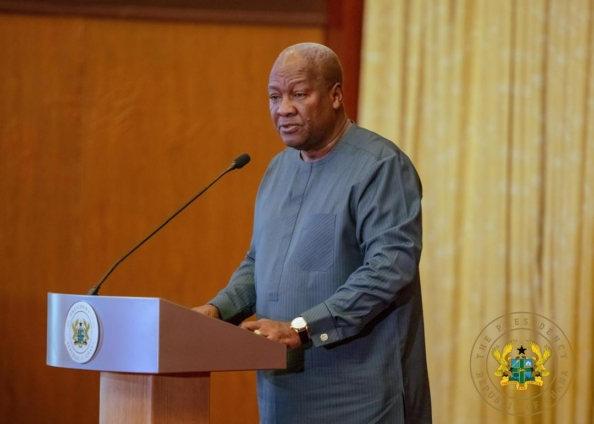
Speaking during the 2026 State of the Nation Address (SONA) in Parliament, President Mahama stressed the government’s determination to reduce dependence on seasonal rain-fed farming and promote year-round irrigation-based agriculture.
“The Feed Ghana Programme is firmly anchored on irrigation for world-class creation,” he said.
“Government is deliberately shifting our agriculture from rain-fed dependence to irrigation-based farming to support continuous production and strengthen climate resilience.”
Mega Dams for Water Security
At the core of the initiative is the construction of two new mega dams, which the President described as critical for ensuring water security in farming regions.
“These mega dams will provide a reliable water supply to thousands of farming communities, enabling continuous cultivation throughout the year,” he said.
“They are central to our vision of modernising agriculture and making it more climate-resilient.”
Rehabilitation of Existing Dams
In addition to new constructions, eight existing irrigation dams are undergoing comprehensive rehabilitation.
“Rehabilitating these dams ensures that our current infrastructure works at its full potential. It is part of a broader effort to modernise irrigation and secure sustainable agricultural growth,” President Mahama said, noting that improvements will restore capacity, enhance water distribution, and optimise existing resources.
Complementary Measures
The programme also includes several complementary initiatives:
Construction of 250 solar-powered boreholes for farming communities and schools in the Northern Belt and Brong Ahafo Region.
Rehabilitation of major irrigation schemes including Via, Weta, Tanoso, Kpong, Ashaiman, and Aveyime.
Development of new inland valleys covering over 1,300 hectares to expand rice production.
President Mahama emphasised that the irrigation programme is designed to improve food security, create jobs, and enhance the climate resilience of Ghanaian agriculture, positioning the sector for sustainable, year-round productivity.
Latest Stories
-
BoG proposes new rules to ensure banks can always pay customers when they need their Money
1 hour -
Hotline Documentary: ‘Silent Football’ to air on JoyPrime and JoyNews today
2 hours -
NDPC examines how evidence shapes Ghana’s development planning and policy decisions
2 hours -
Education Ministry calls urgent talks to break GAUA strike deadlock
2 hours -
NCCE engages women in North East Gonja on rule of law, anti-corruption
2 hours -
NDPC reviews 2004 planning guidelines to reflect changes in decentralised system
2 hours -
Trade Ministry commends Prisons Service for using art to drive inmate rehabilitation
2 hours -
Books, brushes and second chances: Dr Abena Asomaning launches three titles to support prison outreach
2 hours -
Treasury bill auction oversubscribed by 53.5% as yields fall across maturities
2 hours -
NPP warns aspirants premature campaigning could jeopardise eligibility for primaries
2 hours -
Ghana courts investors in Bangkok after exit from $3bn IMF bailout
2 hours -
8 arrested over alleged internet fraud initiation assault in Bono Region
2 hours -
SSNIT says Labadi Beach Redevelopment will create local economic opportunities
3 hours -
BoG proposes 30-day liquidity buffer requirement for banks
3 hours -
BoG plans reviews of banks’ cybersecurity compliance
3 hours