

Audio By Carbonatix
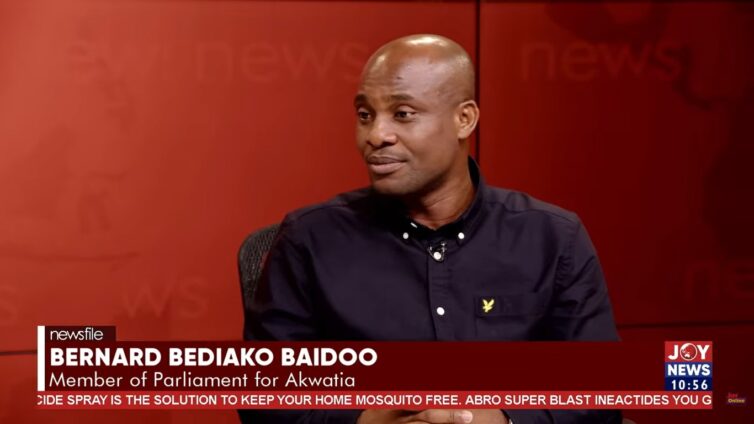
The Member of Parliament for Akwatia, Bernard Bediako Baidoo, has rejected the Minority’s accusation that the Mahama administration is attempting to pack the Supreme Court.
Mr Baidoo argued that the circumstances surrounding President John Mahama’s nominations were different from those under former President Nana Addo Dankwa Akufo-Addo.
According to him, the National Democratic Congress’ objection in 2024 was not merely about increasing the number of judges on the Supreme Court. He said the party’s concern was that Mr Akufo-Addo was allegedly appointing close friends and political allies to the country’s apex court.
Mr Baidoo maintained that the same allegation could not be made against the Mahama administration’s nominees.
"What I heard the NDC said during that period was that it was packed by people who were close to the then president (Akufo-Addo), and to his party," he said on JoyNews’ Newsfile on Saturday, August 29, while discussing the recent three Supreme Court nominees by President John Mahama.
"The circumstances are not the same. In this particular instance, the president requested that we come to do a particular job for the executive," he argued.
He was responding to the Minority’s charge that the governing NDC had abandoned the position it took while in opposition.
Minority Leader Alexander Afenyo-Markin recently questioned why the NDC, which accused the Akufo-Addo administration of court-packing, was now supporting the appointment of additional justices.
“When it was Akufo-Addo’s time, and he brought three Supreme Court nominees, your side argued that it amounted to the packing of the courts,” Mr Afenyo-Markin said.
The Minority subsequently walked out of the Appointments Committee proceedings on Thursday, August 27, after objecting to what it described as an unnecessarily compressed timetable for vetting the nominees.
It argued that the Supreme Court had no urgent vacancies and that the public had not been given sufficient opportunity to participate in the process.
Parliament later approved Justice Sophia Rosetta Bernasko Essah, Justice Edward Amoako Asante and private legal practitioner Anthony Forson Jnr for appointment to the Supreme Court. The approval followed the adoption of the Appointments Committee’s report recommending all three nominees.
Latest Stories
-
‘Nkoko Nketenkete’ boosts local poultry production from 4.6% to 22% in one year – Agric Minister
14 minutes -
ARK Foundation boss warns against stigmatisation of abuse victims
21 minutes -
Health investment beginning to improve access to care – Akandoh
29 minutes -
“It is meaningless” – Parent laments as teachers’ strike leaves boarding school students idle
30 minutes -
Austin Gamey predicts possible end to teachers’ strike, urges better negotiation
33 minutes -
Mahama and Trade Minister champion local manufacturing during Ghato Foods visit
34 minutes -
Labour Minister, ILO Country Director strengthen partnership on decent work and jobs
35 minutes -
Approved vaccine to be rolled out in Upper West next week-GHS
38 minutes -
Trump wants to reduce the cost of fuel as the midterms loom – will it work?
40 minutes -
Fear, institutional bias and lack of support deter domestic abuse victims from reporting – Lawyer
41 minutes -
Yellow fever outbreak is under control – Health Minister
42 minutes -
Communication Minister Sam George called to the Bar
48 minutes -
Kenteman’s Kentemusic weaves ‘Kente Love’
50 minutes -
Former JoyNews journalist Richard Kwadwo Nyarko called to the Bar
1 hour -
Chopmoney Bookkeeping seeks to simplify bookkeeping for Ghana’s small businesses
1 hour