

Audio By Carbonatix
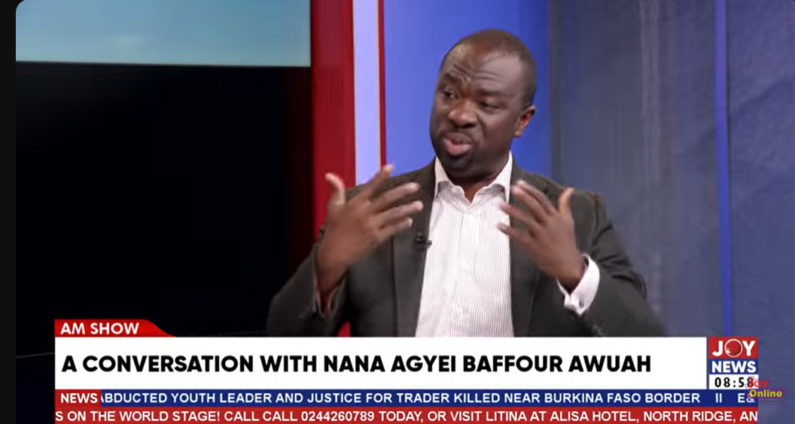
The Member of Parliament for Manhyia South, Nana Agyei Baffour Awuah, has urged Ghana and African leaders to translate discussions on the transatlantic slave trade into tangible national development initiatives.
Speaking on News Desk on Thursday, March 26, Nana Awuah reflected on the recent United Nations vote on a draft resolution recognising the transatlantic slave trade and the racialised enslavement of Africans as one of the gravest crimes against humanity.
The initiative, led by Ghana’s Minister for Foreign Affairs, Samuel Okudzeto Ablakwa, was scheduled for debate on March 25, coinciding with the International Day of Remembrance for Victims of the Transatlantic Slave Trade.
The proposal, championed by President John Dramani Mahama in his role as African Union Champion for Reparations, aims to move global discourse beyond symbolic recognition towards legal accountability and reparative justice.
Nana Awuah criticised what he described as a “talkshop” approach to historical injustices, emphasising the need for practical action:
“We seem to like a lot of talkshop and we prefer to be talking at different occasions and different times, but that is not what drives development. It was unfortunate—the slave trade was unfortunate, colonialism was unfortunate—but there is always a silver lining in every misfortune,” he said.
He encouraged leaders and citizens alike to focus on harnessing the country’s resources and opportunities:
“Let’s explore that as a country. Let’s roll our sleeves, let our leaders roll their sleeves, wear their boots, get to the ground and work. Let’s see what we can make of everything God has given us in this country. Every legacy from colonial rule—what value are they? They may potentially give us more than what we are looking for by way of reparation,” he added.
Commenting on the UN vote, Nana Awuah observed that countries which opposed or abstained were consistent with their historical positions on reparations:
“Argentina, Brazil, and others have their own issues with the slave trade. Looking at the countries that voted against it and those who abstained, they are being consistent. They are telling us that they still stand by what they have said historically—that they are not going to pay any reparations. And we know that voting to support this is the beginning of the demand for reparations,” he concluded.
Latest Stories
-
Vice President launches Mfantsipim’s 150 years of shaping Ghana’s greatest mind
17 minutes -
I assure Otumfuo, Mahama will join him to commission KNUST Teaching Hospital by end of this year – Haruna Iddrisu
58 minutes -
Gov’t to roll out free special education for persons with disabilities from July 1 – Education Minister
1 hour -
“We used it to test our officiating officials’ readiness” – Bawah Fuseini after CAA Athletics event
2 hours -
Volleyball emerges as Ghana’s fastest rising sport
2 hours -
National Sports Fund needs strong leadership from the top – Administrator David Wuaku
2 hours -
JoySports Exclusive: Steve McLaren in talks with GFA after expressing interest in Black Stars job
2 hours -
Fire guts auto parts warehouse at Bubuashie, one fire officer injured
2 hours -
I owe my victory to coach Ofori Asare – Allotey after winning WBA Africa Gold Super Flyweight belt
2 hours -
Church of Pentecost supports over 2,000 BECE candidates in Obuasi with career guidance seminar
4 hours -
Brandon Asante and Coventry all but promoted to Premier League despite Sheffield Wednesday draw
4 hours -
GPL 2025/26: Late Kwartemaa strike downs Hearts in Tema
5 hours -
Ghana Faces Sierra Leone Moment as Prosecutorial Powers come under strain
5 hours -
Don’t consume fish or seafood from Tema Shipyard until further notice – FDA warns
5 hours -
Why volunteering might be Africa’s most underrated career accelerator
5 hours