

Audio By Carbonatix
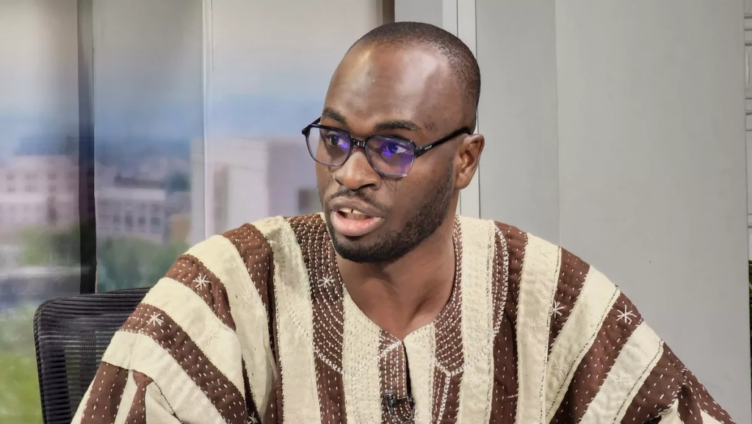
The Member of Parliament for Walewale, Dr Tiah Abdul-Kabiru Mahama, has criticised the government’s fiscal management, arguing that its spending pattern contradicts claims of cost-cutting and prudent economic management.
His comments follow an announcement by the Ministry of Finance (Ghana) that restrictions on new domestic bond issuance have expired. The announcement was made by the Finance Minister, Cassiel Ato Forson, through his social media platforms.
Speaking on Newsfile on JoyNews on Saturday, March 7, Dr Mahama argued that the government’s current expenditure profile raises concerns about its stated commitment to fiscal discipline.
“This government has spent more money than any other government in the fiscal year. That’s also a fact,” he said.
“Now, to what end are your cost-reduction measures when they do not reduce your budget spending? It basically means that you are starving some areas and putting resources into other areas that are probably not relevant.”
Dr Mahama noted that successive governments have historically justified borrowing as a means of financing development and strengthening the productive sectors of the economy.
“Every government justifies borrowing by anchoring it on the fact that we need to invest in the productive sector and improve our infrastructure base, on the basis of which the economy can grow,” he explained.
“That has always been the reason. It has always been the mantra and the slogan for every government deciding to borrow.”
However, he criticised the current administration for previously condemning borrowing by the former government while now signalling its intention to return to the domestic bond market.
According to him, the previous administration led by the New Patriotic Party (NPP) undertook significant infrastructure development across the country, financed partly through borrowing.
“We have seen massive and monumental infrastructure development under the NPP government across the country, where every region had its fair share,” he said.
“When you follow the development tracker, you will see statistics showing projects in almost every district. For the first time, this was done using borrowing alongside internal resources.”
Dr Mahama said the government’s latest statement effectively signals its intention to resume borrowing from the domestic bond market after relying heavily on short-term instruments such as treasury bills.
“This government is clearly telling us one thing, that they are now ready to go back to the bond market,” he said.
He added that the statement also suggests the government intends to reduce its reliance on short-term borrowing.
“They are saying they have been too dependent on the short-term end of the market, particularly treasury bills, and that they want to move away from that,” he noted.
However, he argued that openly signalling such intentions undermines the government’s narrative of fiscal restraint.
“If you decide to borrow, you are basically telling us that you do not want to live within your means,” he said.
“The moment you signal to the market that you want to borrow, you are also telling us that the domestic revenue you are generating is not sufficient for the projects you want to undertake and the commitments you have made.”
Dr Mahama also questioned what he described as the government’s perception that there is enough fiscal space to justify new borrowing.
According to him, the apparent improvement in Ghana’s debt indicators may be misleading.
“One of the reasons why I think the fiscal space they are referring to is fictitious is because the currency has been overvalued,” he argued.
He claimed that large foreign exchange injections into the economy have artificially strengthened the Ghanaian cedi, which could make the country’s debt-to-GDP ratio appear lower than it would otherwise be.
“You are basically creating a false strength of the cedi, and that translates into your debt-to-GDP appearing lower than it should be under the actual strength of the currency,” he said.
Dr Mahama also defended the controversial Domestic Debt Exchange Programme introduced under the previous administration, insisting that the current government is benefiting from the fiscal relief created by the policy despite criticising it.
“The fruits of the Debt Exchange Programme created fiscal space because our debt obligations were pushed into the future,” he said.
“For much of 2025 and 2026, certain repayments are not due. Those are the benefits of the programme.”
He described the policy as a difficult but necessary measure taken to stabilise the economy.
“No austerity measure is ever popular,” he said.
“Structural Adjustment Programmes in the 1980s and 1990s were also unpopular, but they were bitter pills that ensured that the economy eventually recovered.”
The Walewale MP further pointed to Ghana’s programme with the International Monetary Fund (IMF), which imposed strict borrowing conditions as part of efforts to restore debt sustainability.
He explained that the IMF programme included restrictions on new borrowing to prevent the government from accumulating additional debt while receiving financial support.
“The IMF placed these conditions because when your debt levels are unsustainable and you continue borrowing, there is always the temptation to use new loans simply to service existing debt,” he said.
According to him, the expiration of those restrictions appears to have prompted the government to signal a return to the bond market.
Dr Mahama cautioned that rushing back into the bond market could expose Ghana to renewed fiscal risks, particularly if government revenues fail to meet expectations.
“If your revenue is not performing and you rush to borrow, you risk throwing yourself back into the same debt trap,” he warned.
He also argued that recent improvements in macroeconomic indicators do not necessarily reflect deep structural changes within the economy.
“The positive changes we are seeing are not based on structural reforms,” he said.
“They are largely attempts to address the symptoms of the economy rather than the underlying structural issues.”
While acknowledging that borrowing can be necessary to finance development, Dr Mahama urged the government to exercise caution.
“I am not saying government should not borrow,” he clarified.
“Government will have to finance development activities, but the borrowing must be directed towards productive sectors and infrastructure that will strengthen the economy in the long term.”
He warned that without careful planning, additional borrowing could end up financing existing obligations rather than driving sustainable economic growth.
Latest Stories
-
US, Iran fail to reach peace agreement after marathon talks in Pakistan
1 hour -
Port crises loom as 11,000 drivers threaten four-day strike
2 hours -
A source of excellence across generations – Vice President Opoku-Agyemang lauds Mfantsipim
2 hours -
(Photos) Mfantsipim School launches historic 150th anniversary
3 hours -
Knights and Ladies of Marshall group backs Catholic Bishops’ stance on anti-LGBTQ+
4 hours -
Bright Simons writes: All the Filla in the Ibrahim Mahama/E&P – Gold Fields Saga
4 hours -
Monetise Idiocy In Ghana
4 hours -
ECG kicks off Phase Two of transformer upgrades at Lashibi; brief outages expected
5 hours -
The Ghanaian prophet and the mysterious death of his scottish wife Charmain Speirs
5 hours -
Nearly 400 sentenced in Nigeria for links to militant Islamists
5 hours -
Ghana’s recovery supported by gold strength despite global oil price pressures – Standard Bank Research
5 hours -
Methodist Church hails Mfantsipim@150; calls for “fresh consecration” to excellence
6 hours -
‘Excellence is our inheritance’ – Nana Sam Brew-Butler hails Mfantsipim’s 150-year reign in leadership
6 hours -
Kwaku Azar writes: A-G vs OSP
6 hours -
Mfantsipim–Adisadel rivalry built excellence, not division – Sam Jonah
6 hours