

Audio By Carbonatix
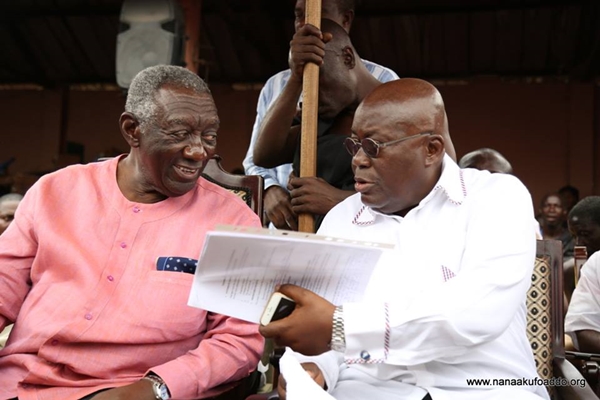
Former President John Agyekum Kufuor says the New Patriotic Party’s (NPP) defeat in the 2024 general elections should serve as a strong reminder to all political leaders that Ghanaian voters will not tolerate misgovernance.
In an interview on The Delay Show, the former President linked the party’s electoral setback to several controversial decisions under the Akufo-Addo administration, including the Domestic Debt Exchange Programme (DDEP), the National Cathedral project, and the failed Power Distribution Services (PDS) concession.
“The Ghanaian electorate cannot be taken for granted. Politicians must learn from this,” Mr Kufuor said, emphasising that the loss reflects the public’s response to choices made in government.
According to him, the NPP’s historic victory in 2016 was heavily influenced by the legacy of his own administration, which shaped the party’s messaging at the time. However, he observed that the direction of governance changed after President Nana Addo Dankwa Akufo-Addo took office.
“Before the 2016 election that brought Akufo-Addo to power, the campaign was anchored on my achievements. They played a major role in the victory,” he noted. “The government started well, but things shifted after he assumed office.”
Mr Kufuor said although the administration initially appeared promising, post-COVID-19 decisions deepened public dissatisfaction. He cited the troubled bond market, setbacks surrounding the PDS agreement, and persistent concerns over the National Cathedral project.
Touching on the Cathedral, the former President expressed worry over the use of state resources, saying he was not consulted during the planning stages and only became aware of developments when the construction was already underway.
He also questioned why important state buildings, including residences for judges and other officials, were demolished for a project that remains incomplete.
Looking back at the party’s electoral fortunes, Mr Kufuor highlighted the contrast between the overwhelming win in 2016, the tense and closely contested 2020 elections that produced a hung Parliament, and the decisive defeat in 2024.
“We won massively in 2016. The 2020 elections were tight and gave us a hung Parliament, and 2024 was something else altogether,” he remarked.
He said the trend underscores a critical message: political leaders must uphold discipline, transparency and sensitivity to public expectations if they hope to maintain the confidence of the electorate.
Latest Stories
-
Ghana’s economy grows by 7.4% in July 2026
6 minutes -
NDC member challenges Dennis Yeboah Twumasi’s eligibility for Bono Regional Secretary elections
16 minutes -
Popular Nigerian gospel singer Toluwanisings dies
27 minutes -
Spio-Garbrah proposes debt swaps to fund reparative justice in Africa and Caribbean
34 minutes -
Alban Bagbin calls for governance reforms and coordinated action to address Africa’s debt crisis
37 minutes -
AAK Academy Ghana trains 22 chocolate and confectionery companies in production techniques
38 minutes -
Adwumawura Programme trains second cohort of young entrepreneurs in Bono East
40 minutes -
Destroying Jimi River for gold could cost us our lives – Asantehene
47 minutes -
Sammy Gyamfi didn’t say BoG has ceded its forex role to us – GoldBod
2 hours -
High Court sets November 4 for ruling on Wontumi’s bail application
2 hours -
Tetteh Kwetey files nomination for NDC Greater Accra Regional Chairmanship
2 hours -
Korle Bu appeals for more doctors, nurses as A&E Centre struggles under pressure
2 hours -
AFCON 2027Q: ‘I’m optimistic Black Stars can turn things around’ – Agyemang-Badu
2 hours -
Digital innovation could widen Africa’s inequalities if people are left out – Sam Jonah
2 hours -
Galamsey is an economic, health and moral problem – Sam Jonah
2 hours