

Audio By Carbonatix
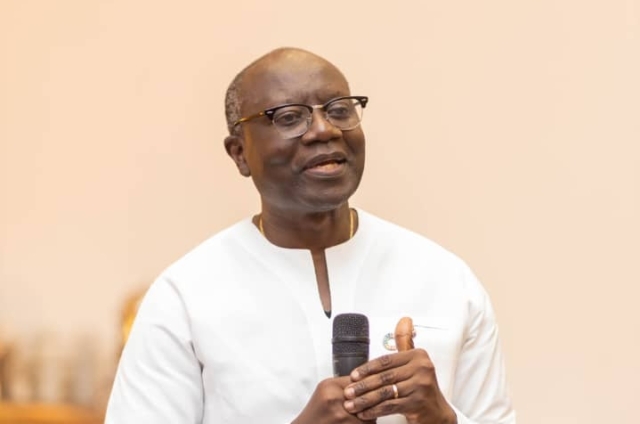
Ghana’s Finance Minister, Ken Ofori-Atta, argues that digital technologies and responsible payment systems have a major role to play in climate adaptation and climate emergency responses.
The ‘Global Stocktake’ during COP28 in Dubai last December will be seen as a critical milestone for African economies for at least two reasons: the agreement to ‘transition away’ from fossil fuels and the operationalisation of the Loss and Damage Fund.
In the long history of climate change activism and actions, with common but differentiated responsibility set out in the Paris Agreement, these are giant steps that will help the African continent to build resilience and adaptation to the disproportionate burden of climate change, while accelerating sustainable development.
It is now clear. Africa is warming faster than the rest of the world. Left unabated, climate change will continue to have adverse impacts on African economies and societies, and hamper growth prospects and wellbeing.
According to the 6th IPCC Assessment, Africans are disproportionately employed in climate-exposed sectors: 55–62% of the sub-Saharan workforce is employed in agriculture and 95% of cropland is rain-fed.
In rural Africa, climate hazards pose heightened risks to low-income and female-headed households, with UN Women projecting a worst-case scenario of 158 million more women and girls pushed into poverty by mid-century in low-income countries. These statistics are grim. Protecting these people and promoting their prosperity would require a stronger voice and stronger partnerships.
That is why Ghana, in its role as the chair of the V20 Group of the world’s most climate-vulnerable nations, raised a clarion call in Dubai for urgent financial and technical support to adapt to climate change while advancing the UN Sustainable Development Goals.
The appeal comes in light of staggering figures. Since 2000, V20 countries have incurred $525bn in costs due to multiple impacts of climate change. It is even more distressing that about 98% of the nearly 1.5bn people residing in these countries are bereft of financial protections.
"We cannot triumph from this adversity in a vacuum. We must, together, confront this challenge using all available and imaginable tools. So, financial innovation and technologies become paramount. They have an outsize role in building climate preparedness and emergency response", said Mr. Ofori-Atta.
Importance of digital payments
Responsible digital payments have emerged as critical enablers to addressing climate change in Africa as highlighted by the World Bank Group in 2020.
Indeed, the success of digital payments during the Covid-19 pandemic offers a valued blueprint for building climate resilience, particularly in vulnerable communities. The indispensability of a robust digital payment ecosystem during emergencies was underscored.
In Ghana, for example, government initiatives ensured that financial aid reached those most in need and in time. Leveraging existing digital payment infrastructure and collaborating with financial institutions, the government reduced inefficiencies, minimised physical contact, and played a vital role in the broader containment effort.
The government of Ghana’s dedication to advancing a digital economy has been matched by significant investment in digital infrastructure. With Ghana pioneering an integrated interoperability system, through the Ghana Interbank Payment and Settlement Systems (GhIPSS), interoperable mobile money transactions surged to $138 million, totalling over $2 billion in 2022.
A digital ID system, the New Payments Systems Act, the Consumer Recourse Mechanism directive, also continues to play a vital role in promoting responsible digital financial inclusion in Ghana.
The Ghana.gov platform equally underscores the government’s commitment to providing a comprehensive one-stop shop for digitally paying for all public services; thus improving predictability and accountability over public resources for mitigating climate challenges.
Together, these infrastructures have laid the foundation for resilient social-protection systems and enhanced anticipatory action in the context of climate related transfers, particularly for women who often disproportionately bear the burden of climate change.
Call to action
Recognising their value and potential, and whilst at COP28, Ghana, the Vulnerable Twenty (V20) Group, the Philippines, Ethiopia together with the UN-based Better Than Cash Alliance, the World Food Programme (WFP) and Mercy Corps, launched a bold call to action.
The call urges faster up-take by governments, international organisations, and the private sector, to expand digital payments and digital public infrastructure for a more climate-resilient future for all.
It is a secure and sure way to close the digital divide by increasing access and connectivity to reduce climate-vulnerability, and put women, youth, indigenous peoples, and communities in fragile and climate-vulnerable areas at the centre of adaptation planning.
Investing in digital payment infrastructure and extending essential digital services to regions most affected by climate change, holds a better and bolder promise for responding to extreme weather and transforming despair into hope for millions of Africans.
Financial innovations by the private sector need to be spurred on with public funds. Adoption efforts by households need to be more affordable to inspire up-take. Yet, the squeeze on public finances across the continent is palpable.
Over 60% of low-income countries are in, or at high risk of, debt distress, while access to capital markets is constrained with prohibitive cost of borrowing. This leaves little room to fund these and other critical investments in support of climate action.
The world needs to deploy all the tools to protect our planet and people. Fortunately, critical voices were raised and heard at COP28. What remains is actions: actions that enable countries to actualise historic agreements and invest in known solutions. The ‘call to action’ on Responsible Payment Systems is a call to ‘lead by example’ at all levels for the sake of our common humanity.
Latest Stories
-
Nearly 2,000 displaced, schools damaged as windstorm wreaks havoc in Gushegu
5 minutes -
Ghana’s Derrick Kohn to work under Marie-Louise Eta as she becomes first woman to coach men’s Bundesliga team
9 minutes -
Accra Open Championships conclude with strong performances ahead of African Championships
17 minutes -
Ghana to begin camping with 12 athletes after Accra Open Championships – Bawa Fuseni
38 minutes -
Anthony Joshua declines showdown with Tyson Fury but admits they ‘probably’ clash next
51 minutes -
Tyson Fury dominates Makhmudov, calls out Joshua next
1 hour -
I have supported highway authority financially to fix roads in my constituency – A Plus
2 hours -
US, Iran fail to reach peace agreement after marathon talks in Pakistan
3 hours -
ECG kicks off Phase Two of transformer upgrades at Lashibi; brief outages expected
3 hours -
Port crises loom as 11,000 drivers threaten four-day strike
4 hours -
A source of excellence across generations – Vice President Opoku-Agyemang lauds Mfantsipim
5 hours -
(Photos) Mfantsipim School launches historic 150th anniversary
5 hours -
Knights and Ladies of Marshall group backs Catholic Bishops’ stance on anti-LGBTQ+
6 hours -
Bright Simons: All the Filla in the Ibrahim Mahama/E&P – Gold Fields Saga
7 hours -
Monetise Idiocy In Ghana
7 hours