

Audio By Carbonatix
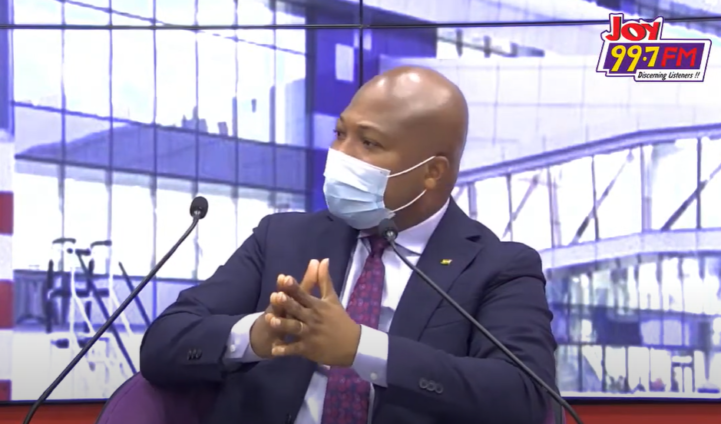
North Tongu Member of Parliament, Samuel Okudzeto Ablakwa, has called on the Attorney-General to repeal laws that criminalise false publications in the country.
According to him, the provisions of Sections 207 and 208 of the Criminal Code are a subtle re-introduction of the repealed Criminal Libel Law.
His call follows the recent wave of arrests and prosecutions of journalists and politicians for purportedly making untrue statements that have the likelihood of causing fear and panic.
The statement, which expressed worry over the recent trend, also called on Parliament to condemn same.
“I believe the time has come for us to repeal those sections of the Criminal Code, Section 207, Section 208 relating to false publication. It’s clearly reintroducing the Criminal Libel through the backdoor and I will urge to the Attorney-General to take steps to have that repealed.
“I agree with the Media Foundation for West Africa and civil society organisations that are saying if you feel some false publication has been made and it affects your person, you have civil remedy,” he said.
In a related development, the Builsa North Member of Parliament (MP), James Agalga, has revealed that he will soon file a Private Member’s Bill to repeal laws that criminalise publication of false news.
Speaking in an interview on JoyNews’ Upfront on Wednesday, February 16, the former Deputy Interior Minister explained that the Bill is targeting all repressive laws because they are being abused.
“I could propose that Section 208 in its entirety be taken out from the Criminal and Other Offences Act. We must protect and safeguard public order.”
“But false news and the publication of same, which does not cause any harm to the public and law and order, we shouldn’t necessarily criminalise them,” he argued.
Meanwhile, a Democracy and Development fellow at the Centre for Democratic Development (CDD), Prof Kweku Asare, charged judges to strike down the wrongful application of the law by the Police.
“I have no difficulty with Section 207, which is a law that deals with public peace, has something to do with whether you use threatening or insulting or abusive words; for instance, if somebody is making loud noise after midnight in a residential area or somebody goes to a funeral and starts insulting people."
“There is a proper place for such a law. Section 208, on the other hand, deals with false statements that are likely to incite fear and panic.”
Latest Stories
-
President Mahama ends Resetting Ghana tour of Ahafo Region
1 hour -
African negotiators seek delivery of climate commitments at COP31
1 hour -
BoG develops AI rules for financial sector
1 hour -
‘Big Push’: Government assures contractors of prompt payments
1 hour -
Court fines miner for breaking into gold buying shop
1 hour -
Tarkwa court jails labourer for three years over GH¢123,000 theft
2 hours -
GAEC must retain nuclear scientists for Ghana’s nuclear ambitions – Minister
3 hours -
Man reportedly mistaken for game and shot by hunter dead in forest
3 hours -
19-year-old mason jailed 15 years for defiling seven-year-old pupil
3 hours -
Ghana’s banking sector assets rise 20.47% to GH¢500.2bn – BoG Governor
3 hours -
22 injured as Sprinter bus overturns at Sege after tyre burst
3 hours -
UN housing expert urges Ghana to strengthen Rent Control Department amid housing affordability concerns
3 hours -
Delta-BCI partnership reaches 166,000 people with breast cancer education
3 hours -
Power restoration fault suspected in Kumasi Central Market fire
8 hours -
The 7-foot giant of Ngleshie Amanfro: Seven-foot Ghanaian Ephraim Saawa dreams of joining the national basketball team
9 hours