

Audio By Carbonatix
The New Patriotic Party (NPP) has called for renewed discussions on the financing of political parties following the Supreme Court's ruling declaring Ghana's political party delegate system unconstitutional.
According to the party's Deputy General Secretary, Haruna Mohammed, political parties cannot be expected to shoulder the financial burden of expanded internal elections without adequate support, given that they are prohibited by law from operating as profit-making organisations.
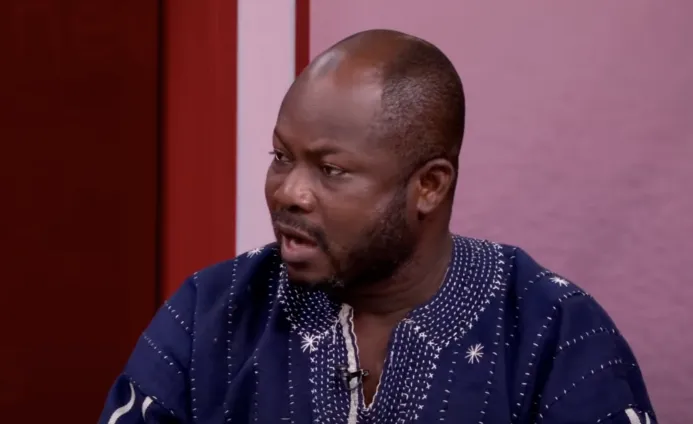
Speaking on Joy FM's Top Story, Mr Mohammed said the implementation of the Supreme Court's decision should be accompanied by broader reforms that address the financial sustainability of political parties.
"Political parties need to be taken a critical look at," he said.
He explained that under Ghana's legal framework, political parties are restricted in how they generate revenue, making it difficult to finance large-scale internal electoral processes.
"If you read the Political Parties Act, no political party in Ghana has the right to do business for profit-making. It is good that we remind the law agencies, the judiciary and the people of Ghana to realise that political parties are not being funded," he stated.
Mr Mohammed argued that while expanding participation in the selection of parliamentary and presidential candidates is a positive democratic development, the cost of organising such elections could become a major challenge if the issue of funding is left unresolved.
He noted that the NPP has already begun implementing reforms aimed at broadening participation in its internal elections, including compiling a membership database through both manual and digital registration.
According to him, the party has successfully used the register for polling station and electoral area elections, demonstrating its commitment to strengthening internal democracy.
However, he maintained that implementing the Supreme Court's ruling on a national scale would require more than organisational preparedness.
"The issue of financing political parties must be looked at seriously because political parties are not profit-making entities," he stressed.
Mr Mohammed's comments come after the Supreme Court declared the delegate system used by political parties unconstitutional, a landmark decision expected to compel parties to adopt more inclusive voting systems that allow broader participation by registered members.
While political parties have largely welcomed the ruling, concerns are emerging over the financial and logistical demands of organising nationwide internal elections without a dedicated framework to support party financing.
Latest Stories
-
GRA assures Tullow of collaboration to settle $393m tax liability without disrupting its petroleum operations
28 minutes -
South Korea demands apology from Pyongyang for landmine blasts that injured three
31 minutes -
Carlos Queiroz not the sort of coach Black Stars need – Nii Lante Vanderpuye
1 hour -
AFCON 2027Q: ‘Our Black Stars team is gone’ – Former Sports Minister
1 hour -
Prof. Prempeh calls for public review of draft constitutional reform bills
2 hours -
AFCON 2027Q: ‘I have never seen a poor performance from Black Stars like against Gambia’ – Nii Lante Vanderpuye
2 hours -
Nigeria set to launch National Digital Address System 9 years after Ghana showed the way
2 hours -
Policy rate decision takes time to reflect in lower lending rates – BoG
2 hours -
Western Regional Minister applauds Karpowership’s role in Ghana’s power sector
3 hours -
Playback: Road safety crises: Where are we getting it wrong?
3 hours -
Enterprise Life celebrates 25 years of protecting families and building trust
3 hours -
ICC London rules in favor of Ghana against Tullow over $400m tax charge
3 hours -
We are disappointed in ICC’s ruling over our corporate income tax assessment in Ghana – Tullow Oil
3 hours -
Cost of building inflation for August 2026 increases to 4.6% – GSS
3 hours -
Today’s front pages: Wednesday, September 30, 2026
4 hours