

Audio By Carbonatix
Dr Afua Ansre, UN Women Ghana, says the potential of youth in agribusiness is limitless, but they require access to finance, mentorship, market integration, and digital literacy.
She called on the government to commit to policies that dismantled these barriers and unleashed their entrepreneurial spirit.
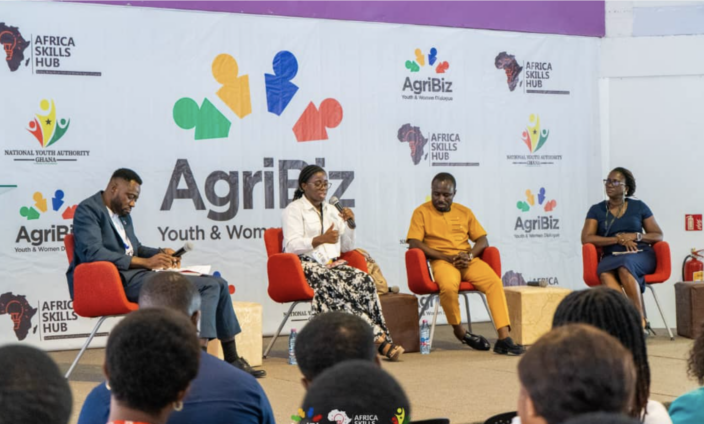
Dr Ansre was speaking at the maiden edition of AgriBiz Youth & Women Dialogue (AYWD) on the theme: “Sustaining & Scaling Youth and Women-led Agribusiness for Economic Growth.”
The AYWD, an initiative of Africa Skills Hub Foundation (ASH) in partnership with National Youth Authority, is a platform for young people and women in agriculture and agribusiness to share experiences, tackle challenges, and explore opportunities.
This dialogue seeks to increase their voices, promote collaboration, and advocate for policies that enhance their participation in the sector.
The event was to identify key challenges young people and women face in agribusiness, and propose actionable solutions and explore emerging agribusiness opportunities, including innovative financing and technology.
It was also to advocate for policies that enhance inclusivity (youth and women) in agribusiness and facilitate networking
to foster partnerships and collaboration among stakeholders.
She said as “we focus on women in agriculture, we must also acknowledge their critical role as caregivers and the impact of agricultural practices on the well-being of young children.”
Dr Ansre said women farmers were often responsible for ensuring household food security and nutrition, and supporting them directly translated to healthier families and communities.
She said to achieve sustainable transformation in agribusiness, stakeholders must bridge the gender and youth gap through these key interventions:
She said studies demonstrated that if female farmers had equal access to productive resources, farm yields would increase by 20-30 per cent.
She said Ghana’s agricultural financing gap was estimated at $4 billion annually, according to the African Development Bank (AfDB) and “we must prioritise and scale up targeted credit facilities specifically for women and youth in agribusiness, offering favorable terms and conditions.”
She said in Rwanda, youth-led agribusiness innovations had already achieved a remarkable 15 per cent boost in agricultural productivity over the last five years, as reported by AfDB.
Dr Ansre said Ghana could emulate this success by strategically investing in agritech, mechanization, and climate-smart agriculture.
She said digital agriculture solutions had the potential to increase farm productivity by up to 70 per cent and reduce post-harvest losses by as much as 30 per cent, according to the World Bank.
“Across Africa, young entrepreneurs are pioneering precision farming technologies, including drone-assisted irrigation and AI-driven soil analysis,” she added.
She urged governments, financial institutions, development partners, the private sector, civil society, and everyone to act decisively and collaboratively to support these groups of people
She called for investment in women, empowering young people to build a future where agriculture was not simply a means of survival, but a thriving pathway to prosperity, innovation, and sustainable development for all Ghanaians.
“Together, let us cultivate a brighter future for Ghana’s agribusiness sector, transform lives, uplift communities, and leave a legacy of progress for generations to come,” she added.
Daniel Antwi, Executive Director of ASH, said as a dedicated enterprise support organisation for youth and women, Africa Skills Hub understood the role of capacity building, capital access and community engagement in supporting and strengthening youth and women enterprises on their entrepreneurial journeys.
He said the conversations provided insights into challenges and opportunities in youth and women-led agribusinesses.
Latest Stories
-
Young woman found dead at Kasoa Peace Town
27 minutes -
Livestream: The Law examines lawful arrest in Ghana
52 minutes -
Mahama urges African governments to treat healthcare as an investment, not budget cost
1 hour -
Bawumia congratulates John Boadu and new NPP executives, pledges support ahead of 2028
1 hour -
‘No talent should be left out’ – Bawumia pledges inclusive NPP campaign for 2028
2 hours -
Prof. Mike Oquaye recounts how he blocked Special Prosecutor’s attempt to arrest Bawku Central MP
2 hours -
Make health sovereignty a priority for Africa – Mahama
2 hours -
Dorimon Naa, Wa West DCE lead massive clean-up exercise; threaten sanctions against recalcitrant residents
2 hours -
Photos from Adom FM Y2K Jam
2 hours -
Praye Tiatia steals the show at Adom FM Y2K Jam [Watch]
2 hours -
Boakye Agyarko congratulates John Boadu, pledges support for NPP leadership
3 hours -
Antwi HiMight thrills fans with Antwi ne Antwi hits at Adom FM’s Y2K Jam [Video]
3 hours -
Amb. Edward Boateng congratulates Boadu, Kodua on election wins
3 hours -
John Boadu pledges to rebuild NPP from grassroots and restore ‘winning machinery’
3 hours -
Ashaiman Assembly deploys monitoring system to curb dumping in storm drain
4 hours