

Audio By Carbonatix
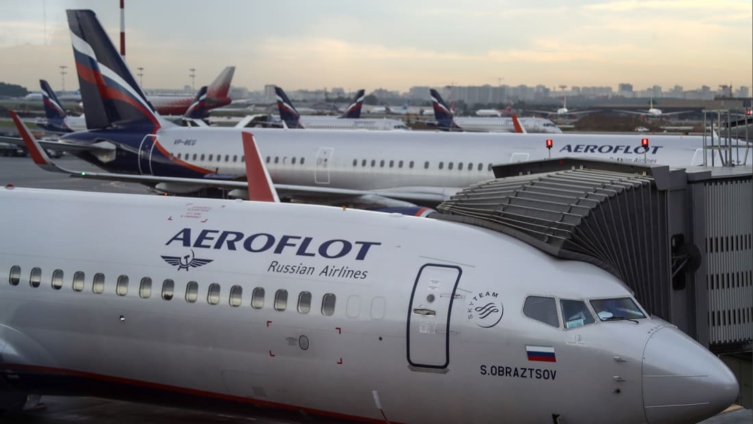
Russian airline Aeroflot has announced it will designate specific seats onboard its planes for passengers who refuse to wear masks.
"It is critically important for us to ensure the safety of all passengers," Yulia Spivakova, a spokeswoman for the airline, said in a statement.
Aeroflot, which is Russia's largest airline and national flag carrier, has a policy that travellers must wear masks while boarding and while on the plane unless they are eating, drinking or changing masks.
However, it seems that some passengers are not obeying these guidelines.
And because a plane can't just stop in midair and kick out an offending passenger, Aeroflot has designated certain seats on each flight for travelers who cannot or will not follow the mask policy.
"[This] does not exclude the application of other measures of liability for violation of the rules for the use of personal protective equipment on board," Spivakova added.
Mask wearing policies on planes vary throughout the world and individual carriers often make their own rules. Much of the burden on enforcing these policies is passed onto flight attendants.
Russia is not the only country where mask regulations on board airplanes has become an issue.In the United States, several high-profile incidents have occurred on flights where passengers refused to wear masks.
In July 2020, a Southwest Airlines flight returned to the gate at Denver International Airport when a scuffle took place between several passengers, one of whom claimed it was their "Constitutional right" not to wear one.
As of August of this year, Delta Air Lines announced that it had instituted nearly 250 lifetime bans on travellers who had refused to mask up.
The following month, two passengers on board two different domestic flights in Japan were removed from planes before takeoff, both for failure to wear masks. Aeroflot has not announced whether it will implement long-term bans or other punishments for passengers who refuse to keep their masks on throughout the flight.
But isolating them to a specific section of the plane may somewhat reduce the likelihood that an un-masked traveler could pass the coronavirus on to one of their seatmates.
Latest Stories
-
David Beckles claims second J60 Accra title
8 minutes -
No France cocaine suspect linked to Mahama, Vice President’s security details – NACOC
16 minutes -
Anwelle Foundation launched in Jirapa to tackle poverty, youth unemployment
37 minutes -
Joy Sports Editor Fentuo Tahiru Fentuo to moderate inaugural Music Meets Football Summit in Zambia
41 minutes -
Court premises too volatile for Baffour Awuah’s attempted arrest by EOCO – Inusah Fuseini
49 minutes -
Drug bust: Under no circumstances will NACOC leadership be compromised – Twum-Barimah
50 minutes -
VIDEO: EOCO’s attempted arrest of Baffour Awuah was flawed beyond saving – Law Lecturer
50 minutes -
Genuine Ghanaian exporters may face heightened foreign inspections over drug busts – Lawyer
50 minutes -
Stakeholders demand action against foreign-led illegal mining in Ahafo Region
2 hours -
Ghana handed tricky draw at 2026 Amputee World Cup
3 hours -
2024 Nyankpala election violence: Youth group petitions authorities over slow probe
3 hours -
Ghana, UNICEF strengthen partnership to advance child protection
3 hours -
Day Two of 3rd Republic Bank-JoyNews Habitat Fair ends with great homeownership offers and financing solutions
3 hours -
Guinness Ghana DJ Awards 2026 Pub Fest celebrates Ghana’s DJ culture as Accra turns up the energy
3 hours -
10th woman found dead in South Africa’s string of killings
3 hours