

Audio By Carbonatix
The Supreme Court has ruled, by a 5–2 majority decision, that all registered members in good standing of political parties must be allowed to vote in the election of their party leaders and candidates.
The decision effectively overturns the long-standing delegate system employed by Ghana's major political parties, paving the way for a "one member, one vote" system in internal party elections.
The ruling is expected to have far-reaching implications for the organisation of political parties and the conduct of future presidential, parliamentary and executive primaries.
A seven-member panel delivered the judgement on Wednesday, July 29, bringing to a close a constitutional challenge that has generated intense legal and political debate over the extent of democratic participation within political parties.
The suit was filed by former Minister for Environment, Science, Technology and Innovation, Professor Kwabena Frimpong-Boateng; veteran politician Dr Nyaho Nyaho-Tamakloe; and former Lands and Forestry Minister, Dr Christine Amoako-Nuamah.
They argued that restricting voting rights to a limited number of delegates was inconsistent with the democratic principles enshrined in Ghana's 1992 Constitution.
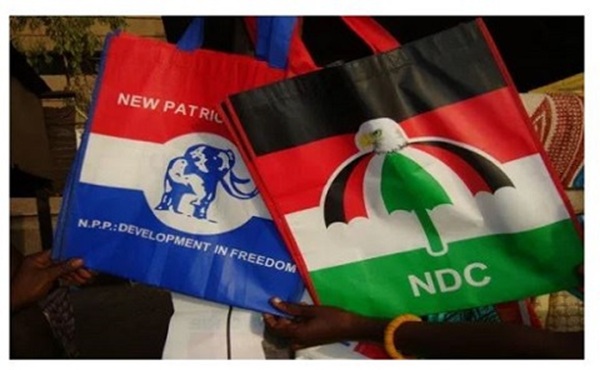
For decades, Ghana's leading political parties, including the New Patriotic Party (NPP), the National Democratic Congress (NDC) and the Convention People's Party (CPP), have relied on delegate-based electoral colleges to elect presidential candidates, parliamentary candidates and national executives.
Under the arrangement, voting rights were reserved for selected party executives, constituency officers and accredited delegates, leaving the vast majority of ordinary members without a direct say in choosing party leadership.
The plaintiffs contended that the system created inequality among party members by granting electoral rights to a privileged minority while excluding ordinary members in good standing.
They maintained that political parties, as institutions recognised under Article 55 of the Constitution, are required to organise and operate in accordance with democratic principles, making broad participation in internal elections a constitutional imperative.
In support of the challenge, the Attorney-General's Department also urged the Supreme Court to adopt a "one member, one vote" approach.
The state argued that political parties perform an important public function within Ghana's democratic framework and that their internal electoral processes should reflect the constitutional values of equality, participation and universal suffrage.
The Attorney-General further submitted that expanding voting rights to all registered members would strengthen accountability and deepen internal democracy.
Among the reliefs sought by the plaintiffs were declarations that the delegate systems contained in the constitutions of the NPP, NDC and CPP were unconstitutional, as well as orders compelling the parties to amend their constitutions to allow equal, direct and meaningful participation by all members in good standing.
They also sought directives requiring the Electoral Commission to ensure that political party constitutions comply with the democratic requirements of the Constitution and the Political Parties Act.
Latest Stories
-
GAF sets Sept. 28–30 for Documentation, Body Selection Exercise
22 minutes -
I resigned five months ago – BoG Governor Asiama explains GoldBod Board exit
38 minutes -
Trump says men arrested at UK air base used by US were looking to do ‘big damage’
54 minutes -
Trump confirms meeting with Anthropic’s Amodei, repeats dismissal of AI fears
1 hour -
China pushes back against US on Iran and Cuba in UN speech
1 hour -
OpenAI, Anthropic CEOs called to appear at Australian AI probe
2 hours -
Nigeria come from benhind to win in AFCON 2027 qualifier
4 hours -
South African white genocide does not exist, new ambassador to US tells BBC
4 hours -
T-bills auction: Government exceeds target marginally; yield on 91-day bill remains unchanged
4 hours -
Pope says ‘scourge’ of abuse must be rooted out as he visits Lourdes
5 hours -
GPL 2026/27: 10-man Aduana hand Kotoko defeat in Kumasi
5 hours -
News media must stay relevant or ‘society will struggle’, says World News Day boss
5 hours -
Kenyan High Commissioner hosts Heads of Mission from 25 countries
5 hours -
Embattled Serbian president resigns, paving way for early elections
5 hours -
GPL 2026/27: Medeama ease past Basake Holy Stars
5 hours