

Audio By Carbonatix
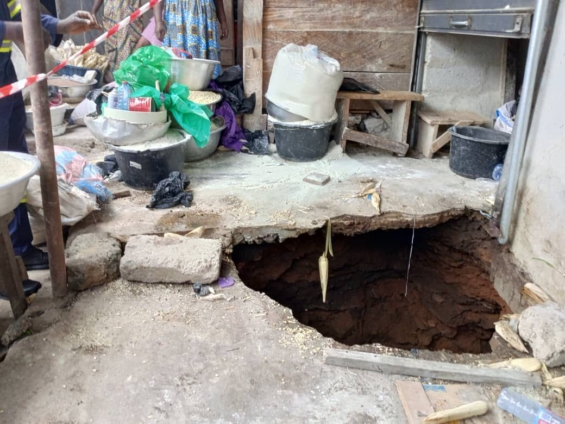
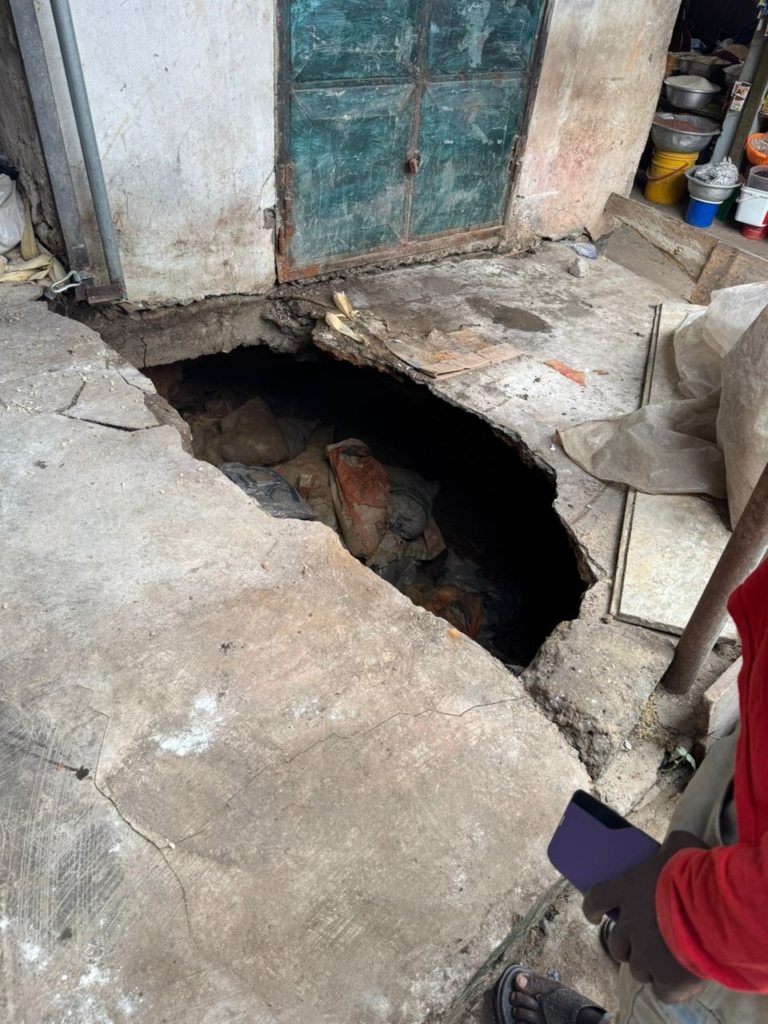
A gaping chasm where a shop floor once stood greeted traders at Tarkwa’s Women Market on the morning of Monday, September 15, a violent reminder that the town’s very foundation is being eaten alive.
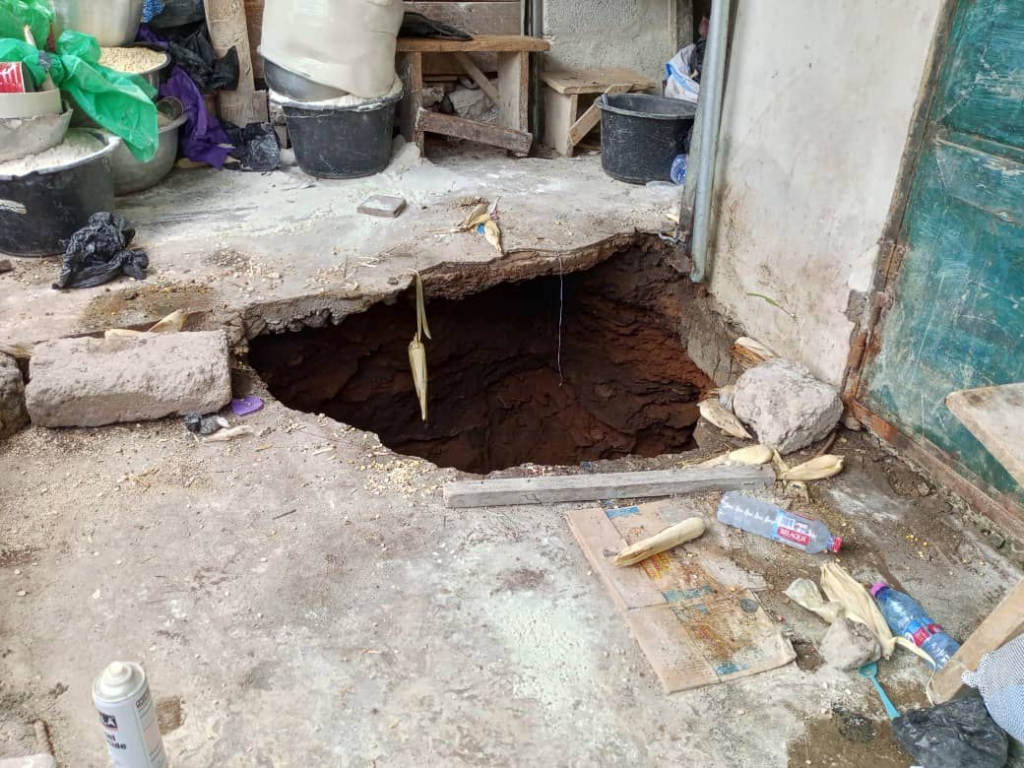
The overnight collapse, which nearly swallowed two storefronts whole, was not an act of nature but a direct result of the illegal mining tunnels silently ravaging the ground beneath one of the region's busiest hubs.
Traders arrived at a scene of sheer disbelief. Muttered sympathies quickly gave way to nervous glances as the scale of the void became clear. While a few hastily shifted their wares to safer ground, the two most affected shop owners displayed a grim, defiant normalcy, arranging their goods mere feet from the crater. Their greatest fear wasn’t another collapse, but that customers would now flee.
This is not a new story in Tarkwa; it is a recurring nightmare. For a broadcast journalist in the mining community, the frantic cover-up that followed was a familiar script. Instead of a formal investigation, the response was to hastily fill the hole with sacks of stones, a cheap disguise for a profound danger.
It is a pattern of neglect and imminent peril. Just last year, sections of the newly commissioned Nana Angu Road crumbled and were quietly patched over. But the consequences have turned deadly elsewhere. In 2021, seven miners perished in a galamsey pit collapse near Bonsawire. Another cave-in was reported at the Tarkwa Community Mine just last year.
The risks are no longer confined to those holding pickaxes. The danger is now migrating from the pits to the streets, markets, and homes of ordinary residents. “Sometimes I feel like the whole of Tarkwa is hanging,” one local remarked, a chillingly accurate description of a town built on a hollow shell.
Researchers confirm the terrifying reality. A 2023 study mapped “dead zones” across the Tarkwa-Prestea belt, identifying areas of extreme subsidence risk. While institutions like the University of Mines and Technology (UMaT) and the Ghana Geological Survey Authority possess the technology for seismic mapping, a comprehensive, town-wide survey remains elusive.
When contacted for comment, Municipal Chief Executive Ebenezer Cobbinah stated the incident “had not come to [his] notice.”
Tarkwa’s wealth has been extracted at a catastrophic cost. The gold that built the nation is now literally undermining its people.
The hole in the Women Market is more than a sinkhole; it is a warning tremor. Without urgent, systematic action to map the town's vulnerabilities, the next collapse may not be in a market after hours, but under a home, a school, or a crowded street in broad daylight. The ground is speaking. The question is, is anyone in power listening?
Latest Stories
-
Demand and savings deposits decreased in August 2026, but currency outside banks increased by 4%
18 minutes -
Fiscal policy implementation poses downside risk to inflation – BoG
52 minutes -
Organised Labour should seek fair adjustment, not excessive pay rise – Labour consultant
56 minutes -
BoG maintains medium-term inflation target of 8 ± 2%
1 hour -
Sammi Awuku urges NPP Germany to unite ahead of 2028 elections
2 hours -
The Inconvenient Truth: We cannot pray for the cure while protecting the disease
2 hours -
MTN Ghana trains civil society organisations on artificial intelligence
3 hours -
GoldBod FX framework aims to make dollar supply predictable – Acheampong
4 hours -
How does a Ghanaian team make it to the BAL?
4 hours -
Ghana’s investment climate presents opportunities for industrial growth and job creation.
4 hours -
‘I paid thousands to a company for jobs that never came’
4 hours -
SSNIT intensifies informal sector enrolment drive with Techiman float
4 hours -
Ghana seeks long-term mining investments that benefit local communities – Armah-Kofi Buah
4 hours -
GHATOF demands compensation for 85 businesses affected by La Pleasure Beach demolition
5 hours -
Bono Regional Minister calls for investor education to drive economic growth
5 hours