

Audio By Carbonatix
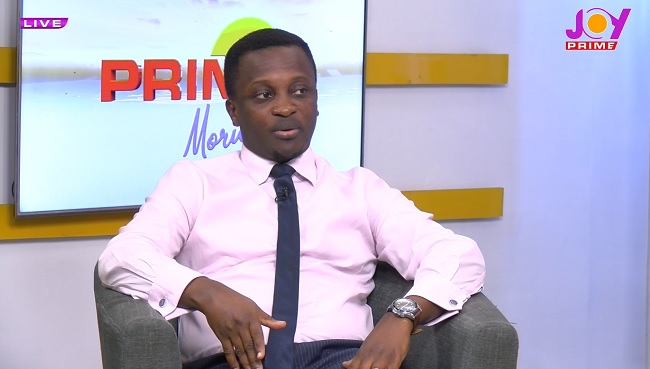
Clinical and Radiation Oncologist at the Korle-Bu Teaching Hospital, Dr. Mervin Boakye Agyeman has admonished all to visit the hospital regularly for breast screening, because early detection of breast cancer enhances the chances of saving lives.
According to him, breast cancer can be present without the patient's knowledge for several years, depending on how quickly it develops, grows, and spreads. Delay in visiting the hospital for early treatment when symptoms start developing only paves the way for the disease to spread, making it difficult for doctors to help cure it and, and in worse cases, leading to death.
Speaking to Noella Kharyne Yalley on Prime Morning on Tuesday, the doctor said visiting the doctor immediately after symptoms pop up, as well as regular breast screening, can go a long way to help doctors detect breast cancer and increase the chances of saving lives before the disease spreads and becomes unsolvable.
“Early detection saves lives. So the earlier you detect, the earlier your chances of living. Not every lump in your breast is cancerous. Even if it’s cancerous, there are many effective treatments that help sustain their lives. To be sure that after going through treatment, my survival rate will be high, it only depends on people presenting themselves early for detection,” he said.
The specialist also said although it is good to self-check for breast cancer at least once every month, it is also important to adopt the habit of visiting the hospital for screening. According to him, sometimes symptoms of breast cancer can take a while to become visible. Self-examination in this case will only delay the detection process, increasing the spread of the disease.
Nowadays, hospitals have ultramodern technologies that make it easier to diagnose breast cancer in its early stages. Hence, Dr. Agyeman advises that people make it a point to visit the hospital regularly, even after self-examination.
“There are screening guidelines. This requires an expert to examine it because you want to pick it up in the early stages when it’s very small. Because of a lack of experience, it will be difficult to detect it by yourself. Every three years, have a professional examine your breast,” he explained.
Dr. Boakye Agyeman revealed that many people, out of fear of eventually losing their breasts after being diagnosed with breast cancer, tend to flee from all forms of screening. He explained that running away only puts the affected person at a huge risk.
Dr. Agyeman stated that breast cancer is not a death sentence. Early detection of the disease can help affected people find ways to manage and cure it. That is why it is important that, after being diagnosed, patients make it a priority to follow the doctor's instructions and keep up with regular checkups rather than running away.
Latest Stories
-
Morocco strike late to overcome 10-man Black Starlets
54 seconds -
Nyaho-Tamakloe calls on Kurt Okraku to resign amid Black Stars struggles
7 minutes -
Societe Generale Group agrees to sell Ghana subsidiary to Attijariwafa Bank
16 minutes -
Accra: Fire breaks out in North Industrial Area at Avenor
22 minutes -
Measure food systems progress not only by productivity but also ability to deliver healthy diets – AGRA
36 minutes -
Black Stars: Seven years of decline while hashtagging love
48 minutes -
Today’s front pages: Thursday, October 1, 2026
49 minutes -
Gov’t to suspend GH¢1 D-Levy on diesel for October and November
1 hour -
Fire destroys belongings in Akweteyman apartment
2 hours -
Baffour Awuah to turn himself in to EOCO today – JoyNews sources
2 hours -
Government identifies payment discrepancy holding up teachers’ strike resolution
2 hours -
BoG signals no FX intermediation for October as GoldBod plans $1bn support for banks
2 hours -
When share ownership becomes personal: The African mindset of the Dangote IPO
2 hours -
Why MFWA Legal Fund matters to Ghana’s democracy
2 hours -
Fuel prices to rise from October 1; diesel could hit GH¢19.60 – COMAC
2 hours