

Audio By Carbonatix
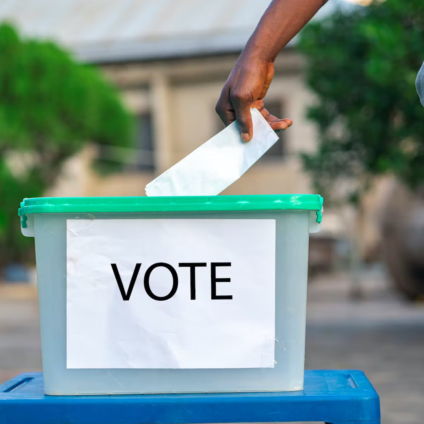
In just a few hours, Ghanaians will head to the polls to elect a President and Members of Parliament. As expected, political parties have rounded-up their campaigns, leaving many undecided voters grappling with choices. While some believe the outcome is divinely preordained, others argue that hard work and strategic planning win elections. However, one undeniable truth remains: the ultimate decision lies in the hands of the people going to vote—the electorate.
Ghanaian voters are a fascinating group. For many, their choice of candidate can hinge on the most unconventional reasons. Some base their decision on ancestral dreams featuring party colours, while others, including university graduates, are swayed by a candidate’s physical appearance. Regardless of the criteria, Ghanaians will vote.
The faces at the polls
The 2024 General Election is set to draw a mix of voters—those who are satisfied, angry, happy, disappointed, and undecided. This diverse group reflects the sentiments of a population that has experienced significant socio-economic changes in recent years. Many will travel great distances to vote, particularly those returning to their constituencies. These returning voters represent a critical demographic that candidates cannot afford to overlook. Yet, the question remains: are they all going to vote?
Apathy among the electorate
For some voters, apathy stems from disillusionment. They feel let down by political parties whose policies have failed to impact their lives. Fuseini, a young man from a rural community, sums it up: “The roads are still bad, our water sources are unreliable, and farming is exhausting. Why waste time voting when nothing changes?” He asserts that no amount of monetary incentive could persuade him to vote—only tangible development for his community would.
Others, like Tweba from Essaman, have specific grievances. “I vowed to vote for anyone who would fix the streetlights on the Cape Coast-Takoradi highway. No one has done it, so I have no reason to vote,” she laments.
Barriers to voting
For some, the cost of voting is a deterrent. Despite offers from candidates to provide free transport to their constituencies, many voters cite additional expenses, risks, and even personal safety concerns. Some fear encountering adversaries back home who might jeopardise their return to their workplaces.
A common question arises: why didn’t these individuals transfer their votes to their current locations? Many admit they were unaware of the option. This lack of awareness highlights gaps in voter education, leaving some disenfranchised due to logistical challenges.
Broken loyalty
Another subset of voters—former party loyalists—feels abandoned by their political parties. Disappointed by unfulfilled promises and policies that exclude them, they have chosen to abstain. A bus driver expresses his frustration: “For years, those in my profession have been ignored when it comes to national planning. If I can’t vote for my party, I won’t vote at all.”
Hope and determination
Amidst the apathy, there are glimmers of hope. Many first-time voters are eager to exercise their franchise, seeing it as an opportunity to influence Ghana’s future. For them, the elections represent a chance to address critical issues such as unemployment, corruption, and Ghana’s economic independence.
Ultimately, those willing to invest their resources and effort to vote are driven by a desire for change and progress. As the country prepares for this pivotal moment, it is clear that the people going to vote will play a decisive role in shaping Ghana’s future.
Their voices, choices, and aspirations will echo long after Election Day, determining the trajectory of the nation in the years to come.
Read also: Election 2024: EC ready for polls, election materials deployed
Latest Stories
-
Israel-bound flight diverted after fight between pilots
1 minute -
EchoWave earns praise for sound quality at 10th Women in Worship
11 minutes -
Crackdown on South Africa’s unsafe streets ordered by president to keep women safe
22 minutes -
Banks are responding to improved monetary policy conditions – John Awuah
41 minutes -
Judges’ conference forces further adjournment of Salomey Baffoe case to Oct. 5
53 minutes -
GRA assures Tullow of collaboration to settle $393m tax liability without disrupting its petroleum operations
1 hour -
South Korea demands apology from Pyongyang for landmine blasts that injured three
1 hour -
Carlos Queiroz not the sort of coach Black Stars need – Nii Lante Vanderpuye
2 hours -
AFCON 2027Q: ‘Our Black Stars team is gone’ – Former Sports Minister
2 hours -
Prof. Prempeh calls for public review of draft constitutional reform bills
2 hours -
AFCON 2027Q: ‘I have never seen a poor performance from Black Stars like against Gambia’ – Nii Lante Vanderpuye
3 hours -
Bawumia backs insurance sector reforms after engagement with IBAG
3 hours -
Nigeria set to launch National Digital Address System 9 years after Ghana showed the way
3 hours -
Policy rate decision takes time to reflect in lower lending rates – BoG
3 hours -
Polytanks Ghana supports GNFS with water storage tanks
3 hours