

Audio By Carbonatix
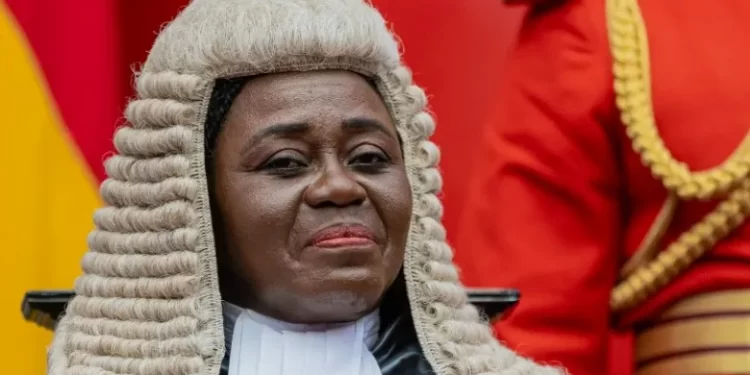
NPP’s Director of Legal Affairs, Frank Davies, has described the suspension of the Chief Justice as a “direct assault on the judiciary,” warning that it could damage the integrity of the country’s democratic institutions.
Speaking on PM Express on Joy News, he expressed deep unease over President John Mahama’s decision to suspend Gertrude Araba Sackey Esaaba Torkornoo and establish a five-member committee to investigate petitions for her removal.
“Well, as a trained lawyer, I would rather have wished that we are not where we are now,” he said.
“Because this, obviously, is the first time in our democratic dispensation that a Chief Justice has had to be suspended on petitions filed for her removal.”
He acknowledged that the process itself is constitutionally allowed. “Of course, Article 146 is a constitutional stricture,” he admitted.
“So nobody can say that what is happening is not regulated by the Constitution.”
“But the reason why I say it’s an assault on the judiciary is that we should look at the commentary that has gone on thus far,” he argued.
“Look at the statements made by very senior political actors. It gives a veiled impression that maybe this Chief Justice is not liked, so there should be an attempt to have her removed.”
Mr. Davies said the mere initiation of a removal process — even under constitutional guidelines — must be weighed carefully against its wider implications.
“This is not just about legal procedures. It’s about perception. It’s about the message it sends to the bench. If the head of the judiciary can be treated this way, what about the others?”
President Mahama on Monday announced the formation of a five-member committee to investigate the petitions.
The panel includes legal, academic, military, and public service figures. It has been tasked with conducting what the presidency called a “thorough, independent, and expeditious inquiry.”
But Mr. Davies questioned the atmosphere surrounding the process.
“This is a Chief Justice we’re talking about. The very foundation of our legal system. The perception of fairness and impartiality is just as important as the process itself.”
While insisting he was not casting doubt on the legal basis of the inquiry, Davies stressed the political climate in which the suspension is unfolding.
“There’s a difference between following the Constitution and weaponising its provisions,” he cautioned. “Let us not pretend that the optics here do not matter.”
The veteran lawyer called on Ghanaians to guard the judiciary’s independence.
“We must be careful. If today it’s the Chief Justice, tomorrow it could be any judge whose rulings are inconvenient. That’s a slippery slope.”
Latest Stories
-
La Beach demolition: Senyo Hosi condemns lack of consultation
8 minutes -
Russian glide bomb attack on Zaporizhzhia kills at least 15 people
23 minutes -
Jinapor warns underperforming energy sector CEOs of consequences, says no protection for failure
25 minutes -
Fire destroys head of tipper truck on Lower Volta Bridge
29 minutes -
Palmer signs new Chelsea contract until 2034
31 minutes -
World Cup visa scandal: Mahama will act on corruption allegations – Abass Nurudeen
33 minutes -
Abass Nurudeen accuses Minority of ‘scandal scavenging’ over World Cup visa controversy
34 minutes -
US Embassy recognised NSA, GFA and GTA as separate entities for visa applications – Sports Minister’s aide
40 minutes -
Only 30% of Ghanaian teachers satisfied with their jobs – CAPCOE data reveals
51 minutes -
Communities affected by construction of Akosombo Dam urge government to speed up compensation process
1 hour -
World Cup visa scandal: Sports Ministry not shielding anyone – Sports Minister’s special aide
2 hours -
World Cup visa scandal: Over 30 people misrepresented as GTA board members to US Embassy – Vincent Assafuah alleges
2 hours -
Fire destroys wooden structure near Yesu Mo Villa at Bush Road
2 hours -
NDC threatens sanctions over oversized campaign posters, gives aspirants 5 days to comply
2 hours -
Star Oil paid GH¢2.7bn in taxes, levies in nine months of 2026
3 hours