

Audio By Carbonatix
Let me tell you a small story.
A man’s roof began to leak.
At first, it was just a drop. Then two. Then a steady rhythm—kpok… kpok… kpok—right in the middle of his living room.
Naturally, the man became angry.
But instead of fixing the roof, he did something remarkable.
He chased the rain.
That, in many ways, is where South Africa finds itself today.
When the economy coughs, the foreigner catches a cold.
And suddenly, the Zimbabwean is the problem. The Nigerian is the suspect. The Ghanaian is the explanation.
Meanwhile, unemployment is seated comfortably like a chief at a durbar—well-fed, well-known, and completely untouched.
Ah.
In our part of the world, we say: “When the drumbeat changes, the dance must also adjust.”
But here, the dance has changed… while the drummer remains the same.
Let us not pretend this is new.
2008 came and left its scars. 2015 returned with familiar anger. 2019 reminded everyone that the script had not been rewritten—only rehearsed.
Now, in 2026, the performance has improved.
It is no longer just about mobs in the streets.
It is about language in high places. It is about policies that whisper what mobs used to shout. It is about organised movements that believe prosperity is hiding behind a border post.
But let us ask a simple question—one that does not trend on social media:
If you remove all the foreigners tomorrow, will the jobs appear on Monday?
Or will unemployment wake up, stretch, and ask for breakfast as usual?
Because here is the uncomfortable truth.
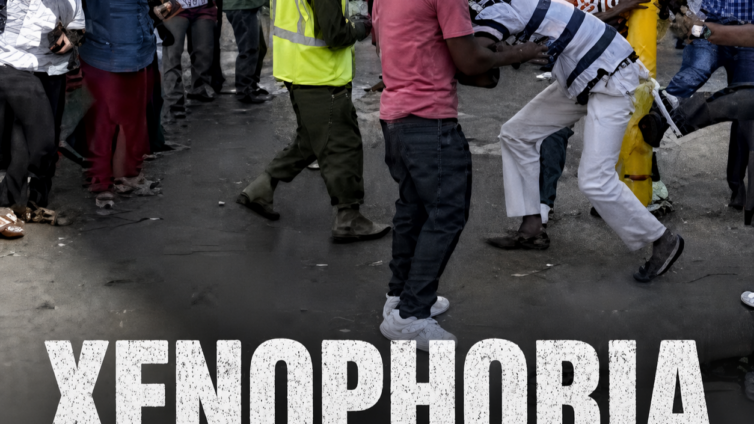
Xenophobia is not born.
It is cultivated.
Watered daily with frustration. Fertilised with inequality. And harvested politically when convenient.
In such soil, the foreigner becomes a very useful crop.
And yet, history is watching this moment with raised eyebrows.
This same South Africa once leaned on the shoulders of Africa.
From Ghana to Nigeria to Zambia, the continent stood in solidarity when apartheid refused to sit down.
Today, some of those same Africans are being told:
“Go home.”
If irony were a person, it would have applied for South African citizenship by now.
But let us not laugh too quickly.
Because this is not just a South African story.
It is an African story.
When systems fail, we personalise the problem. When leadership hesitates, narratives take over. And when frustration rises, the nearest outsider becomes the nearest solution.
Easy.
Convenient.
Wrong.
There is another proverb worth remembering:
“The lizard that ruins its own home has no right to complain about the weather.”
If systems are weak, institutions are fragile, and opportunities are scarce, the answer cannot be found in chasing those who did not design the system.
So what is the way out?
Not slogans.
Not blame.
Not periodic outrage followed by national amnesia.
The way out is less dramatic—but far more effective:
Fix the system, not the scapegoat
Strengthen institutions, not suspicions
Create opportunity, not enemies
Tell the truth—even when it is politically inconvenient
Because until then, the cycle will continue.
And each time it does, it will feel justified… even when it is misplaced.
Let me end where we began.
The man is still chasing the rain.
The roof is still leaking.
And the living room is slowly flooding.
Let’s Talk
Is xenophobia in South Africa really about foreigners…
Or about the roof we have refused to fix?
SouthAfrica# Xenophobia #AfricanUnity #PublicPolicy #Leadership
Latest Stories
-
What Is Wrong With Us: We queue for the Colosseum while our own Castles crumble
23 minutes -
Visa scandal: Signed letters, money admissions put Kofi Adams and Ampofo Ankrah under scrutiny – Hadzide
4 hours -
Visa scandal: Pius Hadzide questions NSA secretariat and appointment outside authority’s structure
4 hours -
Pius Hadzide challenges scandal label on 2018 Australia visa affair
5 hours -
Trump says he is considering firing US ambassador to Greece
5 hours -
Man City bananas ‘brought fun back’, says Varadi
5 hours -
Meta releases Muse Wonder AI models to challenge Anthropic and OpenAI
5 hours -
Daily Insight for CEOs: The CEO as Chief Decision Maker
5 hours -
Burnham had formal meeting with Man City chair while mayor
5 hours -
Is Ghana producing too many lawyers? What is the best lawyer-to-citizen ratio?
5 hours -
NDC sinking Ghana’s democracy with Emelia Agbenyo’s appointment – Miracles Aboagye
6 hours -
Seedorf back in football as Corinthians head coach
6 hours -
Hincapié and Zubimendi injured in post-match training session
6 hours -
Fridges in French supermarkets hit by cyberattack
6 hours -
Qantas flight grounded after bedbug outbreak
6 hours