

Audio By Carbonatix
On June 25, 1982, Algeria left the World Cup unbeaten — and still went home early.
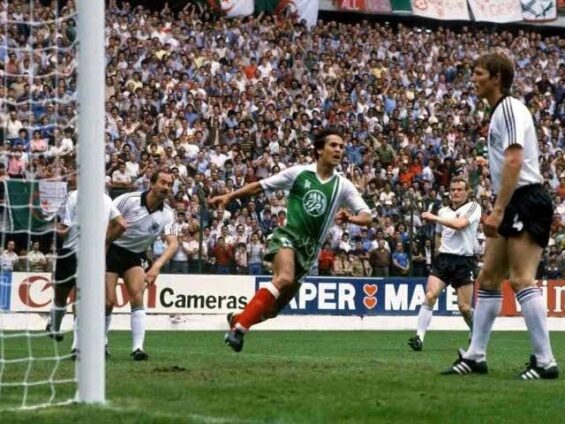
Four days earlier, they had stunned West Germany 2–1 in one of the greatest upsets in tournament history.
The Desert Foxes became the first African and first Arab side to win two matches at a single World Cup. A draw or victory against Chile in their final group game would have sent them through.
Instead, West Germany met Austria in Gijón.
Horst Hrubesch scored in the 10th minute. After that, the match slowed to a walk.
Passes were exchanged with no urgency, no tackles, no pretence. Algerian fans in the stands waved banknotes in disgust, a silent accusation of match-fixing.
An Austrian commentator, sickened by what he was watching, told viewers to switch off and fell silent. The 1–0 result stood. Algeria was eliminated on goal difference.
The outrage was immediate and universal. Fans, journalists, and even some players from other nations condemned the game as a sham. FIFA investigated but found no explicit rule broken at the time.
The global backlash, however, was so intense that FIFA acted. From that day forward, all decisive final group matches at the World Cup would be played simultaneously, a direct response to what became known as the Disgrace of Gijón.
Algerian pain rewrote the laws of the tournament forever.
That is the quiet inheritance the Fennecs carry into 2026.
A game forged by history
Algeria joined FIFA in 1964, barely two years after gaining independence from France. Football quickly became a powerful arena to reclaim national pride and identity after colonial rule.
The style that emerged was compact, technical, and ruthless on the counter, a reflection of a nation that had learned to fight for every inch.
It gave the world Rabah Madjer’s audacious backheel goal against West Germany in 1982, Lakhdar Belloumi’s visionary passing, and later Islam Slimani’s tireless running and Riyad Mahrez’s elegance and leadership.
The 2014 World Cup in Brazil marked a modern high point: Algeria pushed eventual champions Germany to extra time in Porto Alegre.
Goalkeeper Rais M’Bolhi made ten saves, and Manuel Neuer was forced into emergency sweeping duties. Germany won 2–1, but they knew they had been in a real fight.
Then came twelve long years of absence. No qualification for 2018 or 2022. The drought made the latest qualifying campaign feel heavier than most.
The qualification that signaled change
CAF Group G was competitive, but Algeria made it decisive. They finished with eight wins, one draw, and one defeat, scoring 24 goals and conceding eight, ending seven points clear of Uganda.
Mohamed Amoura, the 25-year-old Wolfsburg striker, emerged as one of the breakout stars of the entire CAF qualifying cycle, finishing with ten goals.
In the decisive 3–0 win over Somalia, captain Riyad Mahrez (now 34 and entering the final stretch of his international career) dropped deep, dictated play, scored, and assisted twice for Amoura.
It felt like a symbolic handoff: experience guiding the next generation.
Under coach Vladimir Petković, Algeria plays a practical 4-2-3-1, hard to break down and quick to exploit transitions, with Ismaël Bennacer shielding the defense with calm intelligence and Youcef Atal offering width and explosive runs from full-back.
The system is built on discipline and organization, but it also carries the potential for moments of individual brilliance when space opens.
The 2026 reckoning
The December 2025 draw added an almost theatrical layer. Algeria was placed in Group J alongside Argentina, Austria, and Jordan. Austria, the same team that scored the only goal in Gijón and then helped kill the game while Algerian fans watched in disbelief, will meet them again on June 27 in Kansas City.
On paper, it is just another group match. In truth, it feels like unfinished business 44 years in the making.
Algeria arrives with a strong FIFA ranking, a captain chasing one last global stage, a breakout striker the continent is still discovering, and a coach who understands knockout football.
Their squad reflects modern Algeria: European experience blended with homegrown resolve. But the deeper current runs beneath the tactics and the rankings. Some matches do not end when the final whistle blows.
They settle into the memory of a football nation and wait.
The Disgrace of Gijón did not merely wound Algeria. It changed how the world organizes its greatest tournament.
On the night of June 27, 2026, when Algeria walks out against Austria in Kansas City, the record from 1982 will still read: Austria 1–0 Algeria (after the earlier 2–1 loss).
Some results do not expire. They wait.
Latest Stories
-
6,079 promotion cases fully processed and paid – CAGD says amid nationwide teachers’ strike
5 minutes -
Teacher unions to meet government Monday over nationwide strike
20 minutes -
Photo story: Republic Bank-JoyNews Habitat Fair clinic wraps up after three days of housing solutions, expert engagement
24 minutes -
National Peace Council urges investment in youth to sustain Ghana’s peace
46 minutes -
Afenyo-Markin urges youth to speak up against injustice
56 minutes -
CAF annuls Edo Queens victory, orders WAFU B final to resume from extra time
1 hour -
Interior Minister urges traditional authorities to enforce anti-bushfire bye-laws
1 hour -
3rd Republic Bank-JoyNews Habitat Fair Clinic ends on a high note after three days of strong patronage
1 hour -
Ten climbers missing after avalanche hits Himalayan base camp
2 hours -
NPP had more permanent fuel relief measures than current GH¢2 diesel cut – Amin Adam
2 hours -
Photos from the 3rd Republic Bank-JoyNews Habitat Fair Clinic
2 hours -
Ethiopia’s army promises restraint amid fears of new civil war
3 hours -
Amin Adam calls for review of fuel taxes as diesel prices remain above GH¢18
3 hours -
World Vision Ghana, Ahafo districts sign MoU for universal WASH coverage
4 hours -
When the gold engine stutters: What Ghana’s Cedi and reserves are telling us about the new economic architecture
4 hours