

Audio By Carbonatix
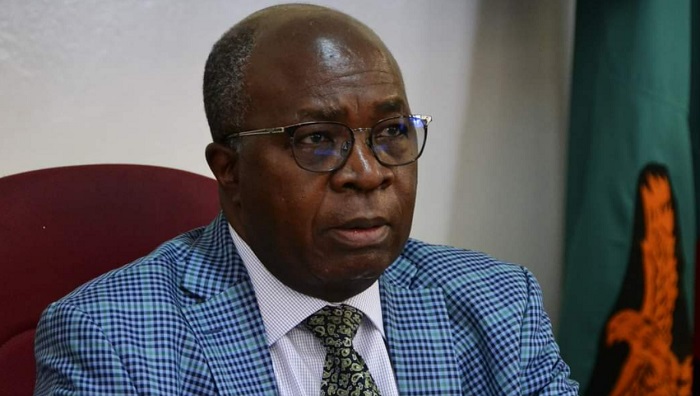
Zambia’s Minister of Finance and National Planning, Situmbeko Musokotwane, has advised Ghana to have restrictive laws on debt accumulation.
“We put a law in Parliament which tied my hands to say, going forward, you can’t be like those in the past. So, we tied our hands for Parliament to have more power and restrictions on borrowing,” he said.
That should be combined with reforms to maintain credibility with creditors, the international community, and citizens, as well as create a conducive environment for private sector investment for value addition.
He expressed confidence that such an action would hasten the processes of concluding debt treatment, grow the economy, increase domestic revenue, create more jobs, uplift the living standards of people, and help avoid future debt crises.
Minister Musokotwane said this as he shared the experience of Zambian authorities, who on Saturday, October 14, 2023, formalised a Memorandum of Understanding (MoU) with its Official Creditors on restructuring of some US$6.3 billion debt.
Zambia, the first African country to default on its debt during the COVID-19 pandemic, reached an agreement in principle in June, and currently awaiting to sign an MoU for the restructuring of its debt.
He spoke at the African Finance Ministers press briefing on Saturday, October 14, 2023, in Marrakech on the sidelines of the International Monetary Fund (IMF)/World Bank Group (WBG) Annual Meetings.
He explained that it was important for the country to take prudent measures not to accumulate high debts by having strong structural and sustainable reforms while investing in education, healthcare, infrastructure and industrialisation.
“To get the support of the international community – lenders and other people, obviously, must conclude that you’re worthy of their support and willing to take steps to assist yourself,” he noted.
“We’ve learnt a lot, and for people like you [Ghana], you’ve been lucky,” Mr Musokotwane said, with respect to Ghana gaining external creditors assurance and securing an IMF programme in five months.
Among others, Ghana has a Fiscal Responsibility Act, 2018 (Act 982), which requires the government not to spend beyond a threshold that would push fiscal deficit above five per cent of Gross Domestic Product (GDP).
However, it was suspended in 2020, following the outbreak of the COVID-19 pandemic, as the government envisaged that it would not meet the five per cent deficit threshold.
In the meantime, the Ministry of Finance and Bank of Ghana (BoG) have signed an MoU, providing for zero monetary financing throughout the IMF US$3 billion loan-support programme with Ghana.
Meanwhile, Ghana’s economic growth had averaged 3.2% for the first two quarters of 2023, something that Dr Ernest Addison, Governor, BoG, explained, should make the government “operate without access to central bank financing.”
Latest Stories
-
Trade Minister applauds GUTA as a pillar of economic growth; Prez Mahama honoured
51 minutes -
President’s brother’s takeover of Damang Mines is ‘untidy’ – Alhassan Tampuli
57 minutes -
It’s not true that gov’t decided not to renew the lease for Gold Fields – Bobby Banson
1 hour -
Ghana to boost tomato production with 60-hectare irrigated farms and processing initiatives
1 hour -
E&P’s takeover process of Damang Mines was very clean – Inusah Fuseini
1 hour -
Damang takeover: There is not going to be any job loss; it is a lease change – Bobby Banson
2 hours -
Gold Fields didn’t stop mining at Damang mines; such claims are untrue – Bobby Banson
2 hours -
Engineers and Planners currently operate only in Ghana – Bright Simons
2 hours -
Lands Minister has no legal basis to restrict lease to Ghanaian firms – Bright Simons
2 hours -
Gov’t’s refusal to renew Gold Fields’ lease was simply untenable – Bright Simons
2 hours -
SOS Children’s Villages Ghana deepens partnership with Gender Ministry
3 hours -
Gender Ministry celebrates Christina Koch, reaffirms commitment to empowering girls
3 hours -
Live stream: Newsfile digs into E&P’s takeover of Damang Mines, OSP powers and Anti-LGBTQ Bill
3 hours -
Moody’s maintains Ghana’s rating at Caa1, revises outlook to positive
4 hours -
Zambia elevates tourism education to national priority as President Hichilema backs continental summit
4 hours