

Audio By Carbonatix
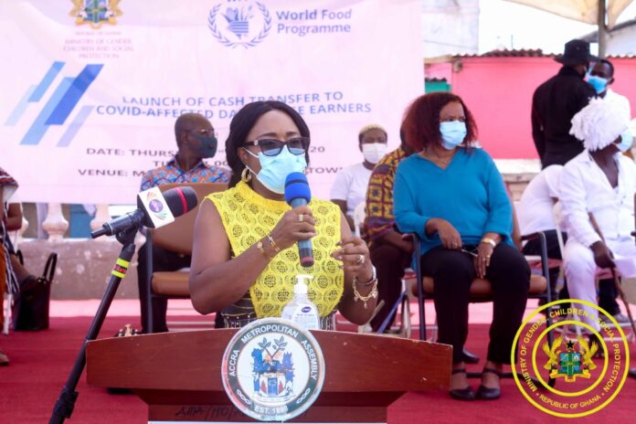
The Minister for Gender, Children and Social Protection, Cynthia Mamle Morrison, has announced that about 75,000 persons within Greater Accra and Ashanti Regions, are set to receive financial support.
According to her, the initiative is to minimise the impact of Covid-19 on the lives of these vulnerable persons.
She said since the declaration of Covid-19 as a pandemic, government’s measures in March to April were critical in the immediate containment and mitigation of the virus’ impact, however, the economic effects continue to negatively affect a significant number of persons, especially the vulnerable poor.
The Gender Minister stated that: “World Food Programme will provide funds to be transferred to benefit up to 75,000 vulnerable people in the Greater Accra and Ashanti Regions, which have been deemed to be hardest hit by the COVID-19 infections, for up to a four-month period.”
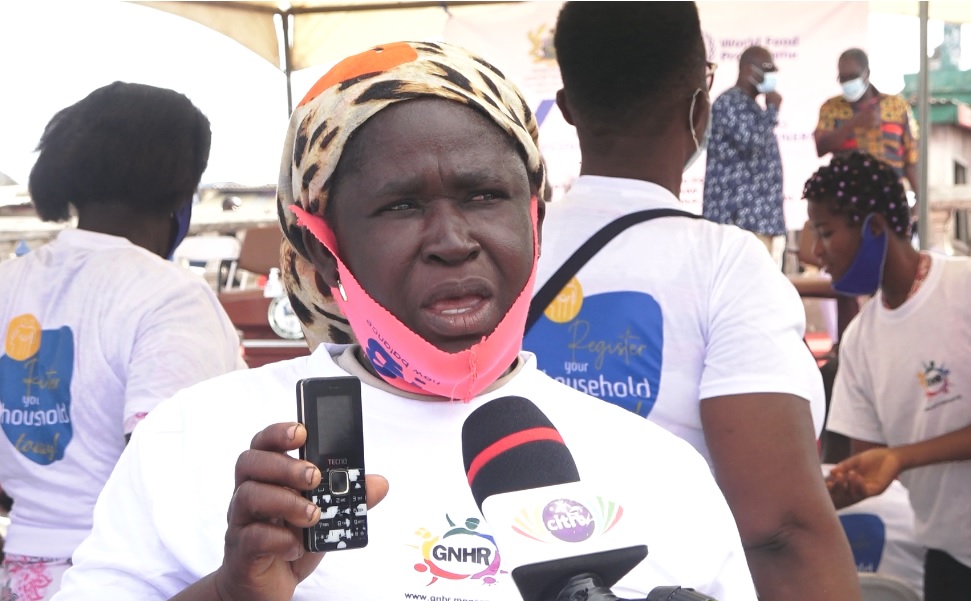
She was delighted that the Ghana National Household Registry (GNHR), under the Gender, Children and Social Protection Ministry, emergency data collection has brought about data that is of use to the World Food Programme (WFP) in reaching out to Covid-affected daily wage earners.
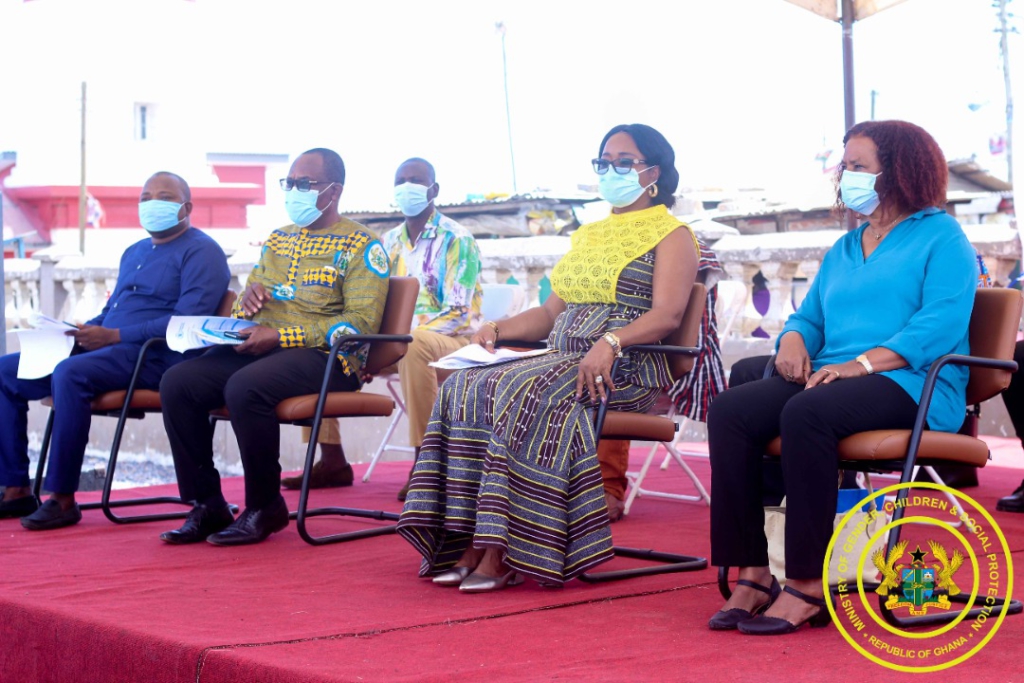
She made the announcement on Thursday, during the launch of “Cash Transfer to Covid-affected Daily Wage Earners” who were profiled during the emergency data collection by the GNHR.
While applauding the WFP team for signing an agreement with her ministry to reach out to about 75,000 persons, the Gender Minister called on well-meaning groups and individuals to help her ‘touch’ more lives.
Mrs Morrison said the beneficiaries, consisting of 60% females and 40% males, would receive their funds via MTN mobile money transfers using the LEAP module.
She further advised the recipients to utilize the opportunity to better their lives and their families.
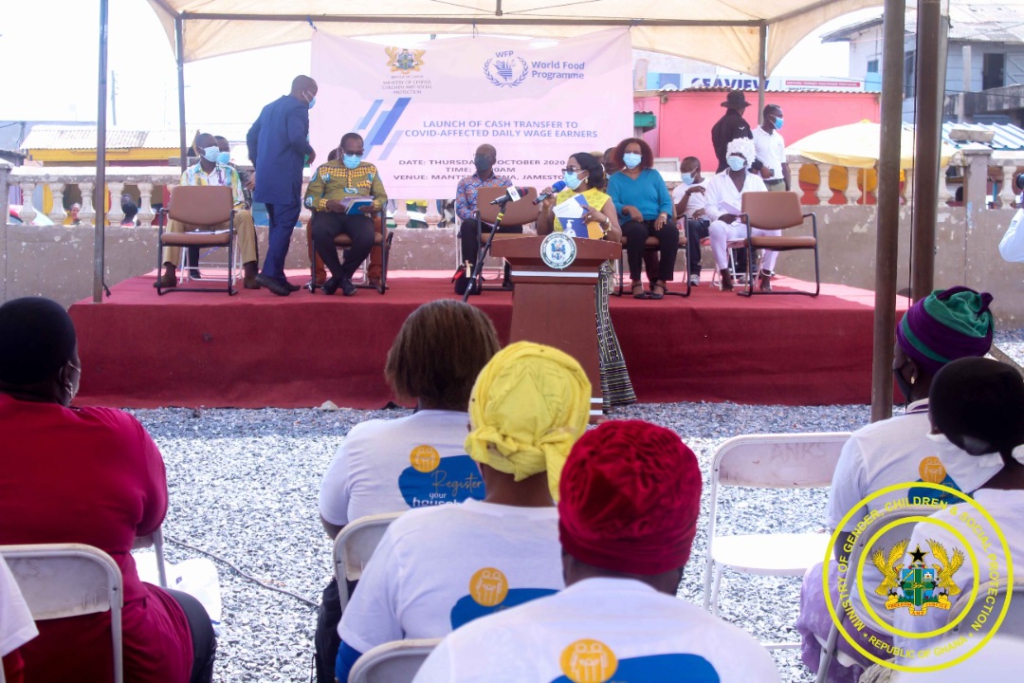
Additionally, she noted that President Akufo-Addo, based on his conviction that every life deserves some amount of dignity, is working hard on creating an equal society where the poor and vulnerable can live decent lives.
“The GNHR would in the coming months profile priority areas such as the disabled, street children, alleged witches and the kayayei across some hot spot zones in the country for government to extend support to these categorized vulnerable groups”, the minister said.
National Coordinator, Ghana National Household Registry (GNHR), Dr Prosper Laari, pointed out that risk assessment was an integral part of the lockdown process when Covid-19 was peaking up.
“Therefore, the Government considered the health and socio-economic implications of the lockdown involving millions of Ghanaians living in poverty, whose condition would grow worse and would be exposed to food insecurity, difficulty in accessing basic healthcare services, and other hazards.
“Consequently, the Ministry of Gender, Children and Social Protection (MoGCSP), put into immediate effect an emergency social protection system to safeguard the poor and vulnerable during this period.”
He said data collected at the lockdown areas showed that over 60% were vulnerable individuals who sleep in kiosks, containers, markets, uncompleted structures, on the streets, bus or lorry stations, chop bars or drinking spots, at the beaches, and are exposed to different forms of hazards.
“Analysis on the sources of livelihood of the total of Forty-Six Thousand and Sixty (46, 060) vulnerable individuals showed that 35% had no sources of livelihood. These were due to reasons such as; old age (1,080), temporary layoff (856), disability (103) or sickness (450).”
Latest Stories
-
From despair to dance: Family of nurse Salomey Baffoe rejoices after GH¢100k bail granted
52 minutes -
Kejetia Phase III pricing talks loom as government moves to restart stalled works
1 hour -
Nchiraa Yam festival: Two killed, 14 injured as police restore calm
2 hours -
I draw inspiration for my songs from Reggae music – Lyrical Joe
2 hours -
AI must not replace human judgment in public spending – BoG Governor
2 hours -
Ghana should withdraw from 2027 AFCON – Kojo Addae Mensah
2 hours -
Team Ghana departs Accra for Angola ahead of Karting Africa Trophy
2 hours -
AIT President Prof Clement Dzidonu urges lifelong learning as AI reshapes work and education
2 hours -
FWSC to meet striking teacher unions on Tuesday
2 hours -
NPP won’t force candidates to step down – Miracles Aboagye
2 hours -
Black Stars: Building in the sinking sands
2 hours -
Low inflation on paper, high cost of living: How Presidents Mahama and Trump are facing stark economic reality
2 hours -
NPP will negotiate with popular non-politicians to secure winnable candidates – Miracles Aboagye
2 hours -
Only 5% of Ghanaians can afford housing without support – Gov’t
2 hours -
Nigeria launches rescue after military plane crashes with 32 aboard
3 hours