

Audio By Carbonatix
About three in every four (76.2%) non-Ghanaians are working in three occupations only; namely, services and sales (34.0%), skilled agricultural, forestry and fishery (25.0%) and craft and related trades (17.2%).
According to the latest thematic report on Migration by the Ghana Statistical Service has revealed, these are easy-entry jobs which call for no skills or basic skills in order for one to go into them.
The majority of the working immigrants are self-employed without employees.
The highest proportion of non-Ghanaian population are from Nigeria, Togo, Niger and Burkina Faso
The migrants constituted 28.9% of the total population of 30,832,019 enumerated in the 2021 Population and Housing Census.
Majority (52.5%) of the migrants were females.
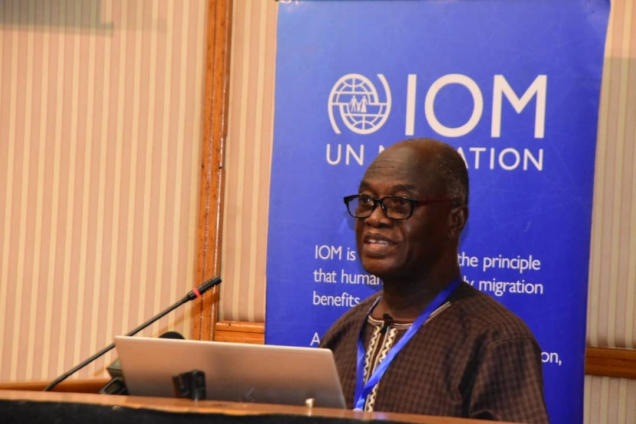
Speaking to Joy Business, Associate Professor of Population Studies at the Regional Institute for Population Studies at the University of Ghana, Professor John Anarfi said this is largely attributed to Ghanaians moving out of the country without skills in certain sectors.
He therefore entreated government to diversify the economy to have more Ghanaians acquire additional skills to accelerate the country’s economic growth.
“Ghanaians who are migrating are the main reason and those coming in are going to these areas. So as long as the situation continue, we will get people to occupy jobs which is not too good”, he said
The report further said the proportion of migrants in the population is much higher in rural areas (33.9%) than urban areas (22.2%).
More than a third (35.9%)of the migrants moved to settle permanently while 24.9% also moved due to marriage/family reunification.
Greater Accra received higher number of migrants
The Greater Accra Region received a higher number of migrants than all the other regions.
Six regions received more people than they sent out. All of them are in the south of the country.
The report furthered that there has been a slight decline in migration from 2010 – 2021. This may be as a result of the Covid-19 pandemic because most migrants had gone back to their hometowns and had not returned at the time the census was conducted.
There has been a decline in the non-Ghanaian population in the country between 2010 and 2021.
Latest Stories
-
Elizabeth Ohene writes: Your lordship, justice must also be seen to be done
25 minutes -
Ghana Water to resume spillage at Weija Dam from Wednesday
35 minutes -
Agyarko ends 16-region tour, targets NPP parliamentary comeback in Greater Accra
43 minutes -
GIGS welcomes UN adoption of Equal Earth map as correction to ‘450 years of cartographic injustice’ against Africa
47 minutes -
‘October 3 is the only poll I believe in’ – Paul Afoko dismisses NPP chairmanship survey
2 hours -
Contractors who delay projects risk losing Big Push contracts – Agbodza
2 hours -
NPA uses Fetu Afahye to educate consumers on petroleum safety
2 hours -
Roads Minister orders contractors to keep working during official visits
2 hours -
New 4-year bond attracts GH¢4.46bn in bids
2 hours -
AIA VIP Lounge to be completed without taxpayer funds – Ablakwa
2 hours -
KEEA Assembly disburses GH¢267,518 to 94 PPCs in third quarter
3 hours -
GAF clears 175.6km corridor for Accra-Kumasi Expressway ahead of schedule
3 hours -
Dr Abu Sakara urges African youth to lead economic freedom
3 hours -
24-Hour Economy mobilises GH¢1bn for poultry value-chain transformation
3 hours -
From working in his room to building a business group – Michael Bartlett-Vanderpuye’s journey
3 hours