

Audio By Carbonatix
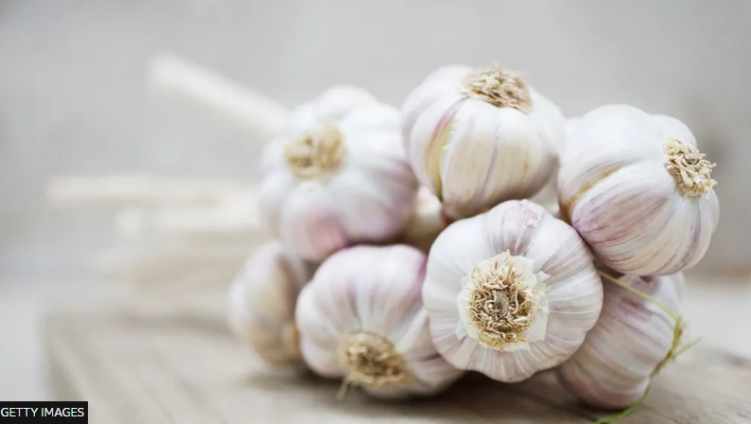
A US senator has called for a government investigation into the impact on national security of garlic imports from China.
Republican Senator Rick Scott has written to the commerce secretary, claiming Chinese garlic is unsafe, citing unsanitary production methods.
China is the world's biggest exporter of fresh and chilled garlic and the US is a major consumer.
But the trade has been controversial for many years.
The US has accused China of "dumping" garlic on to the market at below-cost price.
Since the mid-1990s it has levied heavy tariffs or taxes on Chinese imports in order to prevent US producers from being priced out of the market.
In 2019, during the Trump administration, these tariffs were increased.
In his letter Senator Scott refers to these existing concerns. But he goes on to highlight "a severe public health concern over the quality and safety of garlic grown in foreign countries - most notably, garlic grown in Communist China".
He refers to practices which, he says, have been "well documented" in online videos, cooking blogs and documentaries, including growing garlic in sewage.
He has called for the Department of Commerce to take action, under a law which allows investigations into the impact of specific imports on the security of the US.
Senator Scott also goes into much detail about the different types of garlic that should be looked into: "All grades of garlic, whole or separated into cloves, whether or not peeled, chilled, fresh, frozen, provisionally preserved or packed in water or other neutral substance."
He argues: "Food safety and security is an existential emergency that poses grave threats to our national security, public health, and economic prosperity."
The Office for Science and Society at McGill University in Quebec, which attempts to popularise and explain scientific issues, says there is "no evidence" that sewage is used as a fertiliser for growing garlic in China.
"In any case, there is no problem with this," an article published by the university in 2017 says.
"Human waste is as effective a fertilizer as is animal waste. Spreading human sewage on fields that grow crops doesn't sound appealing, but it is safer than you might think."
Latest Stories
-
‘Avoid political comments’ – Domelevo advises Chief Justice
27 minutes -
‘I don’t trust OSP’ to probe GH¢70k ‘bribe’ allegation – Kwasi Kwarteng
40 minutes -
Road inspections not to witch-hunt contractors – Kwame Agbodza
1 hour -
Inter Milan mount stunning comeback to beat Napoli
1 hour -
Modric plans to play for Croatia past 41st birthday
1 hour -
Bayern fail to score for first time in 59 games
1 hour -
Bawumia preparing new cocoa policy package for farmers – Annoh-Dompreh
2 hours -
Wa-Tumu-Bolga road upgrade will unlock agriculture, trade – Agbodza
2 hours -
Ghana Maritime Authority readies oil-spill response vessel for deployment
2 hours -
Ayariga turns to drones, AI to tackle Agbogbloshie waste mountain
2 hours -
Agbogbloshie waste heap must go – Mahama Ayariga declares
2 hours -
Government to upgrade all rural telephony sites to 4G – Communications Minister
2 hours -
Rural calls, data to become cheaper by Q1 2027 – Sam George
2 hours -
National Chief Imam remains Ghana’s strongest symbol of interfaith harmony – Mahama Ayariga
2 hours -
Nhyiaesohene pledges support to ECG to curb encroachment
2 hours