

Audio By Carbonatix
A bill aimed at lifting the ban on female genital mutilation (FGM) has been tabled in The Gambia's parliament by an independent lawmaker.
It was outlawed in the mainly Muslim nation in 2015 when Yahya Jammeh was president.
He said it was not required in Islam.
But influential Muslim clerics have been pushing for the ban to be repealed, while women's rights activists have vowed to campaign for it to remain in place.
Mr Jammeh's 22-year authoritarian rule came to an end in 2016.
More than three-quarters of Gambian females aged between 15 and 49 have undergone FGM, according to the UN.
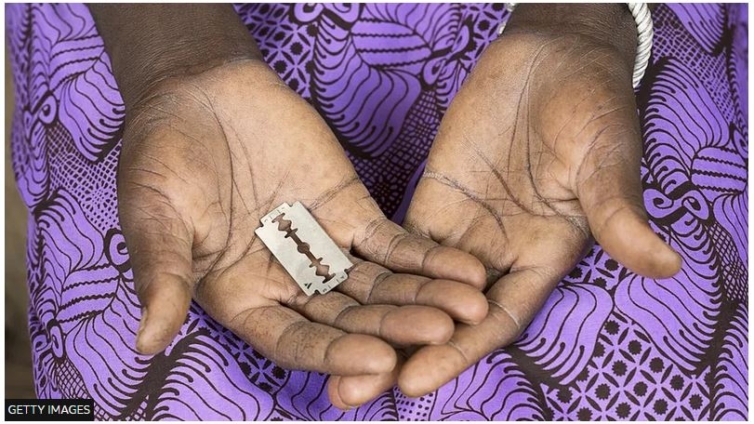
In the procedure's most severe form, after removing the sensitive clitoris, the genitals are cut and stitched closed so that the woman cannot have or enjoy sex.
Followers of an outspoken Muslim cleric, Abdoulie Fatty, rallied in support of the bill shortly before it was introduced in parliament on Monday.
They chanted: "Female circumcision is my religious belief, Gambia is not for sale."
Last year, the cleric helped pay the fines of three women who were convicted of carrying out FGM on young girls.
At the time, The Gambia Supreme Islamic Council, the main body of Muslim clerics in the country, called for the ban to be scrapped.
There are different views in Islam over the practice, with some leading scholars, like those in Egypt, opposing it.
The Gambian lawmaker who is championing the bill, Almammeh Gibba, said it sought to "uphold religious purity and safeguard cultural norms and values", the privately owned Point newspaper reported.
He said the practice could not be described as mutilation if done properly.
The head of The Gambia's Female Lawyers Association, Anna Njie, said that repealing the ban would be a backward step.
"We have no authority to tell the National Assembly what to do, but we have rights reserved in the constitution to take legal action when certain fundamental rights are violated," she was quoted by the local Standard newspaper as saying.
The leader of the majority party in parliament, Billay Tunkara, said it had not yet taken a decision on whether to support the bill.
"We are taking our time because it is a very sensitive area that doesn't only have to do with religion or cultural aspect but also human rights and health issues," he said.
Latest Stories
-
Ghana Enterprise Brands Awards 2026: Leading brands, business trailblazers to shine on November 30
8 minutes -
T-bills auction: Demand improves as government exceeds target by about 76%; interest rates soften
14 minutes -
Ziope undertakes initiative to build a technologically inclined community, commissions self-help ICT lab
39 minutes -
ECG announces power outage in parts of Tema, Central Region due to network fault, maintenance
1 hour -
When the Gospel Becomes a Weapon: The church, blackmail and the abuse of faith
2 hours -
JoyNews’ Jacqueline Ansomah Yeboah selected for UK Media Excellence for Emerging Technology Fellowship
2 hours -
Mental Health Alliance urges government to operationalise Mental Health Fund
2 hours -
Ghana–Holy See agreement heads to Parliament after Cabinet approval
2 hours -
Luv FM Corporate Games 2026: Kumasi Central Prisons, Amanfiman Bank win big amid fun
2 hours -
WAFU B U17: Ghana top Group A after win over Togo
3 hours -
Ho Central Mosque reopens amid unresolved leadership dispute that led to closure
4 hours -
Minority caucus questions GH¢16.4m in Ablakwa’s SA evacuation spending, demands independent audit
4 hours -
Gender Ministry meets Nana Akua Addo’s husband over domestic violence after hospital discharge
5 hours -
UG Vice-Chancellor urges swift operationalisation of National Research Fund
5 hours -
Pope Leo to have surgery after lump found in lung
6 hours